12,000-Year-Old Rock Art in Arabia Reveals Lost Civilization
Discovery of Ancient Art
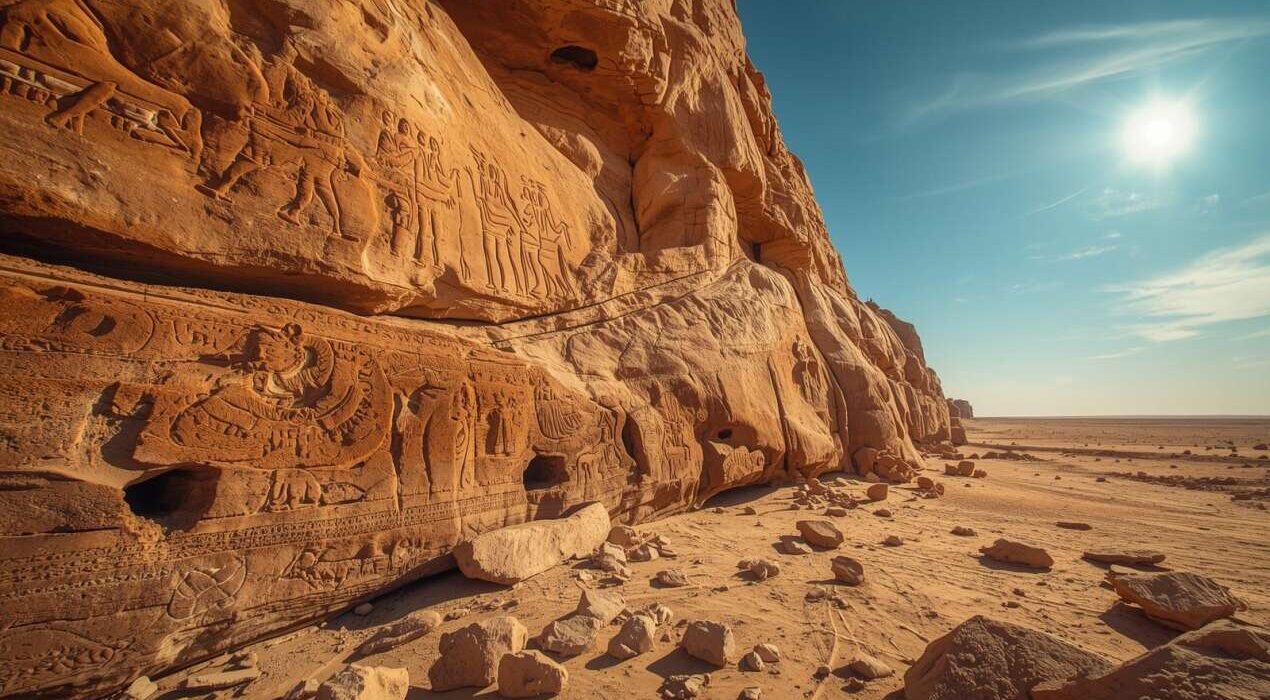
Archaeologists found rock art in remote Arabian deserts. The engravings date to around 12,000 years ago. They feature human figures, animals, and rituals.
Researchers documented petroglyphs across cliffs and caves. They used photography, 3D scans, and GPS mapping. Therefore, they preserved every detail.
The art shows people walking, hunting, and dancing. It also has strange symbols we can’t fully decode. In addition, animals such as antelopes, camels, and wild oxen appear.
The setting lies far from known ancient cities. However, researchers believe groups traveled widely across Arabia. They lived in small tribes or communities.
What This Tells Us
The rock art shifts our view of early human life. We now see that people lived deep in Arab deserts. They adapted and thrived in tough climates.
It suggests a civilization more complex than we expected. For example, they had rituals, spiritual beliefs, and communal life. They might have shared ideas with neighboring lands.
The art hints at trade or migration routes. As a result, historians must rethink ancient Arabia’s role. This land was not just a crossroads — it hosted real culture.
The team compares the art to African and Near Eastern styles. They see links and unique regional traits. However, the art also stands apart in style and content.
Still, many questions remain. We don’t yet know the names of these people. We lack written records to clarify their language or governance.
In coming years, new digs may uncover structures or tools. Those finds might answer deeper questions. We can hope to learn more about identity, art, and society.
Overall, this 12,000-year-old rock art in Arabia gives us a rare window into a lost civilization. It invites everyone to imagine the distant past.