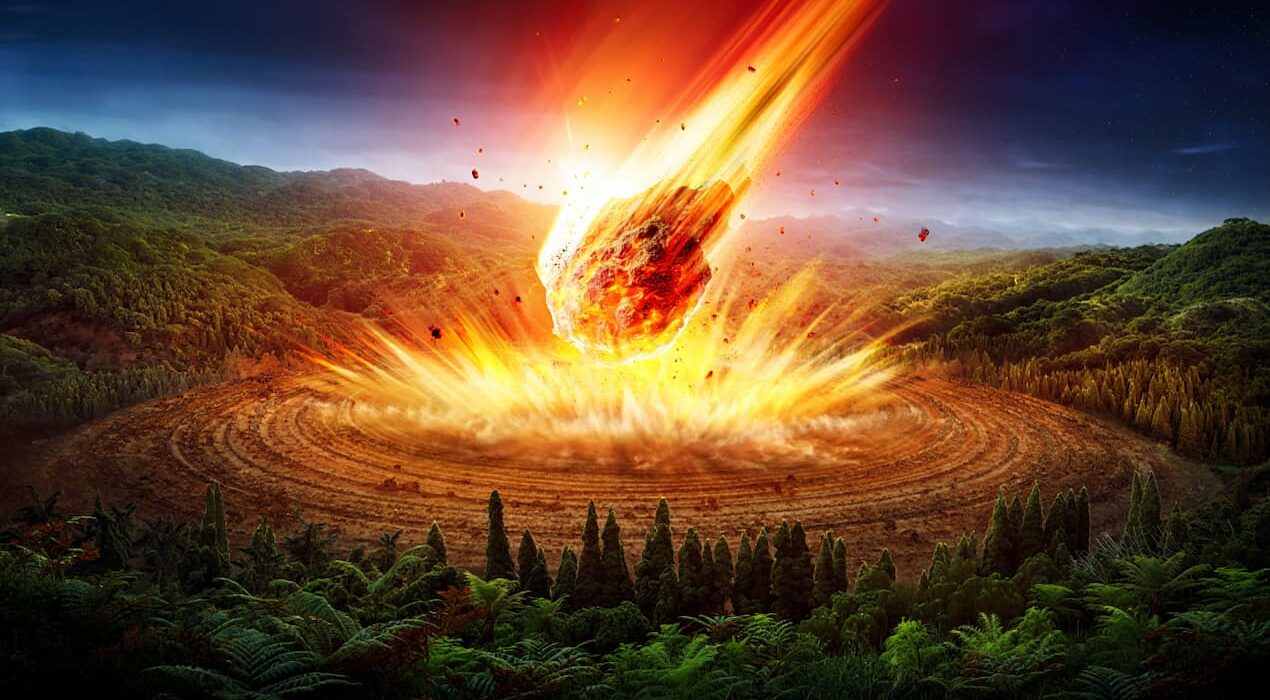
6.3 Million-Year-Old Meteor Impact in Brazil: Scientists Confirm Proof
Scientists found evidence of an ancient meteor strike in Brazil. Hundreds of glass fragments tell the story. This discovery adds a new chapter to Earth’s impact history.Researchers identified the first known tektite field in Brazil. Tektites are natural glass pieces. They form when a space object hits Earth with enormous force. The impact melts rock and throws it into the atmosphere.The glass pieces have a name: geraisites. They come from Minas Gerais state. Here, researchers first found them.The discovery team located samples in three areas of northern Minas Gerais. These include Taiobeiras, Curral de Dentro, and São João do Paraíso. The region spans about 90 kilometers.After the initial discovery, more samples appeared. Scientists found geraisites in Bahia and Piauí states too. Now, the known area stretches over 900 kilometers.Researchers collected over 600 specimens so far. The pieces vary in size. Some weigh less than one gram. The largest weighs 85.4 grams. Some pieces measure up to five centimeters long.
What the Glass Looks Like
At first glance, the fragments appear black and opaque. Hold them to strong light, though, and they change. They become translucent with a grayish-green tone.The outer surfaces are dark and pitted. Small cavities cover them. These formed when gas bubbles escaped during rapid cooling.Chemical tests confirm the impact origin. The glass contains high silica levels. It also has very low water content. This matches tektites from other parts of the world.Volcanic glass like obsidian holds more water. Tektites are much drier. This difference helps scientists identify them.
When the Impact Happened
Scientists dated the event using argon isotopes. The impact occurred about 6.3 million years ago. This was near the end of the Miocene epoch.Three different age tests gave similar results. Therefore, researchers are confident about a single impact event.Here’s the mystery: scientists haven’t found the crater yet. This is not unusual, though. Only three of six major tektite fields have known craters.The search area points to the São Francisco craton. This is an ancient, stable part of the Brazilian continent. The glass chemistry matches rocks from this region.
Why This Discovery Matters
This finding fills a gap in South America’s impact record. Only about nine large impact structures exist there. Most are much older and located in Brazil.The discovery suggests tektites may be more common than we think. They often go unnoticed. People mistake them for ordinary glass.Impacts were frequent during the early solar system. Debris scattered everywhere. Planetary orbits were unstable.Today, the system is stable. Large impacts are extremely rare. Therefore, we shouldn’t worry about frequent collisions.Researchers now work on mathematical models. They want to estimate the impact’s energy and size. As they gather more data, the full story will emerge.