Interstellar Comet 3I/ATLAS Reveals Water Signal, Scientists Discover
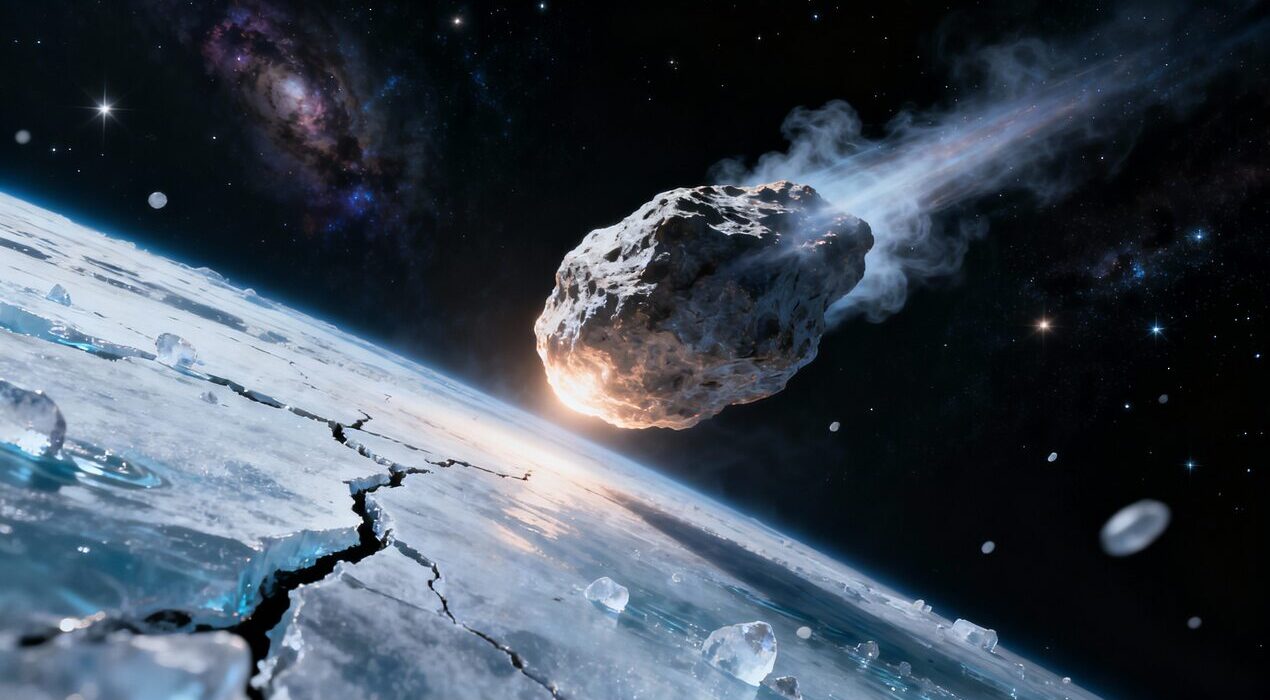
For millions of years, ice and dust drifted through deep space. This summer, that traveler reached our solar system. Scientists named it interstellar comet 3I/ATLAS. Importantly, it is only the third known interstellar comet ever observed. Therefore, every discovery about it matters.
Scientists Spot a Clear Water Signature
Researchers at Auburn University made a remarkable discovery. They detected a clear ultraviolet signal linked to water. Using NASA’s Neil Gehrels Swift Observatory, the team identified hydroxyl gas. This gas forms when sunlight breaks apart water molecules. However, Earth’s atmosphere blocks ultraviolet light. As a result, only a space telescope like Swift could see it.
Water Detection Matters
Water acts as a key reference for comet activity. In addition, it helps scientists compare chemical makeup. Until now, astronomers could not apply this standard to interstellar objects. Therefore, 3I/ATLAS opens a new way to compare planetary systems.
Swift detected water-related activity far from the Sun. At that distance, most comets remain inactive.Even so, 3I/ATLAS released about 40 kilograms of water per second. For example, that equals a fully open fire hose.Scientists believe sunlight warmed tiny icy grains. As a result, these grains released gas far from the nucleus.
A Window Into Other Star Systems
Each interstellar comet tells a different story. ‘Oumuamua appeared dry, while Borisov showed rich carbon monoxide. Now, ATLAS adds water to the list. Together, these objects reveal diverse planetary environments across the galaxy. Swift’s small telescope orbits above Earth’s atmosphere. Therefore, it detects faint ultraviolet signals with high sensitivity. The team observed the comet quickly after discovery. This timing ensured strong data before the comet faded. Although 3I/ATLAS has dimmed, it will return after mid-November. Scientists will continue tracking its activity. Ultimately, this discovery proves water exists beyond our solar system. It also hints that life’s building blocks may be widespread.