Climate Justice March Highlights Workers’ Struggles in Karachi
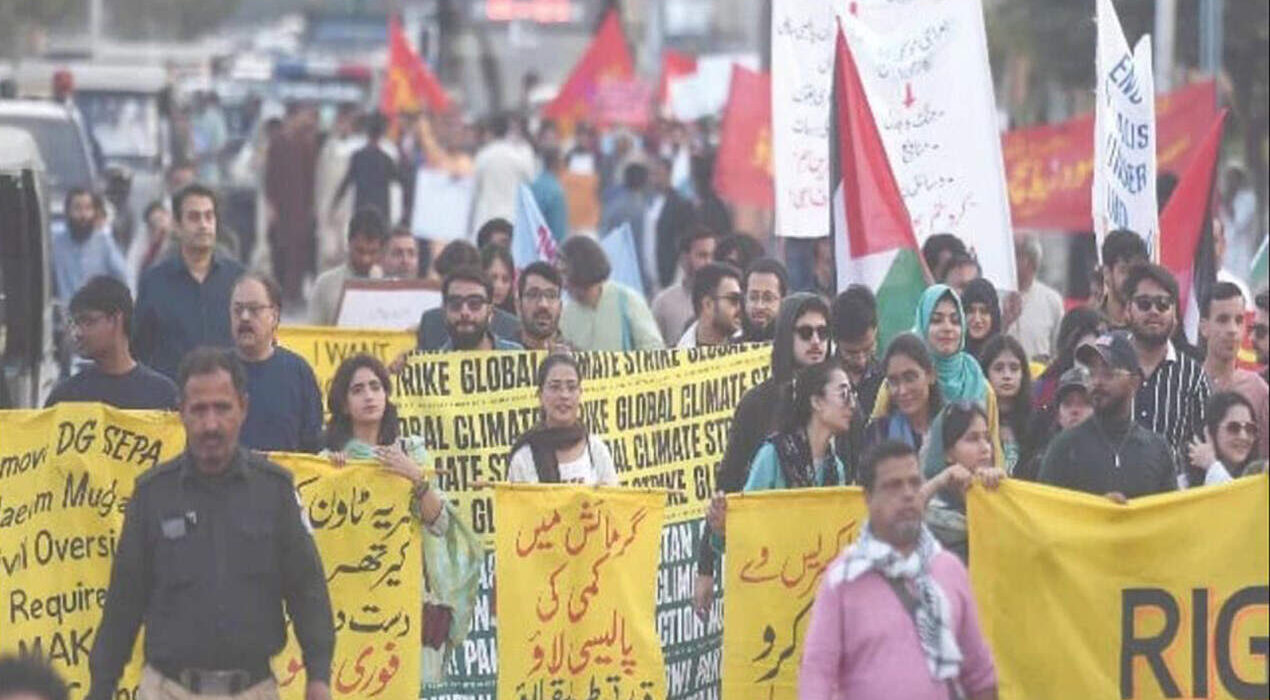
Civil society groups organized a Climate Justice March in Karachi to raise awareness about climate change. The march began at Frere Hall and moved toward the Karachi Press Club. People from all walks of life joined the walk.
Rights activists, trade union members, students, women, and children participated in large numbers. They chanted slogans, waved placards, and held banners. As a result, the march created a strong and visible call for climate action.
Protesters Demand Climate and Labour Protection
Participants displayed powerful messages during the Climate Justice March. One banner read, “There is no Planet B.” Another called for an end to coal use and protection from polluted air and wastewater. Several placards highlighted the “Right to Life.”
Some protesters lay down on the road to show symbolic resistance. One placard blamed capitalism and feudalism for climate change. In addition, several participants wore Palestinian keffiyeh scarves and carried flags to show solidarity with Palestine.
Labour leader Nasir Mansoor said climate change hits the working class the hardest. He explained that heatwaves and heavy rains displace workers and cause deaths. According to him, 70 percent of past heatwave victims came from working-class communities.
Activists Call for Clean Energy Transition
Environmental activist Yasir Darya stressed the urgent need to move away from fossil fuels. He called for electric vehicles, especially electric buses, in public transport. However, he noted that fewer than 50 electric buses operate in Karachi.
He added that Pakistan has only 300 to 400 electric buses nationwide. Most operate in Punjab, while Karachi remains underserved. Therefore, he urged the government to support local electric bus manufacturing.
Zehra Khan from the Home-Based Women Workers Federation highlighted rising heat stress in garment factories. She said workers often faint due to poor ventilation. She demanded proper cooling systems and legal heat stress leave.
Overall, speakers agreed climate action must protect workers’ rights. They urged the government to consult labour groups. Ultimately, the march called for climate justice, clean energy, and inclusive policies.