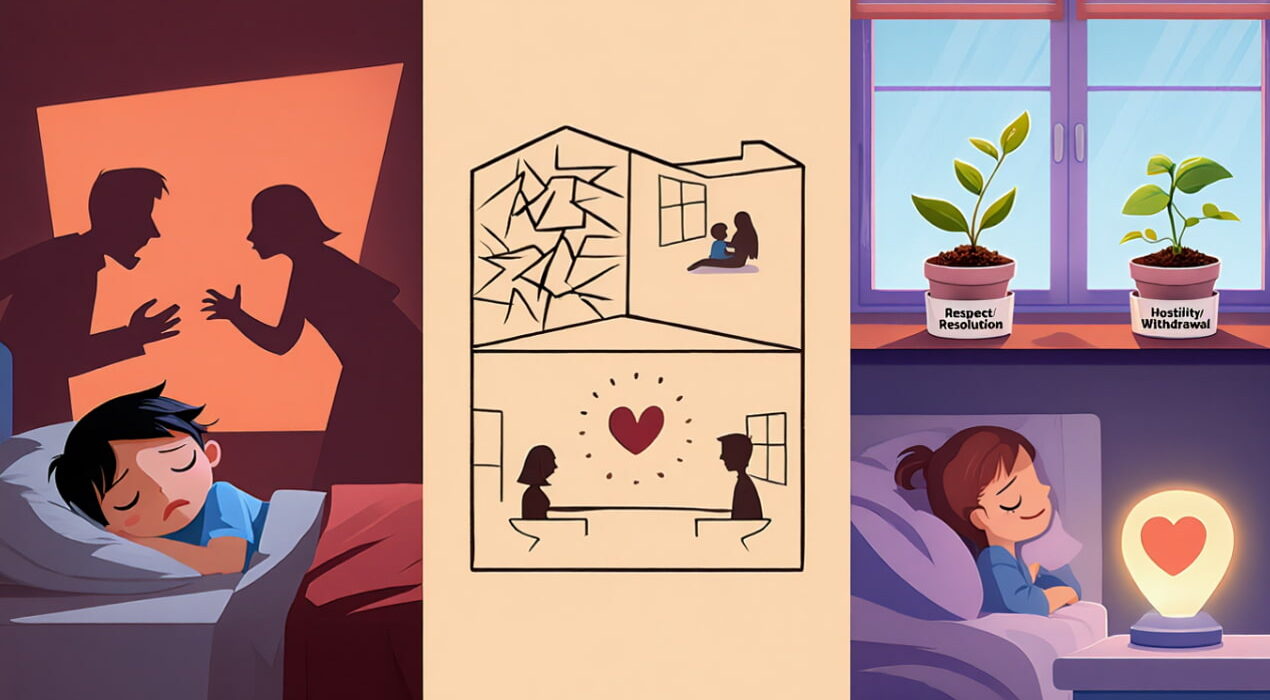
Witnessing vs. Witnessing: How Parental Conflict Shapes a Child’s Mind
The atmosphere inside a home writes the first, and often most enduring, chapter of a child’s mental health story. Extensive research now shows a clear divide in the life paths of children based on the nature of the conflict they witness between their parents.
It is not the presence of disagreement that matters, but its character. Destructive conflict leaves deep psychological scars, while constructive conflict can actually build resilience. This understanding is vital for nurturing the next generation’s well-being.
The High Cost of Hostile Homes
Children are astute observers of their parents’ emotions from a very young age, with some research indicating they can register distress as early as six months. In environments marked by frequent, hostile arguments, the impact is profound and multifaceted.
Psychological and Emotional Toll
Children exposed to destructive conflict—characterized by shouting, insults, physical aggression, or the “silent treatment”—are at significantly higher risk for a range of issues. They often internalize their distress, leading to anxiety, depression, and withdrawal. Conversely, they may externalize it through aggression, hostility, and behavioral problems at home and school. Sleep disturbances, headaches, and stomachaches are common physical manifestations of this stress.
Long-Term Developmental Consequences
The damage extends into core areas of development. These children are more likely to have poorer social skills and problem-solving abilities, which undermines their future relationships. Academically, the constant stress interferes with concentration and learning, often leading to poorer performance. Perhaps most concerningly, growing up in a high-conflict home can alter a child’s stress response system, with studies showing elevated cortisol levels that may affect brain development over time.
The Protective Power of Healthy Resolution
In stark contrast, children who see their parents disagree and then resolve their conflicts constructively receive a different education entirely. Research confirms that when conflicts are managed with respect, support, and compromise, children can benefit from witnessing them.
Building Security and Skills
Successfully resolved arguments reassure children about the stability of their family. They learn that disagreement does not mean disaster and that people can disagree and still love each other. This security is the foundation for healthy emotional development. Furthermore, by watching parents negotiate and problem-solve, children gain a template for their own future relationships, learning valuable lessons in empathy, communication, and compromise.
Key Distinguishing Factors
Experts emphasize that what separates harmful from helpful conflict is not intensity but strategy. Destructive conflict involves personal attacks, withdrawal, or unresolved tension.
Constructive conflict, however, is marked by calm discussion, a focus on the issue (not the person), and a clear resolution or compromise that children can perceive. Notably, “giving in” to end a fight (capitulation) or pretending a conflict is resolved when it is not can be more confusing and harmful for children than open hostility.
Breaking the Cycle: What Parents Can Do
The evidence is clear that supporting the parental relationship is a direct form of supporting the child. Parents can take proactive steps to mitigate harm and promote wellbeing:
1. Manage the How, Not the If: Accept that disagreements are normal. Focus on using respectful language, active listening, and avoiding destructive tactics like name-calling or stonewalling.
2. Seek Resolution in Sight: When possible, let children see the resolution. A hug, a kind word, or a simple statement like, “We were upset, but we talked it through and we’re okay,” provides crucial closure and security.
3. Provide Explicit Reassurance: If children witness a fight, especially a heated one, check in with them afterward. Explain in age-appropriate terms that the argument was not their fault and that the family is safe and intact.
4. Prioritize the Child’s World: Ensure that parental conflict does not spill over into inconsistent or hostile parenting. Maintaining warmth, structure, and a reliable relationship with at least one parent is a powerful protective factor for a child’s mental health.
5. Seek Help When Needed: If conflicts are frequent, intense, and cannot be resolved constructively, seeking guidance from a family therapist or counselor is a sign of strength. It can provide critical tools for communication and protect children from long-term harm.
The takeaway for parents is one of both caution and hope. While unchecked conflict poses a serious risk to a child’s mental health, learning to navigate disagreements in a healthy, respectful way does more than just preserve peace, it actively teaches children the emotional and social skills they need to thrive.