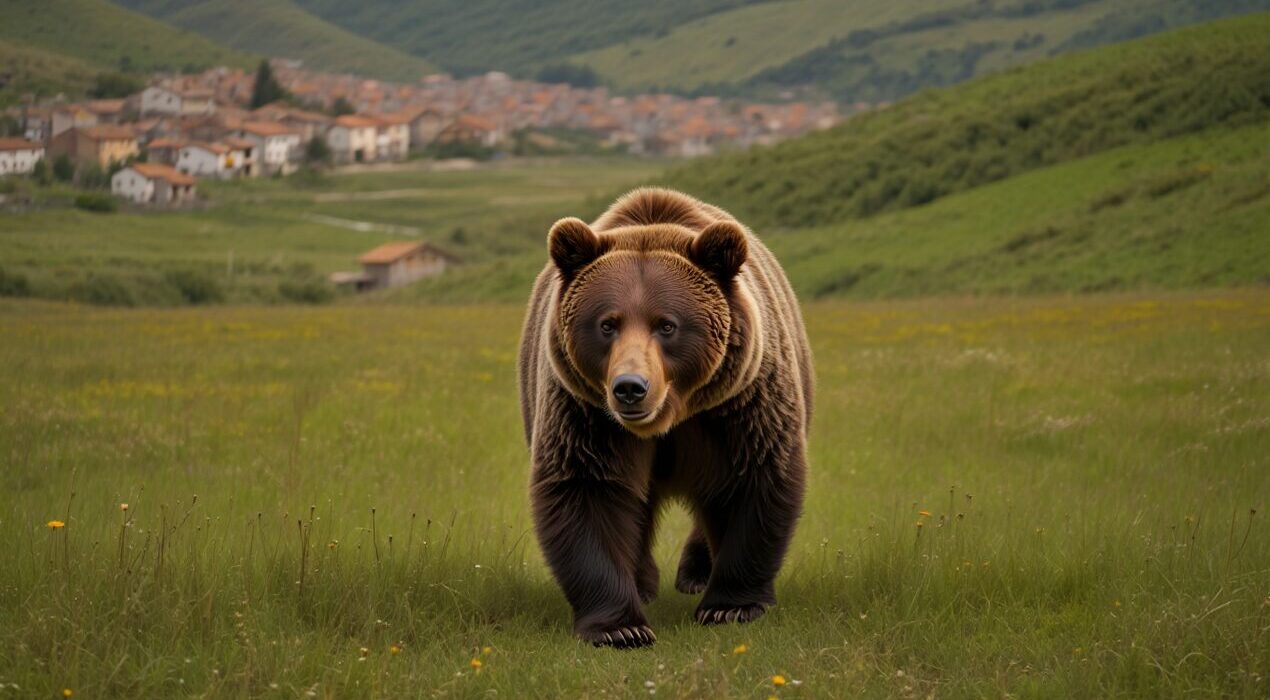
Living Near People Made These Italian Bears Smaller and Calmer, Study Finds
Living close to humans can slowly change how wild animals survive and behave. A new study shows this effect clearly in Italian brown bears. Researchers found that centuries of human presence reshaped the bears’ bodies and behavior in subtle but lasting ways.
Bears Living Near Villages Evolved Differently
Scientists studied a rare population of brown bears living in Central Italy. These bears often move near villages, farms, and human activity. As a result, they evolved differently from brown bears living in remote forests across Europe, Asia, and North America.Human activity has altered natural landscapes for generations. Forest clearing, agriculture, and settlement reduced bear habitats in Italy. Therefore, bears faced constant pressure to adapt to survive alongside people rather than avoid them.Over time, natural selection favored bears that showed calmer behavior. Less aggressive bears were more likely to avoid conflict with humans. Meanwhile, aggressive individuals faced higher risks and fewer chances to reproduce.
A Population Shaped by Isolation
The Apennine brown bear lives only in Central Italy and remains fully isolated. This population separated from other European brown bears thousands of years ago. Since then, human expansion limited movement and reduced genetic exchange.Today, these bears are smaller than most brown bears worldwide. In addition, they show distinct facial traits and less aggressive behavior. These differences make the population biologically unique.
Genetic Evidence Reveals Hidden Costs
Researchers analyzed the bears’ complete genomes and compared them with bears from Slovakia and North America. The results showed lower genetic diversity and higher inbreeding. However, scientists also identified genes linked to reduced aggression.Researchers believe humans unintentionally shaped these changes. For example, people likely removed aggressive bears in the past. As a result, calmer bears survived and passed on their genes.
Living near humans reduced dangerous encounters between people and bears. However, isolation increased extinction risk due to low genetic diversity. This highlights the complex role humans play in shaping wildlife evolution.