Did Earth Seed the Moon? How Our Planet May Have Supplied Lunar Resources
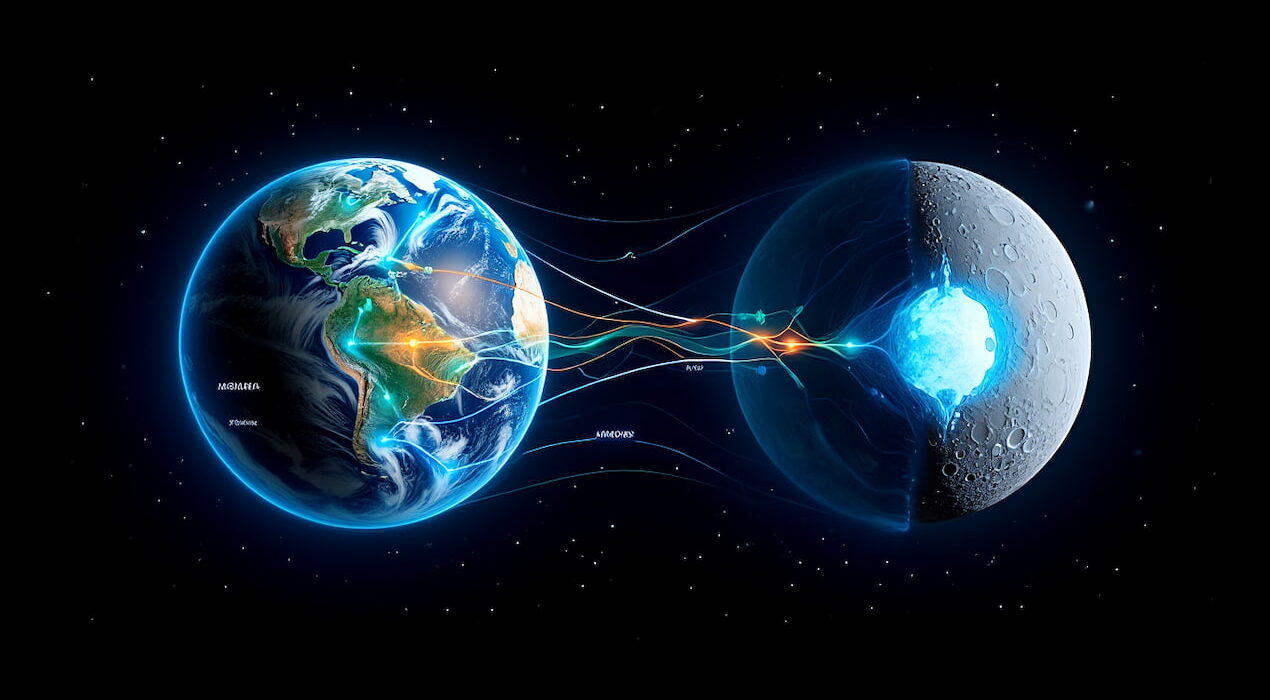
Scientists have made an exciting discovery. Earth may have been sending tiny gifts to the moon for billions of years. New research suggests our planet’s magnetic field acts like a cosmic bridge. It likely funnels particles from our atmosphere all the way to the lunar surface. This process could leave a hidden record in the moon’s soil. It might also provide crucial resources for future human explorers. Let’s explore how this incredible transfer works. The Magnetic Bridge Between Worlds. For a long time, scientists wondered how Earth material reached the moon. A new study from the University of Rochester provides an answer. It centers on our planet’s protective magnetic field. Researchers previously thought this field trapped our atmosphere. However, the opposite may be true. The solar wind can lift charged particles from Earth’s upper atmosphere. Earth’s magnetic field then guides these particles into space. Some travel along magnetic lines that stretch to the moon’s orbit. This transfer has likely occurred for much of lunar history. As a result, the moon’s soil may contain a chemical diary of Earth’s ancient air.
Evidence Buried in Lunar Dirt
Apollo mission samples from the 1970s provided crucial clues. Lunar soil contains volatile elements like water, carbon dioxide, and nitrogen. Solar wind contributes some, but not all, of these materials. The amounts of nitrogen found are particularly high. This suggests another source is at work. Researchers now believe that source is Earth’s atmosphere. Computer simulations confirmed this theory. They compared early Earth without a magnetic field to modern Earth with one. Surprisingly, particle transfer to the moon is more efficient today. Our magnetic field actually helps the process.
A Time Capsule and a Toolbox
This discovery has two major implications. First, the moon may preserve a billion-year record of Earth’s changing atmosphere. Studying lunar soil could teach us about our own planet’s climate history.Second, these transferred particles are practical resources. Elements like water and nitrogen are essential for human survival. If naturally present on the moon, they could support future bases. Astronauts might use them for air, water, and even growing plants.This research also helps us understand other planets. For example, it may explain how Mars lost its atmosphere over time. Ultimately, it shows how connected our cosmic neighborhood truly is.