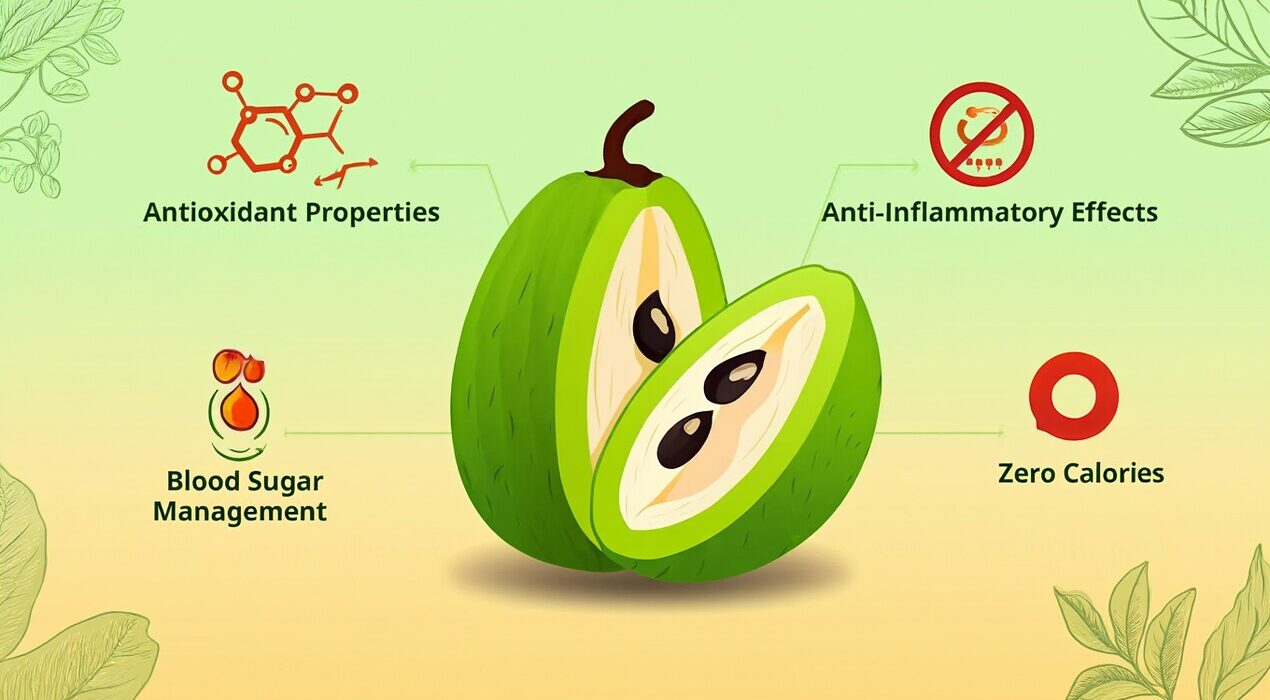
Monk Fruit Benefits: More Than Just a Natural Sweetener, Science Reveals
Monk fruit is more than a natural sweetener. Recent research reveals its hidden health potential. Scientists are now looking closer at this unique fruit.Monk fruit, or Luo Han Guo, is a vine from China. It belongs to the gourd family. For centuries, people used it in traditional remedies. Today, science confirms its value. The fruit is packed with powerful antioxidants. These compounds protect your cells from damage. Therefore, they may help fight aging and disease.
A Treasure Trove of Healthy Compounds
New findings highlight the fruit’s bioactive ingredients. Importantly, these are found in both the peel and pulp. The key groups are terpenoids, flavonoids, and amino acids.Terpenoids often have anti-inflammatory effects. Flavonoids are known for supporting heart health. Amino acids are essential for body repair and immunity. Together, they make monk fruit a nutritional powerhouse.
How Monk Fruit Benefits Your Body
These compounds do more than just exist. They actively interact with your body’s systems. For example, they bind to specific cell receptors. This interaction triggers helpful biological pathways. As a result, it can influence metabolism and reduce inflammation.
Not All Monk Fruit Is the Same
Researchers studied four different varieties. Each one had a unique chemical profile. This means benefits can vary. In addition, it affects how we use the fruit in foods and supplements. Understanding these differences is crucial for future products.Monk fruit is famous as a zero-calorie sweetener. However, it offers much more. Its rich mix of antioxidants and plant metabolites provides real health potential. Scientists continue to explore its full benefits. So next time you see monk fruit, remember it’s a sweet gift with hidden strengths.