Kashmir Unveils Ancient Treasures, Positioning Itself as a Premier Geo-Tourism Destination
Kashmir is expanding its world-famous tourism identity beyond its lakes and mountains. The region is now actively promoting its deep geological heritage—a record of Earth’s history spanning over 2.5 billion years—to establish itself as a leading destination for sustainable geo-tourism.
This new focus was catalyzed by a landmark decision in October 2025, when the Geological Survey of India (GSI) declared Guryul Ravine near Khunamuh as a National Geoheritage Site. This ravine preserves one of the world’s most complete records of the Permian–Triassic mass extinction, known as “The Great Dying,” which occurred 252 million years ago.
A Valley Rich in Ancient Life and Earth History
Kashmir’s valley holds an almost complete geological record. In recent years, significant fossil discoveries have been made not just by scientists, but by teachers, students, and locals during treks. Public reporting via mobile phones has renewed interest in these ancient sites.
A major recent discovery at Saskhudan Kapran in Anantnag includes the first Jurassic ammonoids found in the region. These fossils, from about 150 million years ago, provide crucial insights into the evolution of marine life and the paleogeography of the ancient Himalayas.
Building a Framework for Sustainable Geo-Tourism
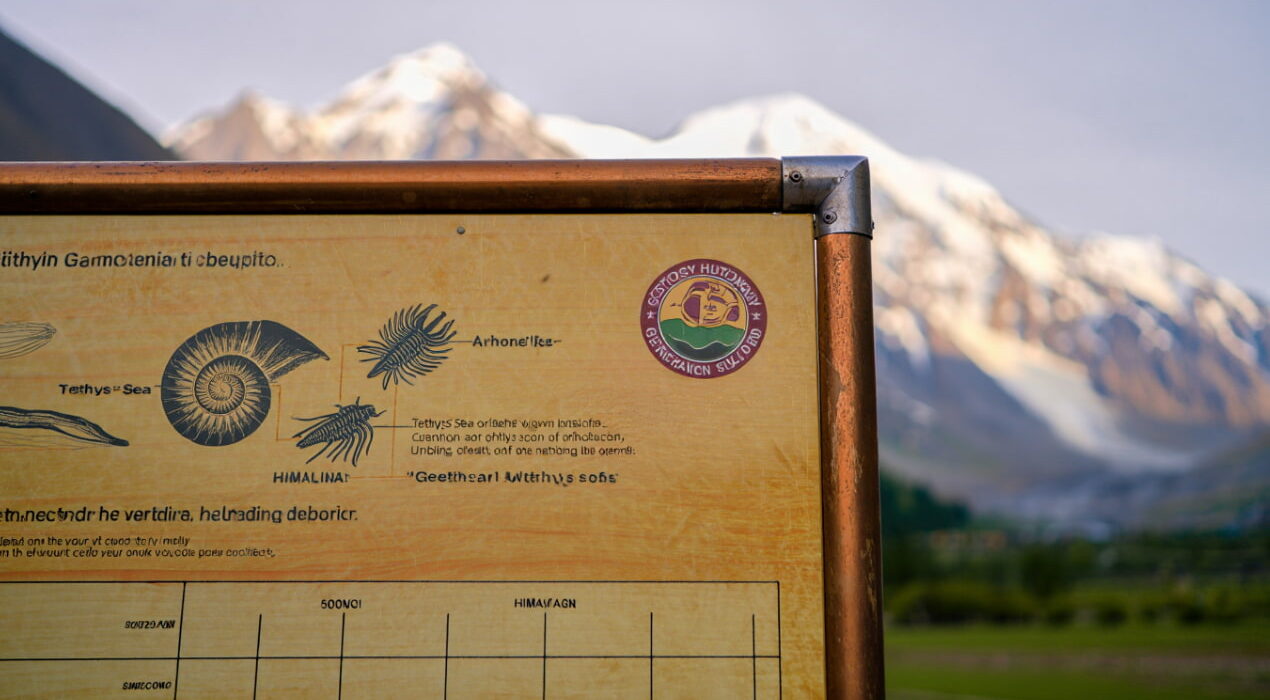
Following Guryul Ravine’s designation, three more sites in Anantnag district—Halsidar, Saskhudan Kapran, and Maswati Narsanger—have been granted protected geo-heritage status. Authorities are installing informational signage and documenting sites across the valley.
The strategy’s strength lies in integration. Most of these geological sites are located along existing popular tourist routes to destinations like Pahalgam and Sonamarg. By adding them to tourism maps and itineraries, Kashmir can diversify visitor experiences, extend stays, and reduce pressure on overcrowded spots without requiring entirely new infrastructure.
A Collaborative Vision for the Future
Success depends on collaboration between the Tourism Department, GSI, Forest Department, archaeologists, and local communities. The goal is to develop guided geo-trails and protect these irreplaceable sites while creating new educational and livelihood opportunities.
As Dr. Riyaz Ahmad Mir, a former senior geologist with GSI, states, protecting these geological treasures is about “safeguarding the story of Earth.” With coordinated effort, Kashmir has the potential to become a model for sustainable, knowledge-based tourism in the Himalayas.