Urban Planning Crisis: Illegal Construction Reshapes Karachi
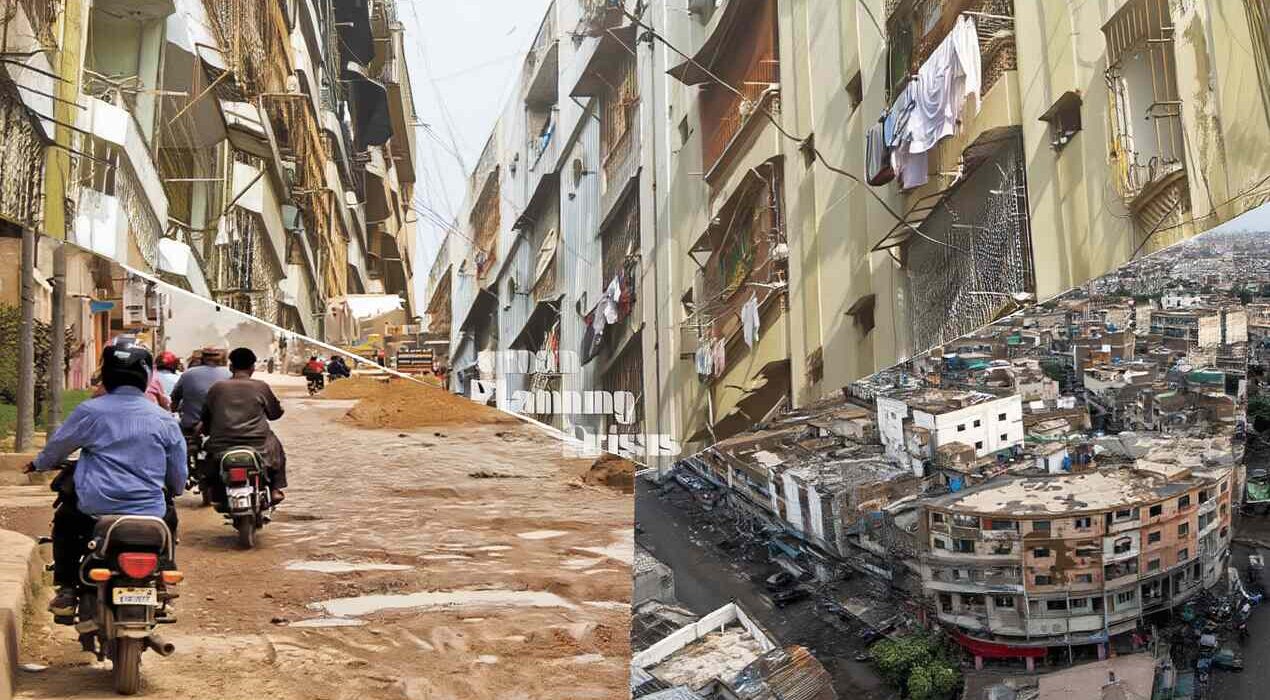
The urban planning crisis has deeply affected Karachi, Pakistan’s largest economic hub. Illegal construction has changed the city’s skyline and strained public services. As a result, housing prices and rents continue to rise, while basic facilities fail to meet demand. However, the core issue is not limited funding. Instead, weak coordination and fragmented authority drive this growing crisis.
Karachi operates under dozens of governing bodies, which complicates every development decision. Therefore, planning efforts often face delays and conflicts. For example, one agency repairs a road, while another digs it up days later to lay utility lines. This lack of coordination disrupts daily life and reduces trust in public institutions.
Divided Land Control and Weak Governance
More than 24 institutions control Karachi’s land, including provincial, federal, and defense-related authorities. In addition, over 30 agencies manage civic services across the city. Consequently, no single institution holds complete responsibility for urban planning. Experts argue that this divided control prevents long-term development and encourages unmanaged growth.
Urban planners emphasize that Karachi needs a central authority to oversee land use and planning. Without unified control, playgrounds disappear and commercial buildings replace residential spaces. As a result, community life suffers and public infrastructure weakens. Data also shows that government bodies control most of the land, while private ownership remains minimal, which discourages organized investment.
Illegal Construction and Systemic Corruption
Although construction laws exist, enforcement remains weak due to alleged corruption. This failure allows illegal construction to spread rapidly across many neighborhoods. Builders often secure approval for limited structures but later add extra floors in violation of regulations. Consequently, Karachi continues to expand vertically without planning.
Reports suggest that informal payments play a key role during construction. Multiple agencies allegedly enable these practices through fake permits and weak oversight. As a result, water, sewage, and power systems face constant pressure. Experts agree that authorities must centralize land records and planning powers. Without this reform, the urban planning crisis will continue to threaten Karachi’s future.