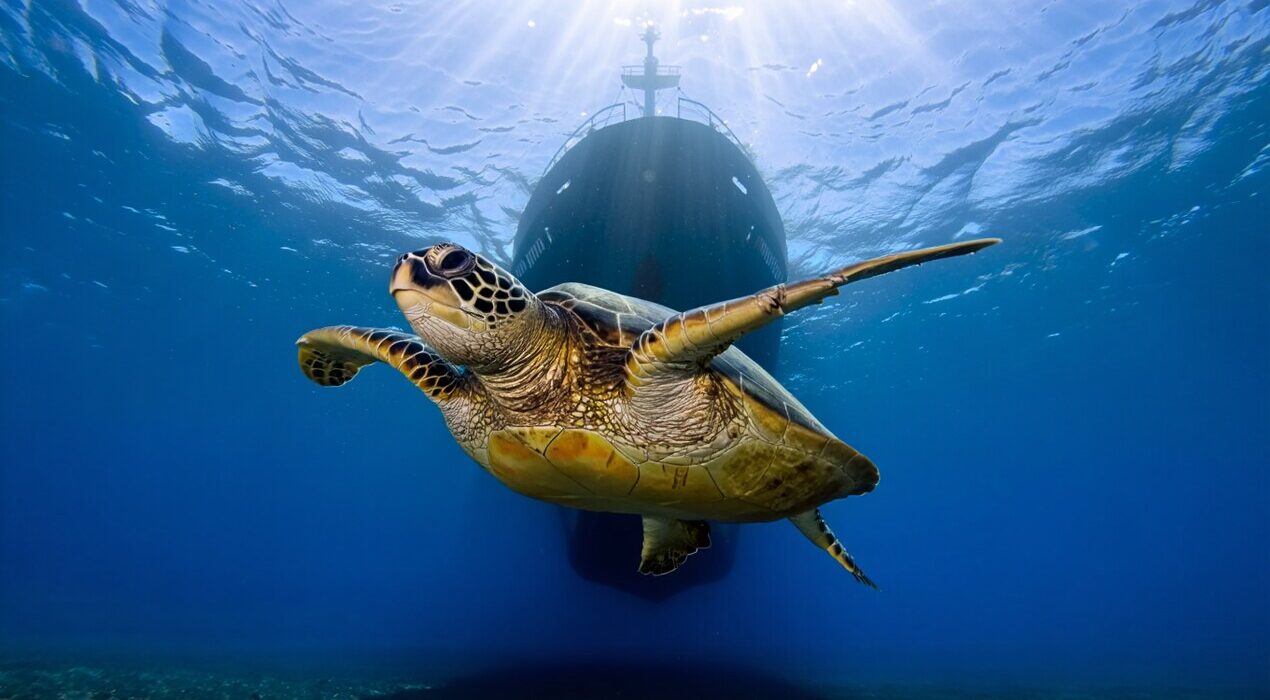
Endangered Sea Turtles Are Highly Sensitive to Noisy Ship Traffic, Study Finds
Rare sea turtles may sense underwater noise just like we do. Humans flood the ocean with sound from ships and industry. New research shows these turtles hear it clearly. Kemp’s ridley sea turtles are critically endangered. They live along North America’s busy East and Gulf Coasts. Therefore, they share waters with major shipping routes.
Why Human-Made Ocean Noise Is a Problem
Sea turtles face many known threats. These include fishing gear, plastic pollution, and boat strikes. However, scientists knew less about noise pollution.The turtles rely on sound to navigate their environment. Low-frequency noises travel far underwater. Unfortunately, ship engines produce these same rumbling tones.
How Scientists Tested Turtle Hearing
A research team conducted a hearing study. They came from Duke University, NOAA, and NC State. Their work appeared in The Journal of the Acoustical Society of America.The team used noninvasive sensors on the turtles’ heads. This measured their auditory nerve responses. Turtles heard sounds from 50 to 1,600 hertz.The results were revealing. Turtles were most sensitive around 300 hertz. This frequency overlaps directly with industrial and vessel noise.
What This Sensitivity Means for Conservation
“This finding highlights a key concern,” said author Charles Muirhead. It does not confirm immediate harm. However, it signals a need for focused study and monitoring.The turtles’ hearing range matches human-made noise. This could affect their behavior and navigation. Consequently, conservation plans must consider sound pollution.
Scientists plan to observe turtles in real ocean conditions next. They will connect lab data with actual behavior in the wild.
This research aims to support evidence-based management. The goal is balancing human activity with turtle protection. “These efforts will help minimize unintended impacts,” Muirhead stated.