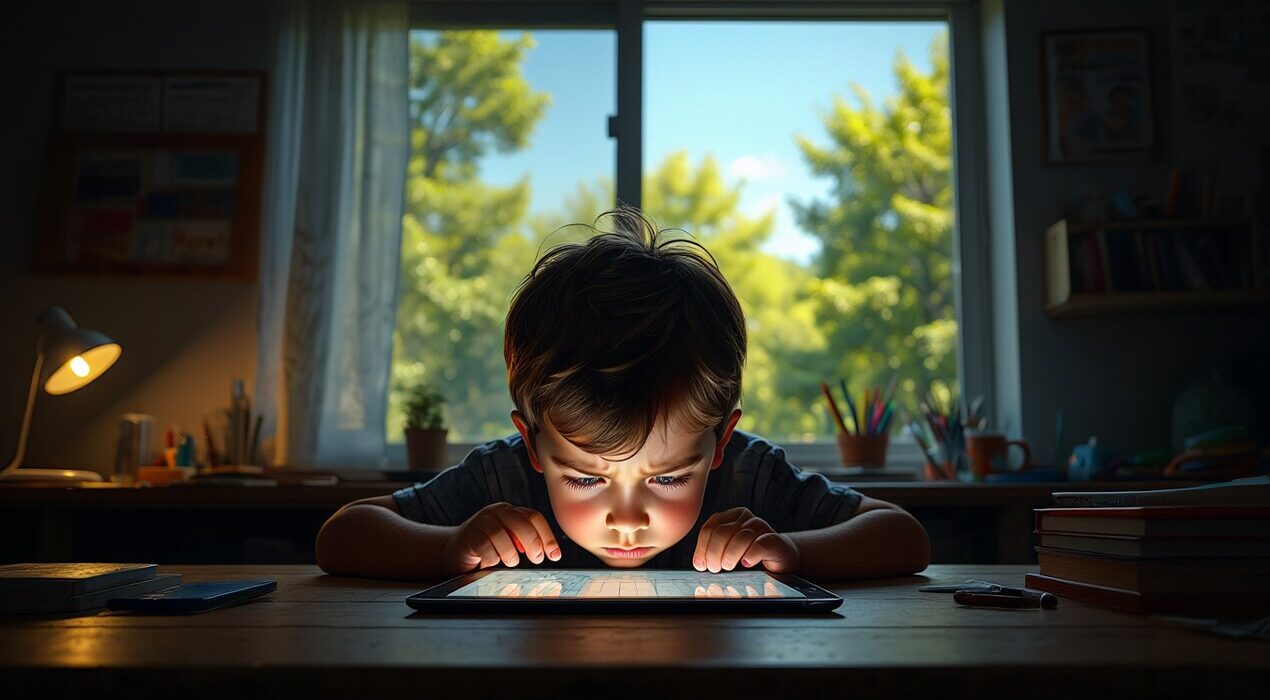
Dim Indoor Light May Drive Nearsightedness Epidemic, Study Finds
New research challenges everything we thought about nearsightedness. Scientists now believe dim indoor light may be the real culprit behind the myopia epidemic, not just screens.Myopia rates have exploded worldwide. Nearly 50% of young adults in the US and Europe are now nearsighted. In parts of East Asia, that number approaches 90%. For years, we blamed smartphones and computers. However, the real cause may be more subtle.
The Hidden Danger in Your Home
Researchers at SUNY College of Optometry propose a new theory. They suggest that extended close-up focus in dim lighting strains our eyes in unexpected ways.Here’s what happens: When you concentrate on nearby objects in low light, your pupils constrict. This reaction reduces how much light reaches your retina. As a result, retinal activity may weaken. This disruption can trigger changes that lead to nearsightedness.”The combination is key,” explains Dr. Jose-Manuel Alonso, senior author of the study. “Sustained near work indoors limits retinal illumination in ways bright outdoor light does not.”
Why Bright Outdoors Light Matters
In bright sunlight, your pupil constricts too. However, it does so because of brightness, not focusing distance. This means ample light still reaches the retina.The difference is crucial. When you read indoors under dim light, your pupil narrows to sharpen the image. This significantly cuts retinal illumination. Over time, this may drive myopia progression.
Simple Ways to Protect Your Vision
The findings offer practical solutions. You can reduce your risk by:Spending more time outdoors in natural light,Taking frequent breaks during close-up work,Ensuring your home has bright, adequate lighting,Using multifocal lenses if recommended by your eye doctorThe researchers emphasize this is not the final answer. However, it provides a testable hypothesis grounded in measurable physiology.”The theory connects many pieces of existing evidence,” says doctoral student Urusha Maharjan. “It gives us new ways to think about prevention.”Remember: screens aren’t the enemy. The real issue may be how and where we use them. Bright light matters more than we ever realized.