190-Million-Year-Old ‘Sword Dragon’ Fossil Rewrites Ichthyosaur History
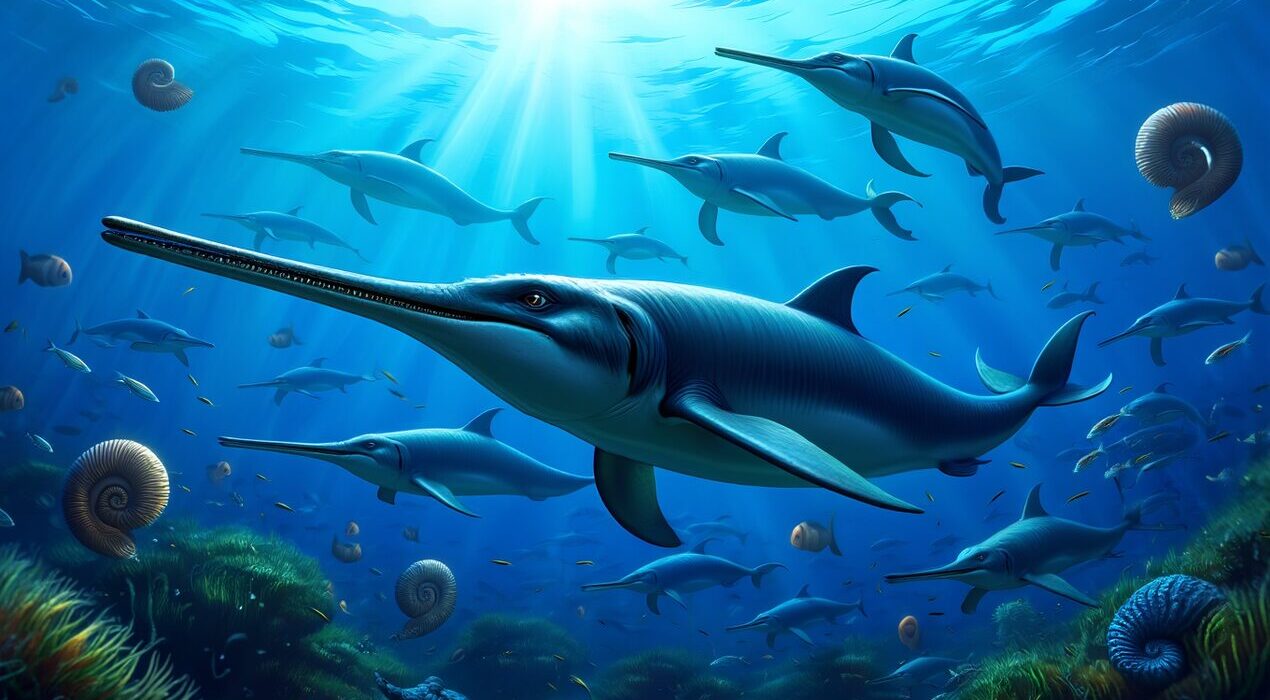
A stunning discovery along the UK’s Jurassic Coast is changing what we know about prehistoric ocean life. Scientists have identified a new species of ichthyosaur from a remarkably complete skeleton. They nicknamed it the “Sword Dragon of Dorset.”The dolphin-sized marine reptile lived about 190 million years ago. It measured roughly three meters long. Its most striking feature is an elongated, sword-like snout. Researchers believe it used this snout to hunt fish and squid.This discovery marks the first new genus of Early Jurassic ichthyosaur from the region in over 100 years. The fossil helps close a major gap in our understanding of these ancient creatures
Meet the Sword Dragon of Dorset
Chris Moore, a local fossil collector, found the specimen near Golden Cap in 2001. The skeleton preserved in nearly perfect three-dimensional detail. It includes a skull with a huge eye socket and possible traces of its last meal.Dr. Dean Lomax from The University of Manchester led the research team. “I remember seeing the skeleton for the first time in 2016,” he says. “I knew it was unusual, but I did not expect it to play such a pivotal role.”The team named the creature Xiphodracon goldencapensis. The name comes from Greek words for “sword” and “dragon.” It honors the long history of calling ichthyosaurs “sea dragons.”
A Missing Piece of the Puzzle
Ichthyosaurs from this time period are extremely rare. Scientists have found thousands of complete skeletons from before and after. However, the species look completely different from each other.This puzzled researchers for years. Something caused a major shift in ichthyosaur diversity. But no one knew exactly when it happened.Xiphodracon provides the answer. It shows clear links to later species. This means the evolutionary turnover occurred much earlier than scientists thought.”We still don’t know why this change happened,” says co-author Professor Judy Massare. “But Xiphodracon helps determine when it occurred.”
Clues to a Violent End
The fossil also tells a dramatic story about life in Jurassic seas. Several limb bones and teeth show abnormalities. These suggest the animal suffered serious injury or illness while alive.The skull holds even more shocking evidence. It bears clear bite marks from a much larger predator. Another giant ichthyosaur likely killed this Sword Dragon.”Life in the Mesozoic oceans was a dangerous prospect,” explains co-author Dr. Erin Maxwell.The Royal Ontario Museum in Canada now houses the fossil. It will soon go on public display. Visitors can finally meet this remarkable “sea dragon” that helped rewrite prehistory.