Korea Launches Half-Price Travel Scheme to Boost Rural Tourism
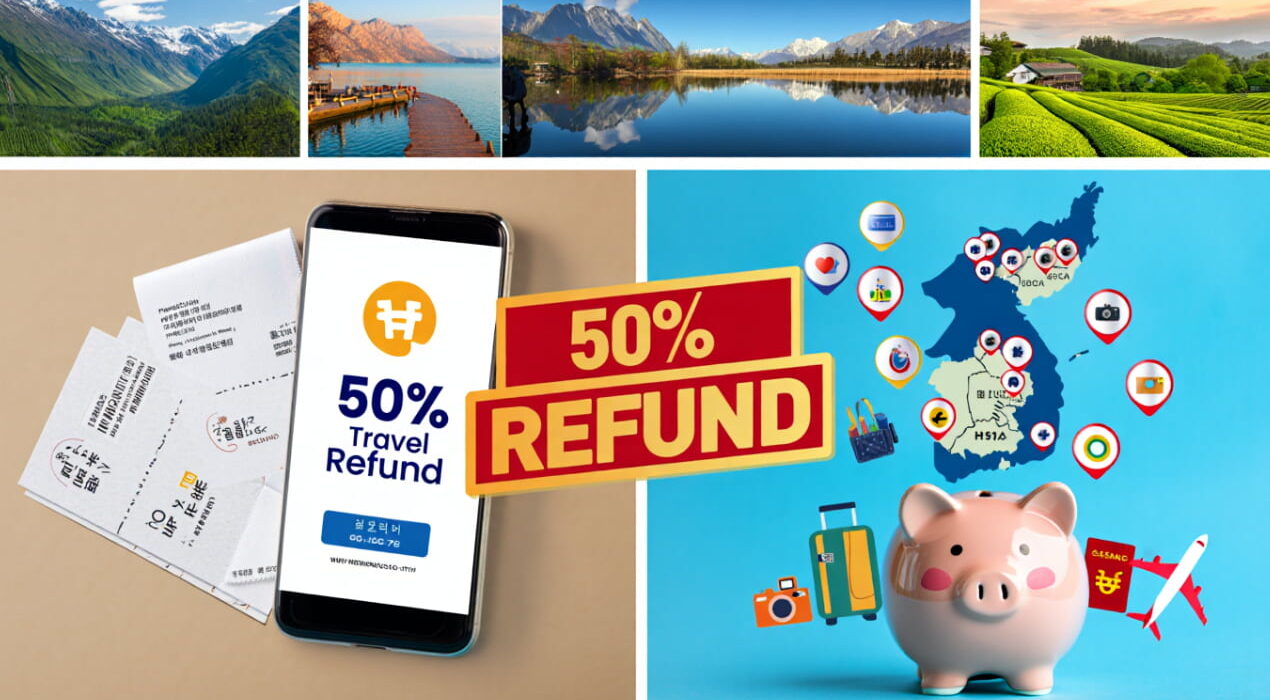
The Korean government is launching a “half-price travel” initiative. It will reimburse half of travelers’ expenses. Visitors must visit designated rural regions facing population decline. The program starts in April and runs through June.
How the Program Works
Visitors to 16 selected localities will receive 50 percent back. Refunds come as mobile regional gift certificates. Any Korean citizen aged 18 or older can apply. Travelers must submit a travel plan to a participating municipality in advance. After the trip, they claim reimbursement with receipts and proof of expenditure.
Upon approval, half of the verified costs are refunded. Individuals can receive up to 100,000 won. Groups of two or more can get up to 200,000 won. The vouchers must be used by the end of this year. They work at local partner shops or online marketplaces selling regional specialties.
Selected Regions for the Pilot
The Ministry of Culture, Sports, and Tourism chose 16 local governments. The selected areas span multiple provinces:
Gangwon Province: PyeongChang, Yeongwol, Hoengseong
North Chungcheong: Jecheon
North Jeolla: Gochang
South Jeolla: Gangjin, Yeonggwang, Haenam, Goheung, Wando, Yeongam
South Gyeongsang: Miryang, Hadong, Hapcheon, Geochang, Namhae
Budget and Future Plans
The program has a total budget of 6.5 billion won. Each municipality will complete preparatory measures before launching. Specific details like application schedules may differ by location. Therefore, participants should check the Korea Tour website (visitkorea.or.kr) or local government sites for guidance.
The ministry plans to expand the scheme later this year. It will add four more local governments to the program. Based on pilot results, participation will gradually broaden nationwide from next year onward.
Official Statement
Culture Minister Chae Hwi-young shared the initiative’s goals. “This aims to refine successful local models that can spread across the country,” he said. The hope is to breathe new life into regions struggling with depopulation. It also offers citizens an affordable and rewarding travel experience through close collaboration with local governments.