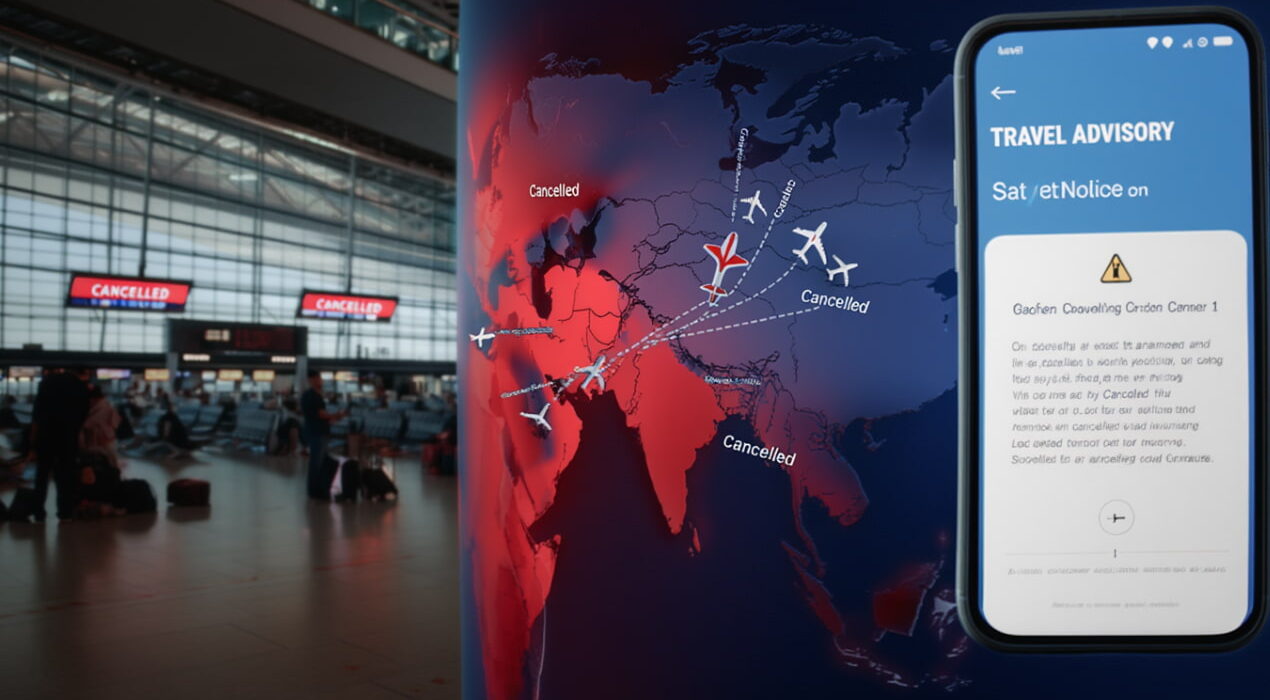
Gulf Carriers Resume Some Flights Amid Middle East Travel Chaos
Several Gulf airlines have resumed a limited number of flights. This offers some relief for travelers caught in widespread airspace closures. Etihad Airways, Emirates, and FlyDubai announced select operations on Monday. However, the situation remains highly volatile after recent strikes involving the U.S., Israel, and Iran.
Limited Operations Resume
Dubai’s government advised passengers to head to airports only if contacted directly. More than 80% of flights to and from Dubai remained canceled. Over half of Abu Dhabi’s flights were also still grounded. At least 15 Etihad flights departed from Abu Dhabi on Monday. These evacuation flights headed to destinations like Islamabad, Paris, and London. Regular commercial flights, however, stayed canceled.
Emirates planned to operate limited flights from Monday evening. FlyDubai scheduled four departures and five arrivals for the day. The airline stated it is working closely with authorities for a gradual return to operations.
Widespread Travel Disruption
The conflict, which started on Saturday, stranded travelers across multiple countries. Dubai, Abu Dhabi, and Doha’s airports are major global hubs. They connect Europe, Africa, and Asia. Iranian strikes directly hit all three airports over the weekend. Therefore, transit passengers also found themselves stuck.
An Indian tech entrepreneur was on a Qatar Airways flight to Barcelona. His plane was forced to turn around. He is now one of many stranded in Doha. “I don’t think going to Barcelona is on my mind anymore,” he said. Qatar Airways flights remain suspended.
Governments Scramble to Help Citizens
Nations worldwide are working to bring their citizens home. More than 58,000 Indonesians were stranded in Saudi Arabia. They were visiting holy sites for Umrah during Ramadan. Indonesia’s government called it an urgent humanitarian issue.
About 30,000 German tourists were stranded on cruise ships and in hotels. Germany plans to send planes to Oman and Saudi Arabia. They will evacuate ill travelers, children, and pregnant people. The German Foreign Minister urged tourists to remain at their hotels. They should not try to reach airports on their own.
The Czech Republic is sending planes to Egypt and Jordan. They will bring home Czech nationals. Around 6,700 Czechs are in the region. Britain is preparing for all options, including possible evacuation. More than 102,000 Britons have registered their presence with the U.K. government.
Impact on Travel Industry
The conflict has severely affected the travel sector. U.S. airlines issued advisories as global transportation was upended. United, Delta, and American airlines all saw shares slide 5% to 6%. Global hotel chains and cruise lines also tumbled.
The Gulf’s economies depend heavily on steady flights. They carry tourists, resident workers, and cargo. Airlines like Emirates and Qatar Airways turned their hubs into the world’s busiest airports. Dubai International Airport handled a record 95.2 million passengers last year. It remains the world’s busiest for international travel.
What Travelers Should Do
The situation remains dynamic and unpredictable. Affected passengers should monitor airline communications closely. They should only go to airports if contacted directly. Governments recommend staying at booked accommodations. Travelers should not attempt to reach neighboring countries independently.