Jupiter’s Icy Moons: Did They Form with Life’s Building Blocks?
Jupiter’s largest moons might be hiding a secret. New research shows they may have formed with life’s essential ingredients. This changes our understanding of where life can begin.
A Surprise About Icy Worlds
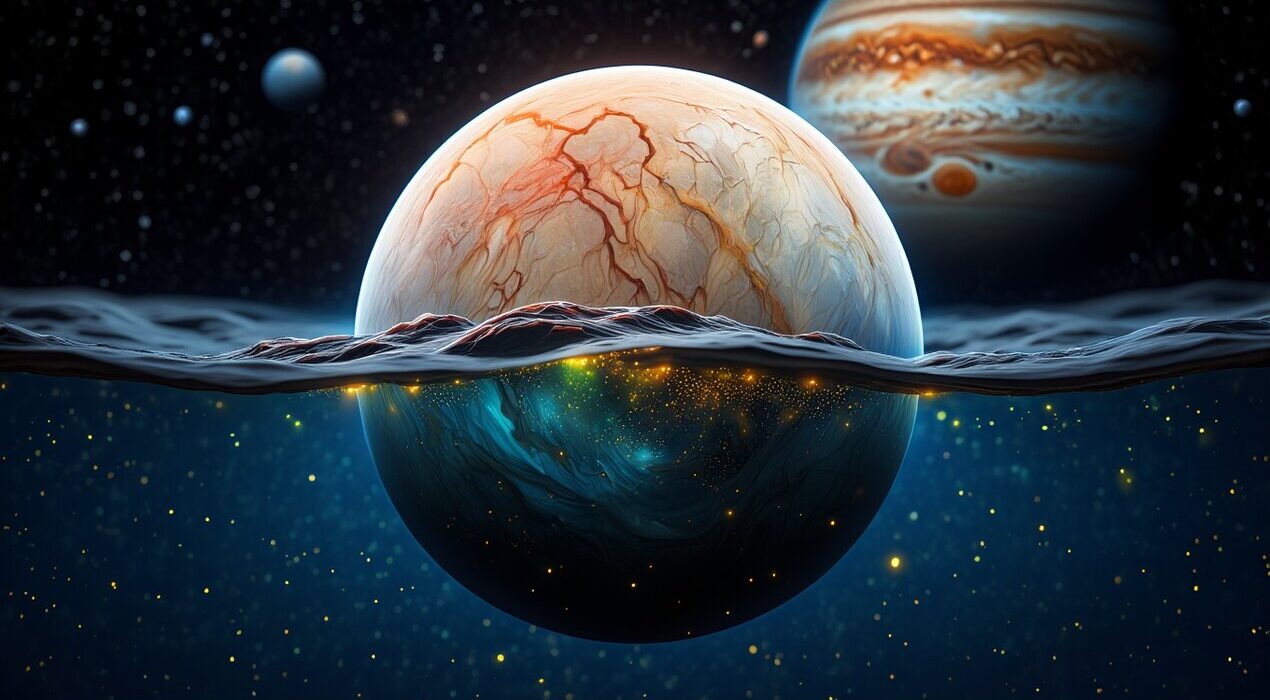
Scientists focused on three specific moons. They are Europa, Ganymede, and Callisto. These worlds are covered in ice. However, beneath that ice, vast oceans may exist.For years, experts believed these oceans formed later. They thought comets brought water and chemicals. But a new study challenges this idea. Researchers from France, the US, and Japan led the work.They used data from NASA’s Juno spacecraft. They also looked at results from the European Space Agency’s Herschel telescope. The findings suggest a different story.
Ingredients from the Start
study proposes that the moons formed slowly. They formed from tiny pebbles in Jupiter’s early orbit. These pebbles contained ice and carbon. As a result, the moons inherited these materials.
Therefore, the oceans were not a later addition. They were present from the very beginning. The water and carbon compounds were always there. These are the basic building blocks for life as we know it.This means the conditions for life existed early on. It also means the subsurface oceans might be rich in carbon. For example, amino acids and other organic molecules could be common.
A New Focus for Exploration
This research has big implications. It changes the priority for future missions. NASA’s Europa Clipper is already on its way. It will search for habitable conditions. The European Space Agency’s JUICE mission will study Ganymede.Instead of just looking for water, they can look for carbon. The study suggests life’s raw materials are readily available. It makes the case for habitability much stronger.
Consequently, the odds of finding life in our solar system increase. We are not just looking for a place that could support life. We are looking at places that likely already have the right tools. Jupiter’s moons are suddenly even more fascinating.