First Polio Case 2026 Reported in Sindh
Pakistan’s National Emergency Operations Centre for Polio Eradication (NEOC) confirmed the first wild polio case of 2026. The patient is a four-year-old child from Bello Union Council in Sindh’s Sujawal District. Health officials reported the case through the polio surveillance network and confirmed it at the National Institute of Health (NIH), Islamabad.
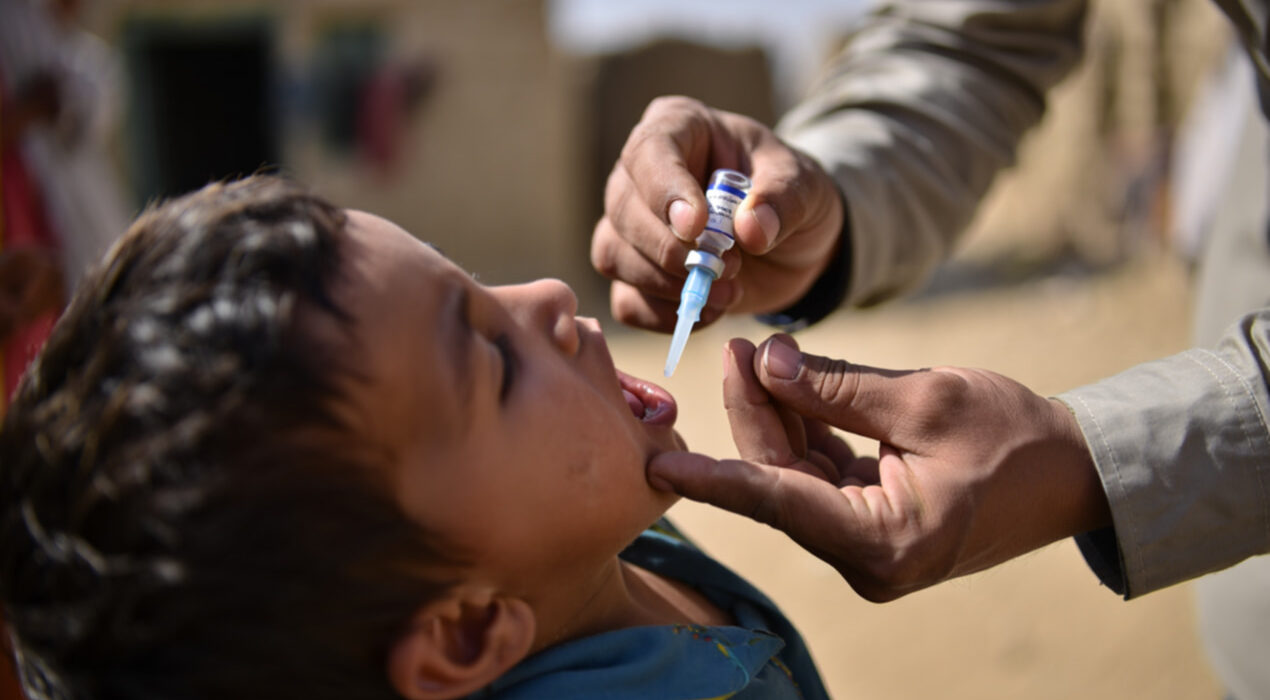
Polio is a highly infectious disease that can cause lifelong paralysis. Vaccination remains the only effective protection. Children under five need repeated doses of the oral polio vaccine during each campaign, along with routine immunizations. Parents are urged to ensure every child receives all recommended doses.
Ongoing Vaccination Efforts
The Polio Eradication Initiative (PEI) continues to analyze strategies to stop virus transmission. In 2026, over 45 million children were vaccinated nationwide. The next campaign is scheduled for April. In 2025, PEI conducted five nationwide campaigns and targeted rounds of oral and injectable vaccines. These efforts integrated with the national routine immunization programme to maximize coverage.
Since 1994, Pakistan has reduced polio cases by 99.8%, from an estimated 20,000 to just 31 in 2025. Despite this success, virus circulation persists in high-risk areas, including Sindh and southern Khyber Pakhtunkhwa. This highlights the ongoing need for consistent, targeted vaccination campaigns.
Collective Responsibility to Eradicate Polio
NEOC emphasizes that polio eradication is a shared responsibility. Frontline health workers ensure vaccines reach children, but parents, caregivers, and communities play a key role. Religious leaders and media outlets also help by promoting vaccination and countering misinformation. Pakistan, along with Afghanistan, remains one of the last countries where polio is endemic. Refusals continue to reduce coverage slightly, but nationwide efforts aim to protect every child from lifelong disability or death.