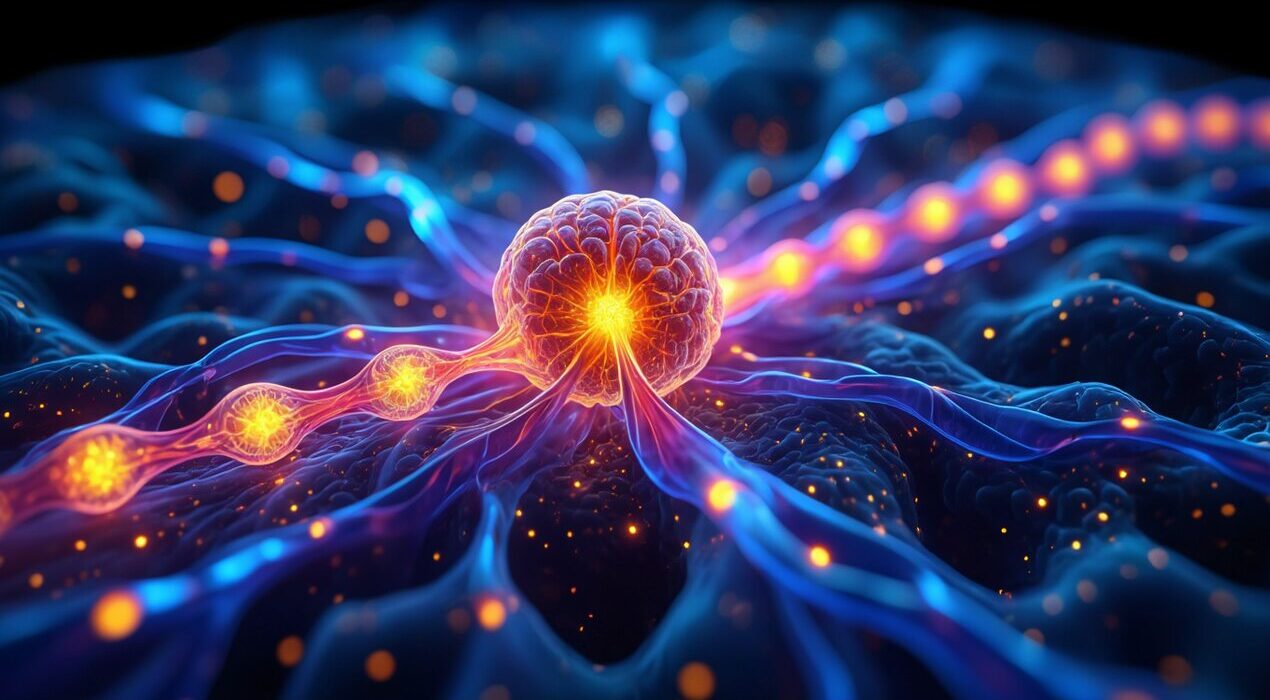
Scientists have discovered a surprising new clue about autism. A tiny molecule in the brain might set off a harmful chain reaction. This process could explain how some forms of autism develop.
The Brain’s Helpful Messenger Turns Harmful
Nitric oxide usually acts as a quiet helper in the brain. This small molecule slips between cells and fine-tunes communication. Think of it as a traffic light keeping signals flowing smoothly.
However, new research shows a different story. In some forms of autism, nitric oxide levels rise too high. When this happens, it stops acting like a helpful signal. Instead, it becomes a “stuck button” that won’t turn off.
The Biochemical Domino Effect
This triggers a specific chain reaction inside brain cells. The excess nitric oxide attaches to a protective protein called TSC2. This chemical tag marks TSC2 for destruction.TSC2 normally acts as a critical brake. It controls the mTOR pathway, which manages cell growth and protein production. When TSC2 disappears, the brake weakens significantly. As a result, mTOR surges into abnormal overdrive. This disruption affects how neurons function and communicate. The cellular system essentially loses its balance.
Promising Signs for Treatment
Here’s the encouraging part. Researchers found they could interrupt this process. When they reduced nitric oxide production in neurons, the system calmed down. In one experiment, scientists engineered TSC2 to resist nitric oxide modification. Preventing that single chemical tag helped protect TSC2 levels. This normalized the mTOR signaling pathway.
The study also examined samples from children with autism. This included children with both known genetic causes and unknown causes. The researchers found the same patterns: reduced TSC2 and overactive mTOR.
What This Means for Future Research
Autism is not one condition with a single cause. However, this research provides a clearer map. It shows how different risk factors might lead to the same cellular pathway”. This offers a more precise map for future research,” said Prof. Haitham Amal, who led the study. The findings suggest new directions for developing targeted therapies.
For now, this discovery represents an important step forward. Scientists now have a concrete “where to look” in the complex biology of autism.