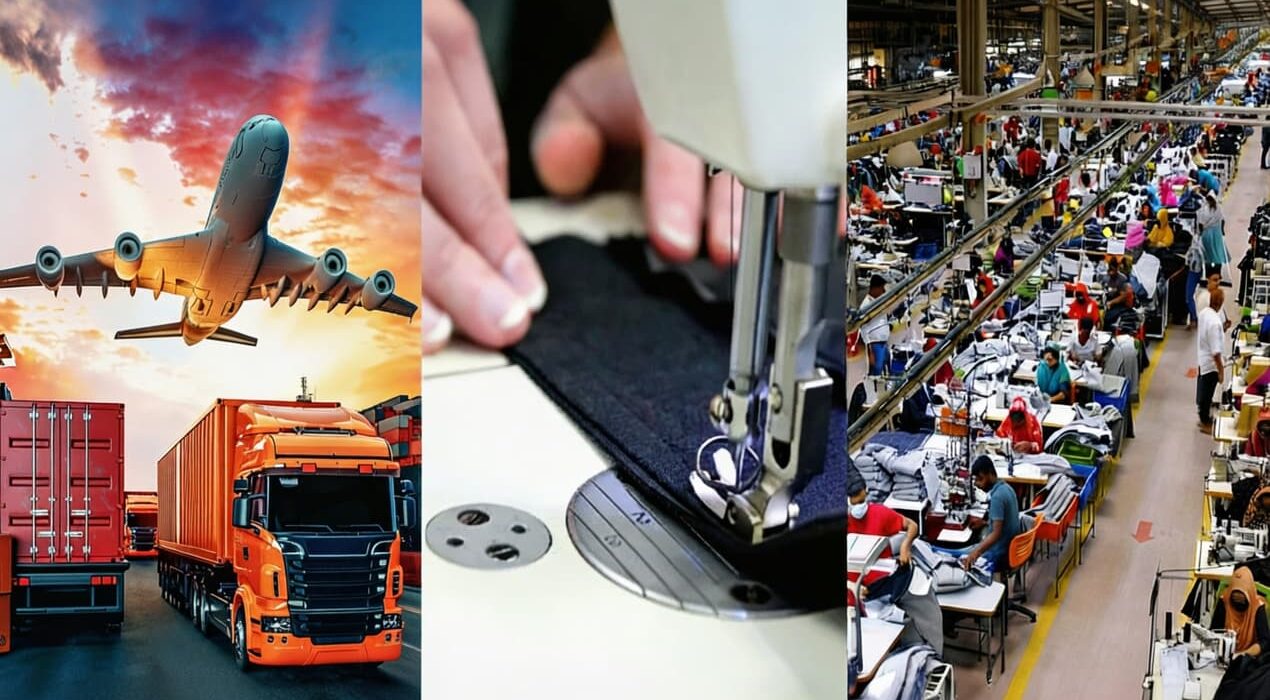
South Asia Garment Shipments Stuck as Iran War Disrupts Global Fashion Supply Chains
A growing South Asia garment disruption is hitting global fashion supply chains. Garment shipments now sit stranded at airports across Bangladesh and India. The crisis began after conflict in the Middle East forced airlines to cancel flights. As a result, cargo routes through Gulf hubs suddenly stopped. Many global fashion brands rely on factories across South Asia. Therefore, the delays are raising serious concerns for manufacturers and retailers.
Garment Shipments Stuck at Airports
Several manufacturers confirmed that shipments remain stuck at airports. These include garments made for brands owned by Inditex. Factories in Bangladesh, India, and Pakistan produce large volumes of fast fashion. For example, they supply global retailers like Primark, Marks & Spencer, and Next plc.
Shovon Islam, managing director of Sparrow Group, said shipments are stranded in Dhaka. They were supposed to reach the United Kingdom via Dubai. However, operations at Dubai International Airport stopped temporarily due to regional airspace closures. Manufacturers now search for alternative routes. Still, most options remain complex and expensive.
Gulf Airlines Play a Key Role
South Asian exporters depend heavily on Gulf airlines. These carriers usually move cargo through passenger flights and dedicated freight planes. Major airlines such as Emirates, Qatar Airways, and Etihad Airways handle a large share of this traffic. According to logistics experts, more than half of Bangladesh’s air cargo moves through Gulf hubs. In addition, around 41 percent of India’s air shipments follow the same route. Because of this reliance, the current airspace closures have disrupted supply chains quickly.
Freight Costs Rise as Capacity Shrinks
Freight costs have also increased sharply. Fewer flights mean less cargo capacity. Alexander Nathani, managing partner at Kira Leder in Mumbai, said shipping prices have doubled. His company produces leather jackets for European retailers. Airlines that still operate now face heavy demand. Consequently, many exporters struggle to secure cargo space. Industry leaders also warn about possible sea shipping problems. For example, disruptions near the Strait of Hormuz could raise maritime transport costs.
If that happens, manufacturers may face another major supply chain crisis. For now, exporters remain cautious. However, they hope air routes will reopen soon to ease the pressure on global fashion logistics.