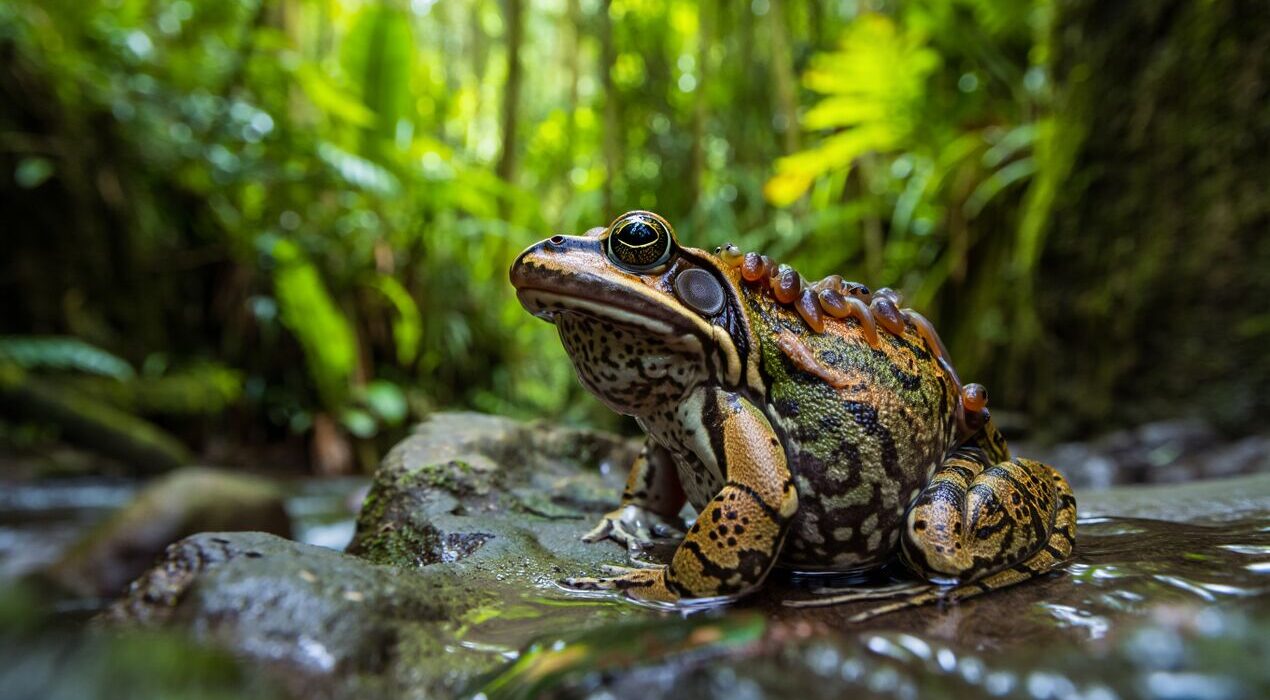
Hidden Frog Species Found in Borneo — But Numbers Are Less Than Expected
Scientists discovered that what looked like one frog species might actually be several. However, the findings reveal something surprising about how we count species. DNA technology helps scientists uncover animals that look identical but are genetically different. Researchers call these “cryptic species.” They are hiding in plain sight all around us. A new study from Michigan State University focused on Borneo’s fanged frogs. These frogs get their name from tooth-like projections on their jaws, not from drinking blood. Scientists have known about one type, called Limnonectes kuhlii, since 1838. Recent genetic tests suggested this single frog might actually represent up to 18 separate species.
What DNA Testing Revealed
Chan Kin Onn led the research team. They collected frogs from Malaysian Borneo’s rainforests and examined over 13,000 genes. The results surprised them. Instead of 18 species, the evidence points to about six or seven distinct groups. “It’s not just one species. But it’s not 18 species either,” Chan explained. The team also found significant interbreeding between different frog groups. This gene flow makes it harder to draw clear lines between species.
Why This Matters for Conservation
Counting species correctly has real-world consequences. Amphibians face serious threats worldwide. Two out of five amphibian species risk extinction. If scientists split species too aggressively, each new group appears to live in a tiny area. This can make their situation look worse than it actually is.”We cannot possibly conserve everything,” Chan said. “We must decide how to use limited resources wisely.”
The Bigger Picture
Borneo’s fanged frogs show that species formation happens gradually. It’s not a sudden event but a slow process. Similar genetic research across insects, fish, birds, and mammals suggests many hidden species exist. Some estimates say Earth could have far more species than we thought. However, this study shows we need careful analysis. The line between species can be blurry. “For example, we found a ton of gene flow between groups,” Chan noted. As a result, some proposed new species might simply reflect how scientists analyze data. Understanding these fuzzy boundaries helps researchers protect what truly needs saving. In conservation, getting the numbers right matters more than ever.