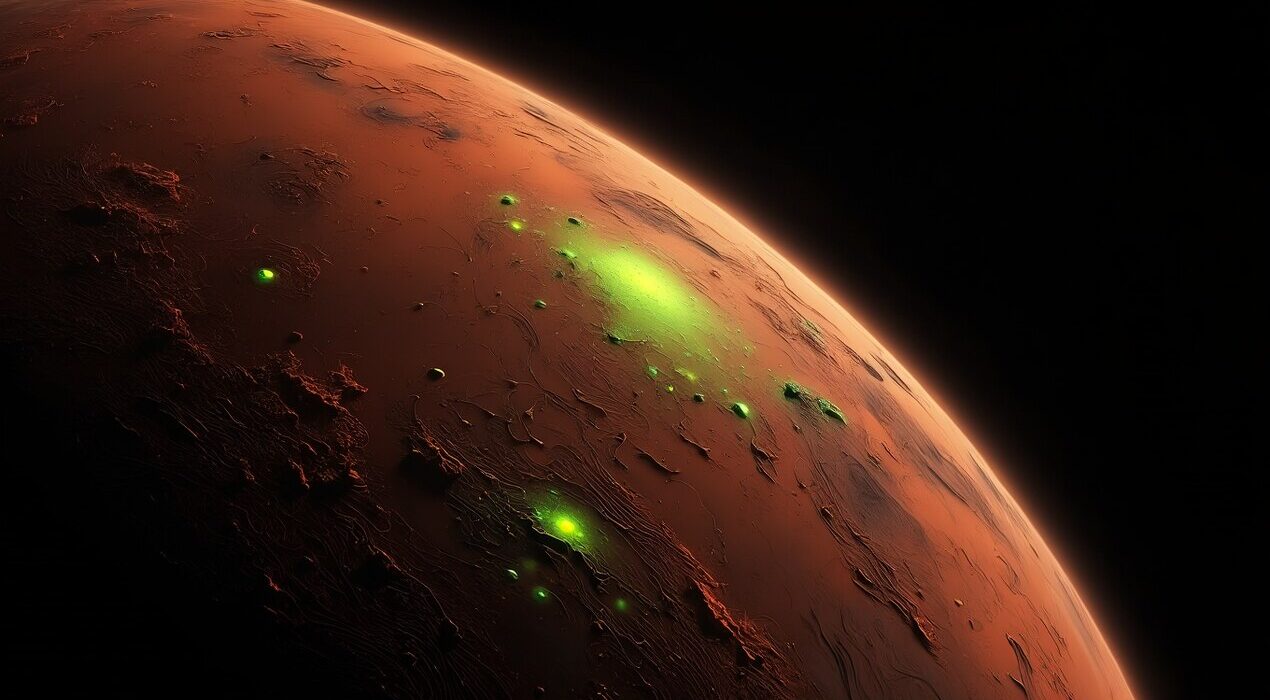
Scientists Discover Possible New Mineral on Mars
Researchers may have discovered a brand-new mineral on Mars. The unusual iron sulfate hides within ancient deposits near the planet’s largest canyon system. A new study in Nature Communications reports the find. Scientists combined laboratory experiments with orbital data to identify the mineral, called ferric hydroxy sulfate. Where Scientists Found the Mineral ,the discovery site lies near Valles Marineris, one of the solar system’s biggest canyons. Researchers examined two specific areas: Aram Chaos and the plateau above Juventae Chasma. Ancient water once flowed through both locations. As the water evaporated, it left behind thick sulfate deposits. These minerals preserved evidence of Mars’ wetter past.
How Heat Created Something New
The mineral formation story involves two steps. First, sulfate-rich water pools evaporated, leaving hydrated iron sulfates. Later, volcanic or geothermal heat transformed them. Laboratory experiments solved the mystery. When scientists heated common Martian sulfates above 100°C, they created ferric hydroxy sulfate. This matches what orbiters detected on Mars. “The material formed in these lab experiments is likely a new mineral,” said Dr. Janice Bishop from the SETI Institute. She led the research team.
Why This Discovery Matters
Sulfur is abundant on Mars. It commonly forms sulfate minerals that preserve environmental clues. On Earth, rain dissolves most sulfates quickly. Mars is extremely dry, so these minerals persist for billions of years.Each mineral has unique crystal structure and properties. Scientists identify them using spectral data from orbiting spacecraft. For nearly two decades, researchers noticed unusual signals from layered iron sulfates. This study finally explains them.The transformation requires temperatures far hotter than typical Martian surface conditions. This suggests geothermal heat altered the minerals long after they formed.
Clues to Mars’ Volcanic Past
The sulfates at Aram Chaos and Juventae probably formed more recently than surrounding terrain. Researchers believe they date to the Amazonian period, less than three billion years ago. This indicates that parts of Mars remained thermally active longer than scientists thought. Volcanic heat at Juventae Plateau and geothermal energy beneath Aram Chaos created conditions for new minerals to form.
What Happens Next
The mineral’s crystal structure resembles szomolnokite, a monohydrated ferrous sulfate. However, it forms more readily from rozenite, which contains four water molecules.For official recognition as a new mineral, scientists must also find it on Earth. The discovery still provides valuable insights into Mars’ evolving surface and its possible ability to support life.”This reaction drastically alters the way these minerals absorb infrared light,” said Dr. Johannes Meusburger from NASA Ames. “That allowed identification of this new mineral on Mars using orbital instruments.”The findings reveal that Mars remained chemically active more recently than previously believed. Each discovery brings us closer to understanding the Red Planet’s hidden history