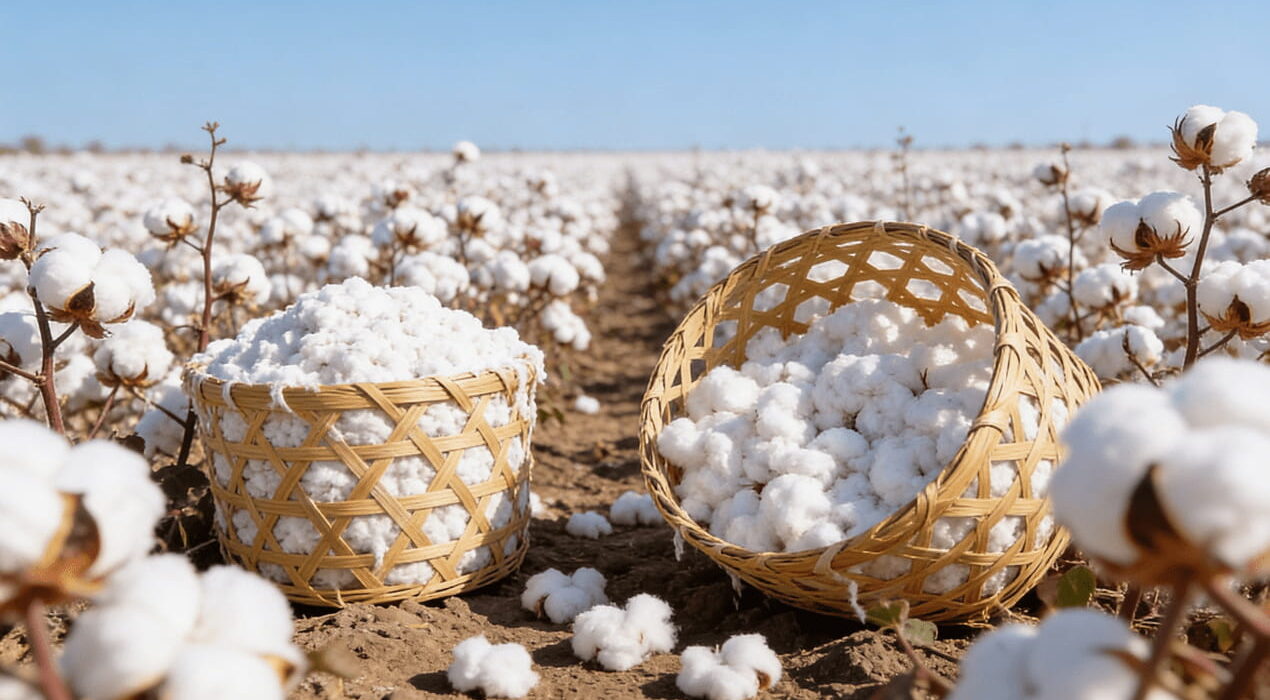
Pakistan Cotton Prices Surge as Global Tensions Disrupt Imports
Pakistan cotton prices rose sharply last week. The increase followed supply shortages and rising global tensions. Conflicts involving the United States, Israel, and Iran disrupted trade routes in the Middle East. As a result, cotton import activities slowed down. Therefore, local markets saw strong demand. Prices increased by around 500 rupees per maund. Consequently, cotton reached nearly 17,000 rupees per maund in Pakistan.
Rising Oil Costs Push Fiber Prices Higher
According to Cotton Ginners Forum Chairman Ehsan ul Haq, global market trends also influenced the surge. Crude oil prices increased in international markets. As a result, polyester fiber prices also climbed rapidly.
During the past week, polyester fiber prices increased by about 30 rupees per kilogram in Pakistan. Consequently, yarn prices also moved upward. Higher yarn rates pushed Pakistan cotton prices even further. Therefore, textile manufacturers started focusing on cotton purchases.
Textile Mills Shift Toward Local Cotton
Local textile mills are preparing for summer clothing production. For example, many factories are increasing cotton purchases earlier than usual. Initially, companies planned to rely on imported cotton. However, global tensions have delayed shipments. Because of these disruptions, mills have turned to domestic markets. As a result, local cotton demand has increased quickly. At the same time, high quality cotton remains limited in Pakistan. Therefore, prices continue to rise across major trading markets.
Prices May Rise Further After Eid
Industry experts expect further increases this week. If the trend continues, Pakistan cotton prices could reach 18,000 rupees per maund.
Such growth may continue until after Eid al-Fitr. However, the textile sector still faces major challenges. Export volumes have declined due to unfavorable industrial policies.
In addition, rising energy costs create pressure for manufacturers. Therefore, experts warn that export growth could remain slow. Despite these issues, textile mills continue buying cotton. The strong demand shows how important cotton remains for Pakistan’s textile industry.