Caffeine Memory Recovery: New Study Reveals Brain Boost After Sleep Loss
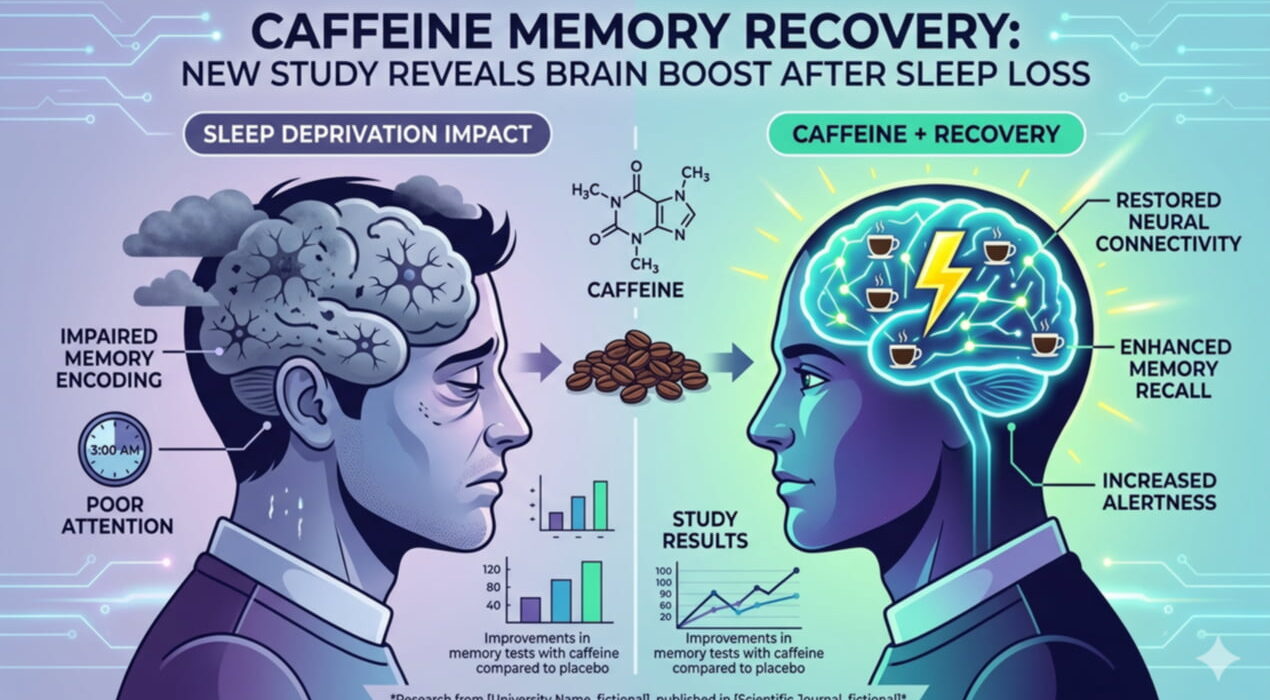
Caffeine memory recovery is gaining attention after new research from National University of Singapore. Scientists found it may restore memory after sleep loss. The findings offer hope for people facing cognitive fatigue.
Researchers showed that sleep deprivation disrupts key memory circuits in the brain. However, caffeine appears to repair this damage in a targeted way. As a result, participants regained better memory performance.
How Caffeine Affects Memory Circuits
The study focused on the hippocampus, which controls learning and memory. Within this area, the CA2 region plays a key role in social memory. This type of memory helps people recognize familiar faces.
Scientists found that sleep loss weakens connections between brain cells. Therefore, communication in this region becomes less effective. However, caffeine restored these connections without overstimulation.
Targeted Brain Recovery Without Overload
Importantly, caffeine did not overstimulate well-rested individuals. Instead, it worked only where damage existed. This selective action makes caffeine different from general stimulants.
In addition, the study showed that caffeine improved synaptic plasticity. This process helps the brain strengthen connections based on learning. As a result, memory function returned to normal levels.
Future Potential for Brain Health
Experts believe these findings could guide future treatments. For example, targeted therapies may help prevent memory decline. Researchers also plan to explore long-term effects on brain health.
However, caffeine is not a replacement for sleep. It offers short-term support but cannot fully restore lost rest. Therefore, maintaining healthy sleep habits remains essential.
Overall, caffeine memory recovery highlights a new way to protect brain function. It provides a simple and accessible tool for mental performance. Still, balance and moderation are key for lasting benefits.