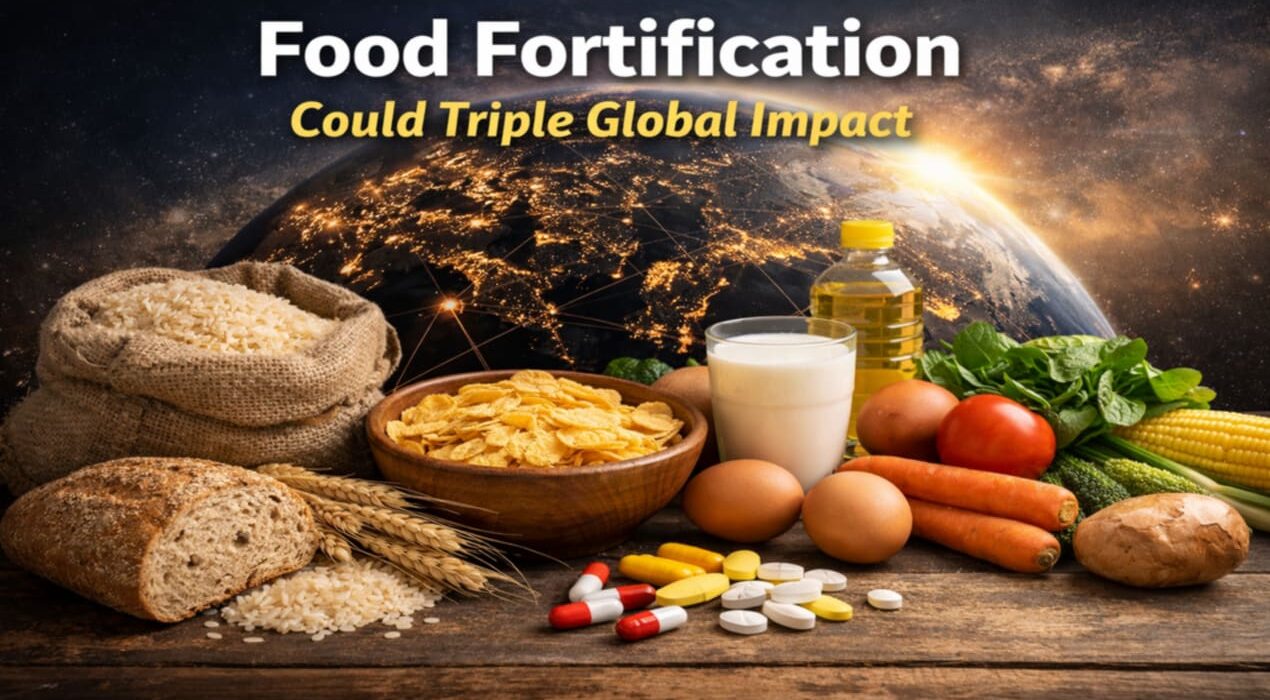
Food Fortification Could Triple Global Nutrient Impact
Food fortification currently prevents billions of nutrient deficiencies each year. However, experts say its impact could triple if expanded globally. Fortified foods add essential vitamins and minerals to everyday diets. This approach improves public health without requiring major lifestyle changes.
How Fortification Helps
Research shows that fortified foods reduce deficiencies in iron, vitamin A, and folic acid. These nutrients support brain development, immunity, and overall wellbeing. For example, adding vitamin A to staple foods can dramatically lower childhood blindness. In addition, fortification benefits people of all ages.
Cost-Effective Global Solution
Fortifying staple foods is highly cost-effective. Governments and organizations can reach millions quickly. Countries with mandatory fortification programs report sharp declines in anemia and other deficiencies. Small-scale producers may face challenges, however. Education campaigns are necessary to encourage public acceptance.
Scaling for the Future
Experts say scaling up fortification could prevent millions more deficiencies by 2030. Innovations in technology make nutrients more stable and easier to distribute. Therefore, investing in fortified foods is a practical solution to malnutrition. Collaboration between governments, NGOs, and food manufacturers is crucial. Food fortification is more than policy, it is a public health necessity.