Indonesia Measles Drop 93% as Cases Decline Nationwide
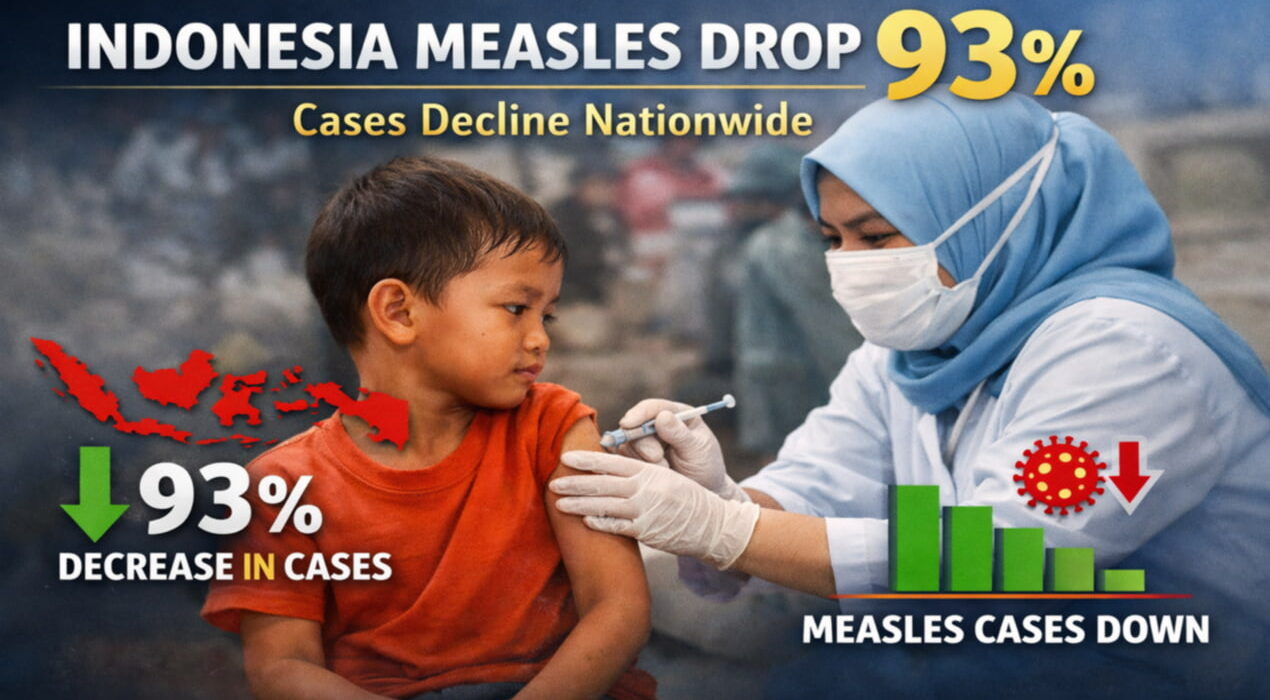
Indonesia has reported a sharp decline in measles infections as the Indonesia measles drop continues across the country. Officials say daily cases fell from 2,220 at their peak in early 2026 to just 146 by mid-March. This progress reflects strong public health action and better monitoring systems.
Health authorities observed this decline in multiple regions. The Indonesia measles drop appeared across 14 provinces and 10 regencies and cities. As a result, high-risk areas saw fewer new infections. Officials also strengthened real-time reporting to detect cases quickly.
Strong Response Drives Results
The government improved surveillance during the Eid al-Fitr holiday. However, teams kept systems fully active. They used layered verification with local health offices. Therefore, data remained accurate and timely across regions.
Caution Still Needed
Despite progress, risks remain in some communities. The ministry confirmed 10 measles-related deaths in 2026. For example, an intern doctor died after workplace exposure in Cianjur. This loss highlights ongoing dangers.
Officials now push to expand vaccination coverage. They are reviewing clinical trials for adult immunization programs. In addition, they urge people and healthcare workers to complete vaccines on time. As a result, authorities expect further declines.
The Indonesia measles drop shows how quick action can protect communities. However, experts stress that sustained efforts are still essential. Gaps in vaccination can allow the virus to spread again. Therefore, awareness campaigns must continue in every region.
Parents play a key role in prevention. They should check vaccination records and visit clinics when needed. Schools can also support outreach programs. In addition, community leaders can encourage trust in vaccines. Together, these efforts will help Indonesia maintain progress and end the outbreak safely.
Looking ahead, officials will keep monitoring trends closely. They aim to respond fast to any new surge. This approach will protect lives and strengthen public health.