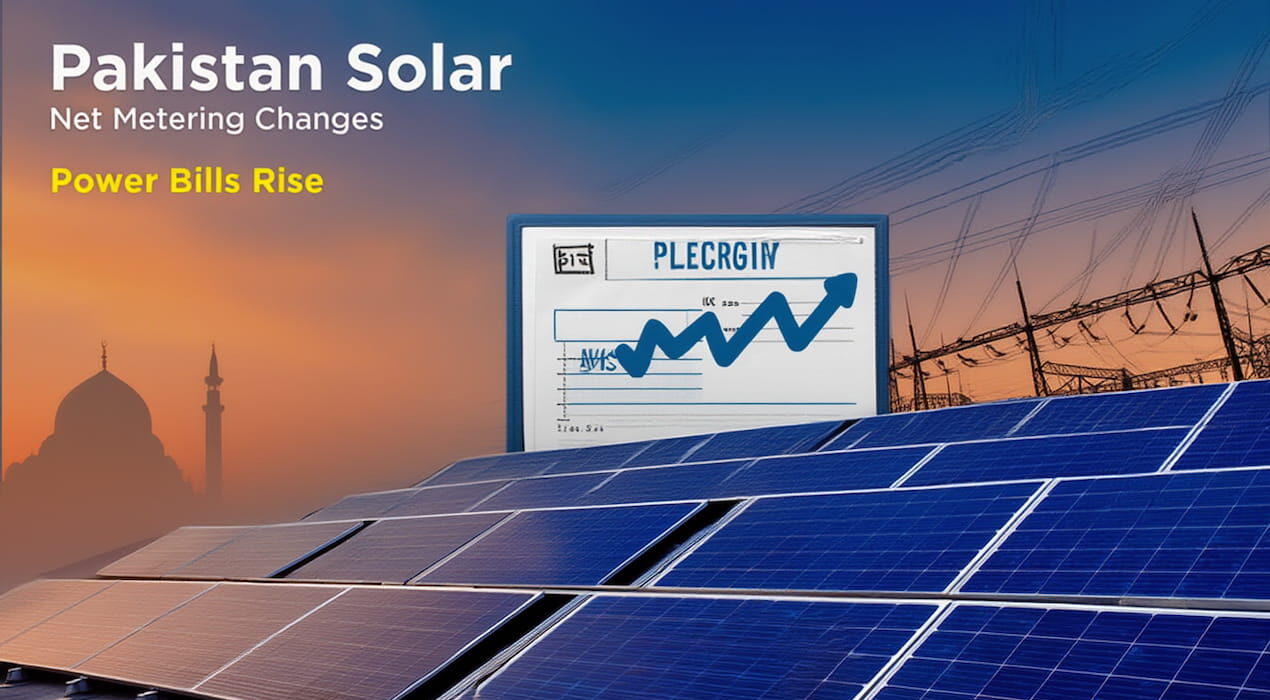
Pakistan Solar Net Metering Changes: Govt Ends Extra Unit Relief, Power Bills Rise
Pakistan solar net metering rules have changed as the government revises billing policies. Authorities have removed relief on excess electricity generated by solar users. Therefore, consumers will not receive credits for units beyond approved limits.
Officials introduced an Export MDI check on solar connections. This step ensures users stay within their sanctioned capacity. However, those who install extra panels will lose benefits on additional electricity. Distribution companies will now count surplus units as zero.
New Rules for Solar Consumers
Under the updated policy, only approved electricity units will qualify for credits. Any extra power sent to the grid will not appear in billing adjustments. As a result, many solar users may see reduced savings.
In addition, authorities want to control unregulated expansion of solar systems. They believe this step will balance the power grid. However, some consumers worry about reduced incentives for clean energy adoption.
Rising Electricity Costs
At the same time, electricity bills are increasing across the country. The National Electric Power Regulatory Authority approved a new tariff structure in January 2026. This system calculates fixed charges based on sanctioned load instead of usage.
Previously, only high-usage households paid fixed charges. Now, almost all domestic users must pay them, except lifeline consumers. Charges range from Rs. 200 to Rs. 675 per kilowatt per month.
For example, a household with a 5-kilowatt load may now pay up to Rs. 3,375 monthly. As a result, even low-usage consumers will face higher bills. This change increases financial pressure on families already managing rising living costs.
Overall, these reforms aim to stabilize the energy sector. However, they also raise concerns about affordability and the future of solar adoption in Pakistan.