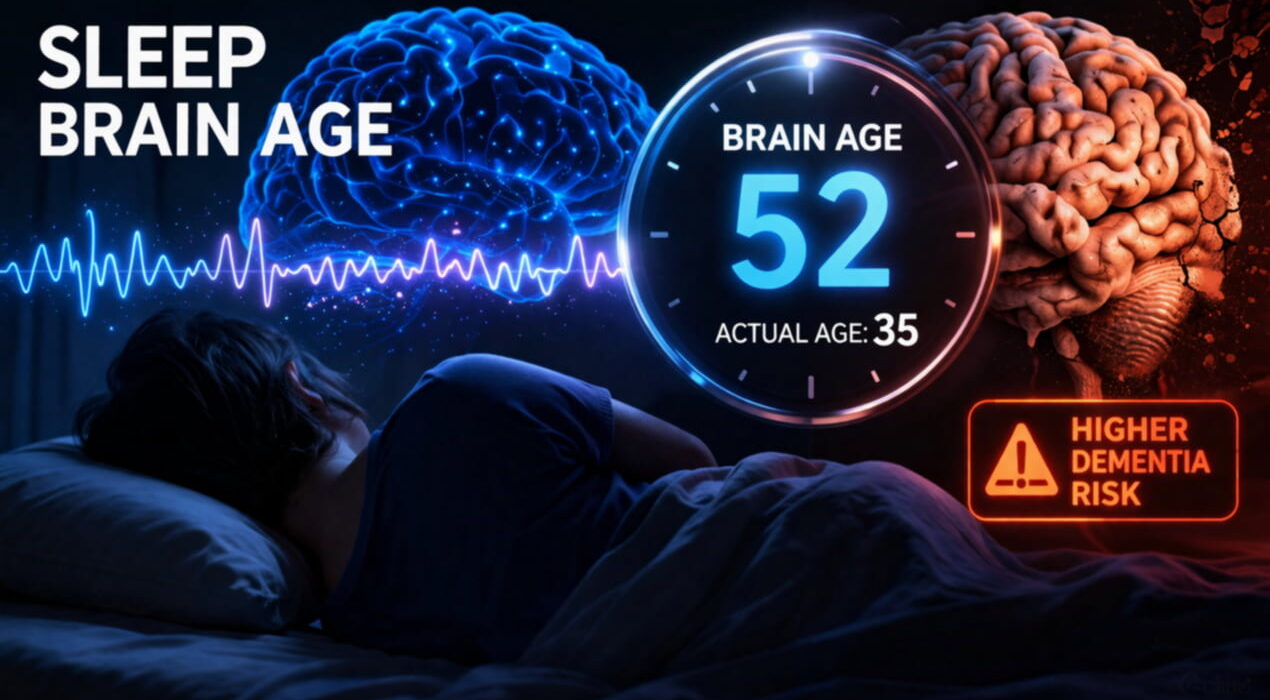
Sleep Brain Age Test Reveals Hidden Dementia Risk
Your sleep brain age may reveal more than expected. It shows how your brain functions during rest. Many people assume their brain matches their real age. However, new research suggests a different reality.
A recent study in JAMA Network Open highlights this concern. Researchers used advanced tools to study sleep brain waves. As a result, they created a way to estimate brain function age.
Sleep Patterns Reveal Brain Health
Scientists analyzed sleep data from over 7,000 adults. They focused on detailed brain wave activity during sleep. For example, they examined subtle electrical patterns often ignored before.
These patterns helped calculate a brain age index. This index compares actual age with brain performance. Therefore, it offers deeper insight into long-term brain health.
In addition, sleep may act as an early warning system. It can reveal changes before symptoms appear. This makes sleep analysis more valuable than ever.
Higher Brain Age Signals Risk
The study found a strong link to dementia risk. A higher sleep brain age increased future risk significantly. For instance, a ten-year gap raised risk by nearly forty percent.
However, researchers adjusted for major health factors. These included lifestyle, genetics, and heart health. As a result, the findings remained consistent and concerning.
This suggests sleep patterns may show early brain decline. Therefore, ignoring sleep signals may delay early action.
What This Means for You
Sleep is more than rest or recovery. It reflects deeper brain health processes. In addition, new technology may soon track these patterns at home.
Experts believe early awareness can support better outcomes. Simple habits like good sleep hygiene can help. Therefore, small changes today may protect future brain health.