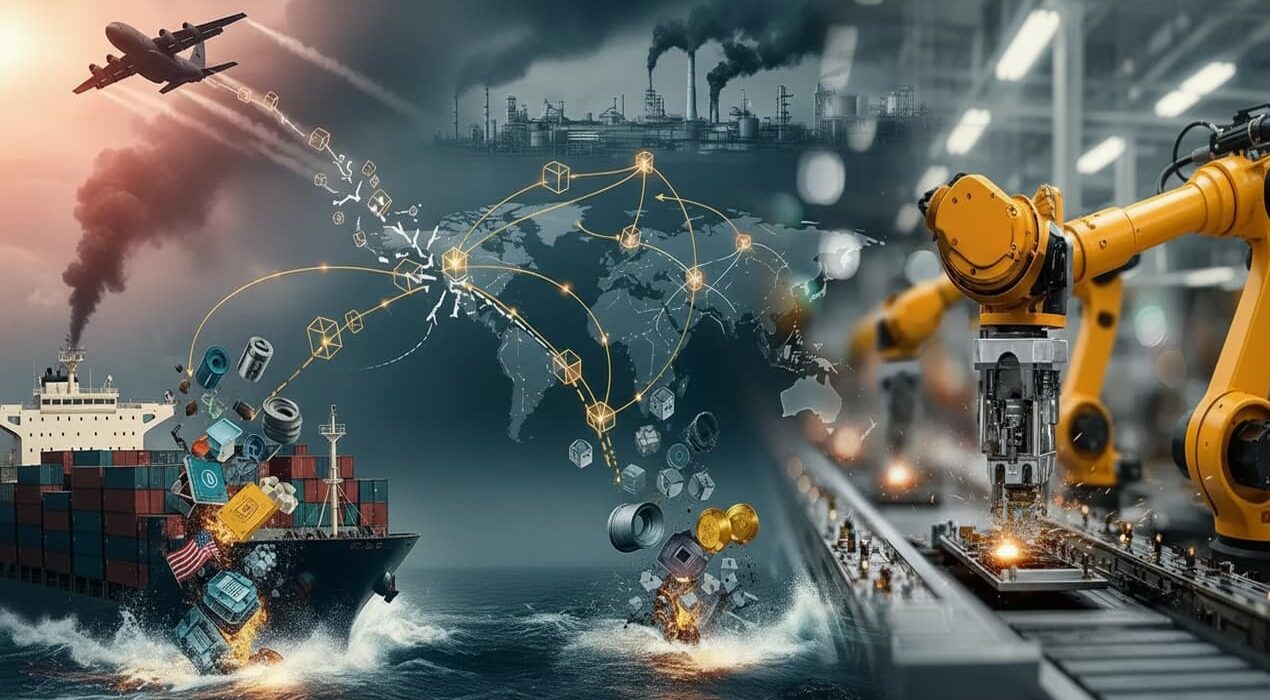
Iran War Supply Chains Disrupt Global Factory Costs Surge !
The Iran war supply chains crisis pushed factory costs higher worldwide in March. Manufacturers struggled with delays and rising expenses. As a result, the sector’s fragile recovery faced fresh pressure.
Supply chains slowed due to disrupted shipping routes. For example, longer delivery times increased costs for raw materials. In addition, weak demand made the situation harder for factories.
Energy Prices Add Pressure
Rising oil and energy prices forced companies to raise selling prices. Therefore, many businesses passed higher costs to customers. However, this also risked reducing demand further. PMI data showed mixed signals across regions. Although headline figures suggested growth, they were misleading. Longer delivery times inflated these numbers rather than real demand. In Europe, manufacturing activity improved slightly. The eurozone PMI rose to 51.6 in March. Still, experts warned that the growth masked uneven performance across countries.
Mixed Trends Across Europe
Germany and Italy showed strong improvement in factory activity. Meanwhile, Spain remained in contraction territory. France’s manufacturing sector showed little to no growth. Outside the European Union, Britain faced rising costs and delays. Ships avoided key routes, which increased delivery times. As a result, supply chain issues reached levels last seen in 2022.
Asia Feels the Biggest Impact
Asia faced the strongest impact from the Iran war supply chains disruption. The region relies heavily on oil shipments through the Strait of Hormuz. Therefore, rising fuel prices hit businesses hard. For instance, diesel prices in Manila have tripled. In addition, companies in Vietnam and South Korea struggled to find materials. These shortages disrupted production plans. China’s manufacturing sector grew for a fourth month. However, growth slowed due to rising costs and supply issues. Similarly, countries like Indonesia and Taiwan reported weaker factory activity. Japan also saw higher costs and slower growth. Input prices reached a 19-month high. On the other hand, South Korea stood out with strong growth driven by semiconductor demand.
Conclusion
The Iran war supply chain crisis continues to strain global manufacturing. Rising costs, delayed shipments, and weak demand create uncertainty. Therefore, businesses and policymakers must adapt quickly to manage ongoing risks.