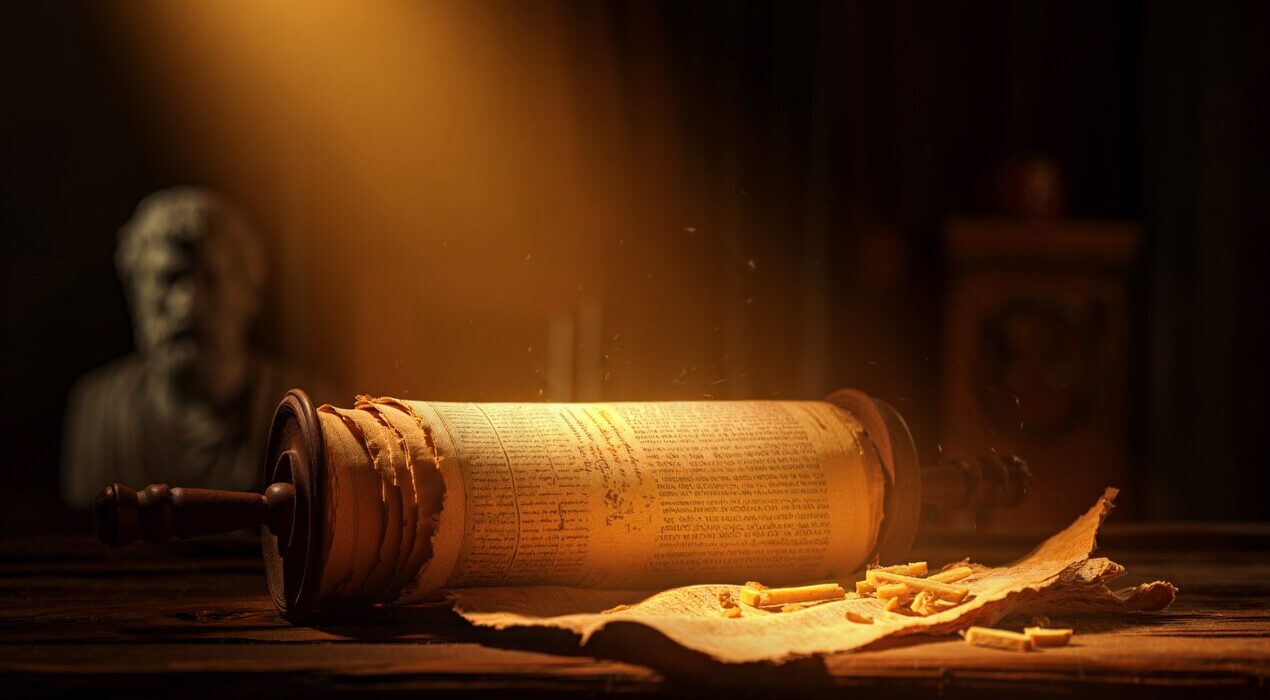
Lost Greek Philosopher Verses Found After 2,000 Years
Researchers found a 2,000-year-old papyrus in Cairo. It contains thirty unknown verses by Empedocles. He was a famous Greek philosopher from the 5th century BCE.Until now, scholars only knew his work through quotes. Later thinkers like Plato and Aristotle cited him. However, those sources were often incomplete or biased. As a result, we never had direct access to his original words.
What the Papyrus Reveals
The new text focuses on vision and particle emissions. For example, it shows links to Plutarch, Plato, and Theophrastus. In addition, Empedocles may have inspired atomist thinkers like Democritus. Therefore, his influence was even larger than we thought.Imagine finding lost pages of Victor Hugo’s Les Misérables. That is how exciting this discovery feels. Papyrologist Nathan Carlig calls it a “second Renaissance” for ancient literature.
Why This Matters Today
This find changes our understanding of early Greek thought. Empedocles believed in four elements: earth, air, fire, and water. He also described cosmic forces called Love and Strife. Now we can read his ideas directly.The papyrus proves that ancient philosophy still holds secrets. Even after 2,000 years, new voices can emerge. That is powerful. Every person’s perspective matters in telling the full story of human thought.