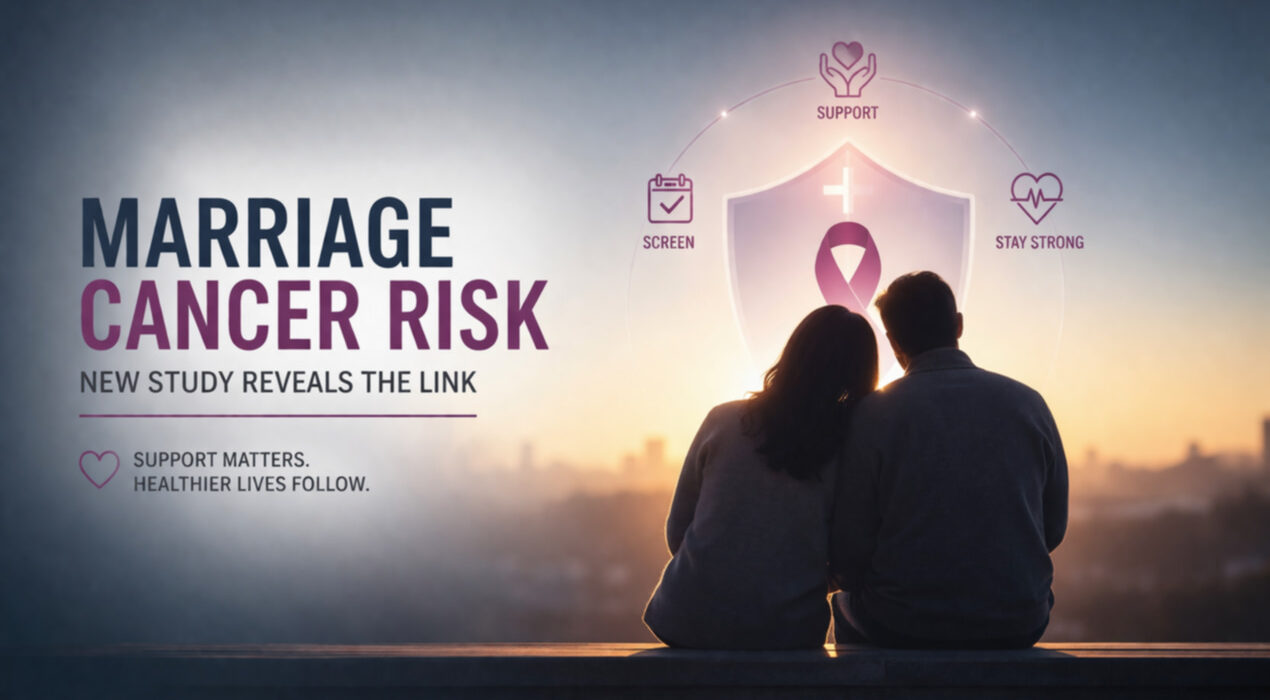
Marriage Cancer Risk Link: What New Study Reveals
A surprising study highlights marriage cancer risk as an important social factor. Researchers say marital status may influence cancer outcomes. Never-married people show higher incidence rates.
For example, never-married men face a 68% higher cancer rate. Meanwhile, never-married women face an 85% higher rate. Therefore, the gap is significant and consistent.
In addition, the difference becomes stronger after age 55. This suggests long-term social and health effects build over time. However, lifestyle and screening habits also play a role.
Social Support and Health Impact
Researchers explain that marriage often improves health behaviors. For instance, spouses may reduce alcohol and tobacco use together. As a result, healthier routines become easier to maintain.
Moreover, partners often remind each other about screenings. This leads to earlier detection and better treatment outcomes. In addition, emotional support reduces stress during illness.
University of Miami researcher Frank Penedo noted that unmarried people should stay alert. He suggested they focus more on screenings and risk awareness. However, he stressed marriage is not a solution itself.
Why Outcomes Differ
Studies show married individuals often receive faster diagnoses. Therefore, survival rates tend to be higher in this group. Economic stability also improves access to healthcare.
Furthermore, spousal support helps patients manage treatment plans. This includes attending appointments and following medication schedules. However, support can also come from friends or family.
Overall, marriage cancer risk reflects social support, not marriage itself. Therefore, awareness and regular screenings remain essential for everyone.
Key Takeaway
Researchers clarify that people should not marry to reduce cancer risk. Instead, they should prioritize proactive healthcare choices. For example, regular checkups and healthy habits matter most.
As a result, strong social support networks can improve outcomes. Ultimately, awareness and prevention remain the most important tools for everyone.