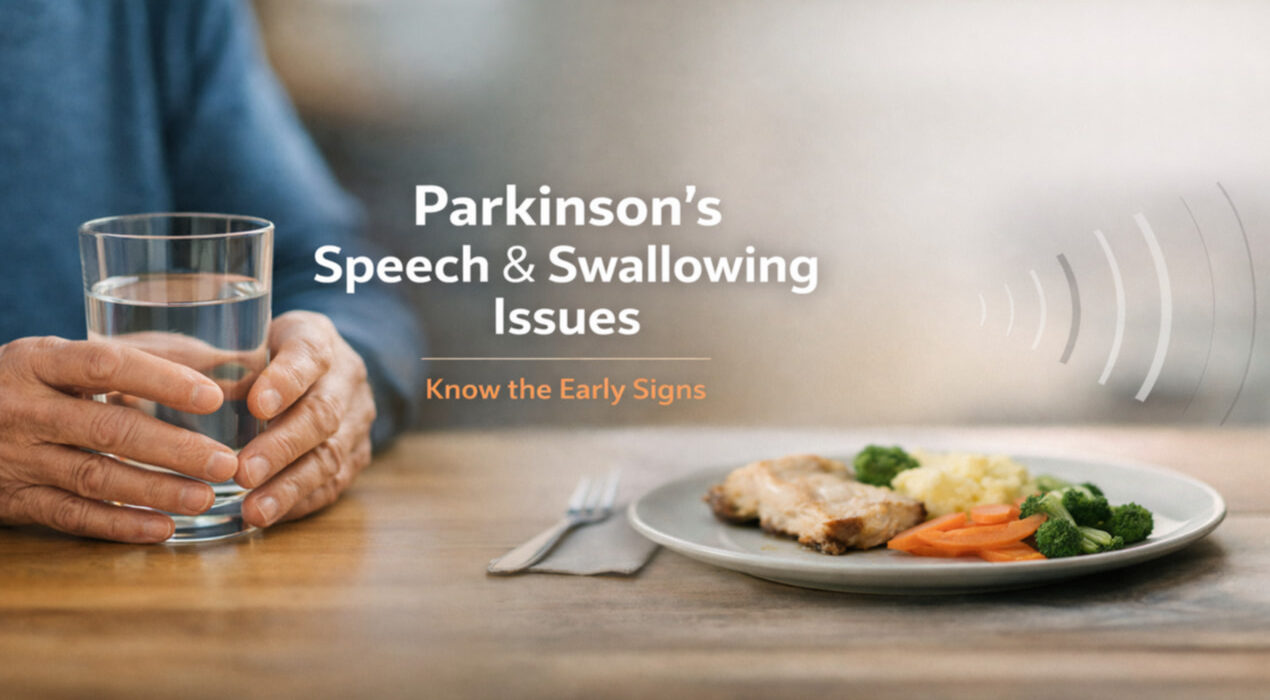
Parkinson’s Speech Swallowing: Hidden Symptoms You Should Know
Parkinson’s speech swallowing challenges often begin quietly. Many people notice tremors first. However, communication and eating issues can appear early. These signs may seem mild at first.
People may speak in a softer voice. In addition, speech can sound unclear or flat. Some may struggle to express emotions through tone. As a result, conversations become harder over time.
Families may not notice these changes quickly. Therefore, they often link them to ageing or fatigue. However, these symptoms usually worsen gradually. Early attention can make a real difference.
Swallowing Risks And Daily Impact
Swallowing problems, also called dysphagia, develop slowly. People may cough while eating or drinking. For example, food may feel stuck in the throat. Meals can take longer than usual.
These issues may seem minor at first. However, they can lead to serious health risks. Poor swallowing may cause weight loss or dehydration. In severe cases, food can enter the airway.
As a result, the risk of pneumonia increases. In addition, eating can become stressful. Many people may avoid social meals. This can affect emotional well-being and confidence.
Early Care Improves Quality Of Life
Early care helps manage Parkinson’s speech swallowing problems better. Doctors can screen for early signs during routine visits. In addition, speech therapy can improve voice clarity.
Swallowing therapy also plays an important role. Specialists may suggest safer eating techniques. For instance, softer foods can reduce choking risks. Simple changes often bring comfort.
Support from family is equally important. Encouragement helps people stay socially active. Moreover, awareness leads to timely treatment. Therefore, early action protects health and dignity.
In conclusion, Parkinson’s speech swallowing issues deserve more attention. With proper care, people can maintain independence longer.