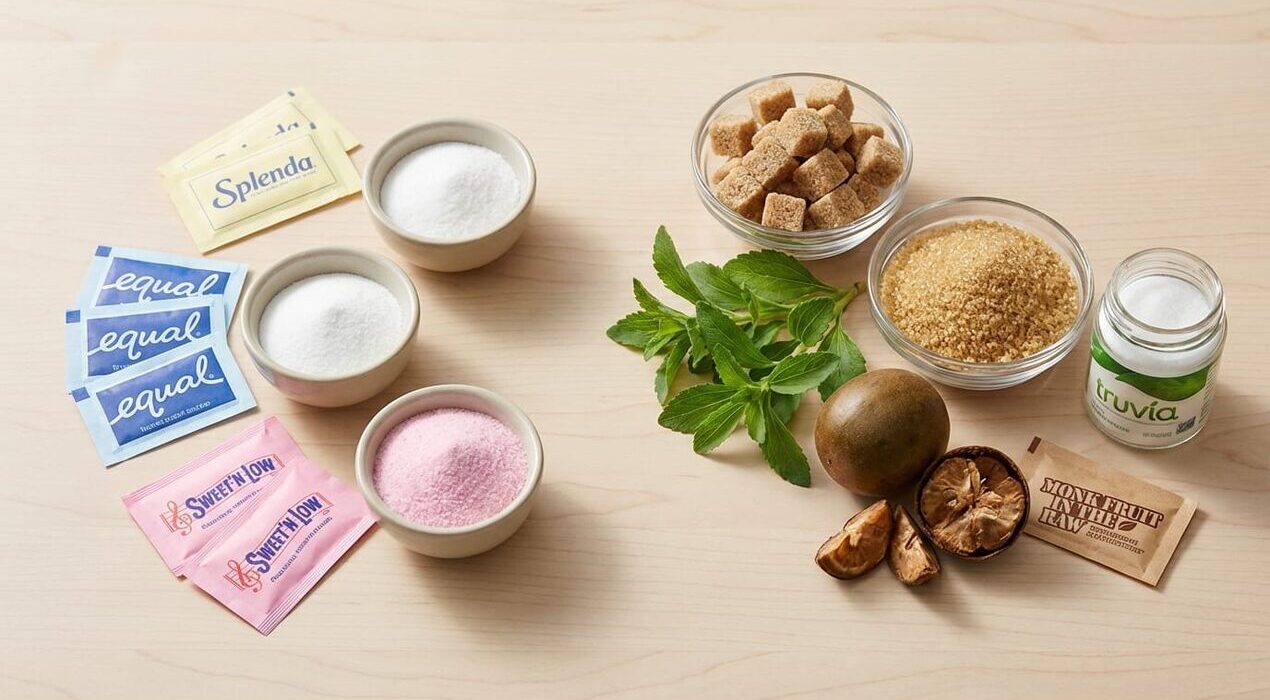
Are Sugar Substitutes Healthier Than Sugar? What You Need to Know
Many people swap sugar for substitutes. They want fewer calories and better health. However, the answer is not that simple. Some sugar substitutes can help. Others may cause concerns when used too often.
What Are Sugar Substitutes?
Sugar substitutes include artificial and natural options. For example, people often use stevia, aspartame, and sucralose. These alternatives taste sweet but contain little or no calories. As a result, they are popular in diet drinks and low-calorie foods.
Benefits of Sugar Substitutes
Sugar substitutes can support weight control. They reduce calorie intake without removing sweetness. In addition, they help manage blood sugar levels. This benefit is important for people living with diabetes. They also protect teeth. Unlike sugar, they do not cause tooth decay.
Possible Risks to Consider
However, sugar substitutes are not perfect. Some studies suggest they may affect metabolism. In addition, they can increase cravings for sweet foods. As a result, some people may eat more overall. Certain types, like sugar alcohols, may cause bloating or discomfort. Therefore, moderation is important.
How Does Regular Sugar Compare
Regular sugar provides quick energy. However, too much added sugar can harm your health. For example, it may lead to weight gain and increase the risk of Type 2 Diabetes. It can also affect heart health over time. Therefore, experts recommend limiting added sugar in daily diets. The better choice depends on your habits. Sugar substitutes can help reduce calorie intake. However, they are not a perfect solution. Whole foods remain the healthiest option. For example, fruits offer natural sweetness along with fiber and nutrients.
Sugar substitutes can be useful in small amounts. However, they should not replace a balanced diet. In the end, focus on overall eating habits. That matters more than choosing sugar or its alternatives.