Medieval Japanese Diary Reveals Hidden Solar Storm Risk
Scientists have uncovered a hidden solar event from the past. Surprisingly, a medieval diary helped guide the discovery. Researchers from the Okinawa Institute of Science and Technology led the study. They combined history with modern science to reveal new insights.
Why Solar Events Matter Solar storms can be dangerous. They release high-energy particles into space. On Earth, we see auroras. However, in space, these events can harm astronauts. For example, a major event in 1972 nearly affected Apollo 17 astronauts. Therefore, understanding these events is critical.
The team used tree-ring data to track carbon-14 levels. These levels rise when solar particles hit Earth. They studied ancient asunaro trees in Japan. In addition, they analyzed historical records for clues. This combined method helped pinpoint a solar event between 1200 and 1201.
The Role of a Medieval Diary
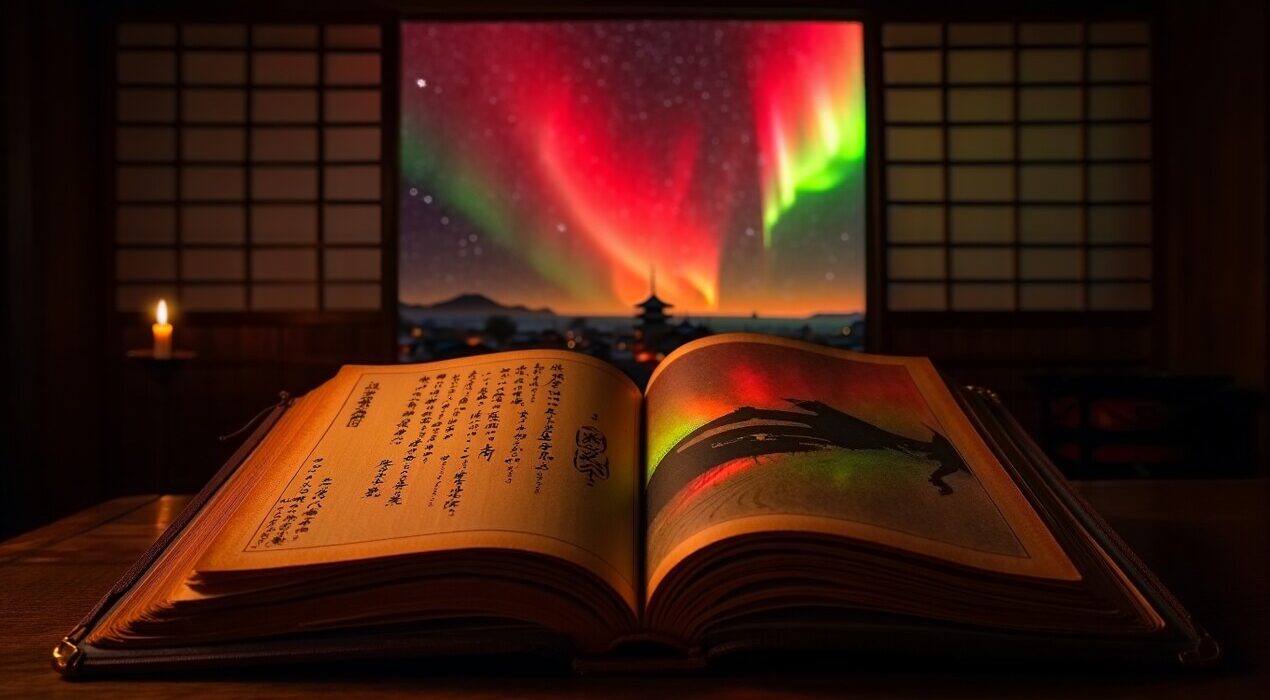
A key clue came from a diary called Meigetsuki. It was written by Fujiwara no Teika. He described red lights in the sky. These lights likely came from auroras linked to solar activity. Therefore, researchers used this record to narrow their search.
Detecting Smaller but Dangerous Events
Most studies focus on extreme solar storms. However, smaller events can also be harmful. These are called sub-extreme solar proton events. They occur more often but are harder to detect. According to Hiroko Miyahara, new methods now make detection easier.
This discovery improves our understanding of solar cycles. It also helps predict future space weather. For example, future Moon missions may face similar risks. Therefore, better predictions can improve safety. In conclusion, combining history and science offers powerful insights. It helps us prepare for hidden dangers from space.