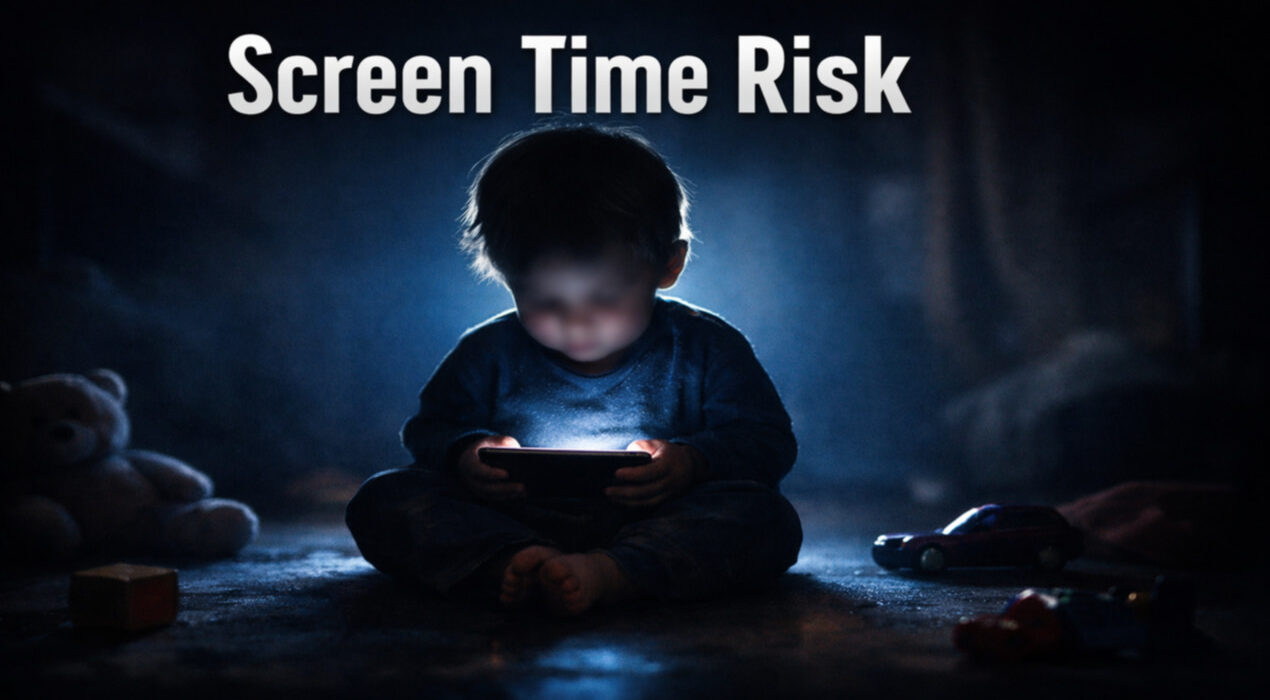
Excessive Screen Time Effects on Children Raise Global Concern
Excessive screen time is affecting young children in worrying ways. Recent research highlights a sharp rise in screen use among infants. Therefore, parents now face growing concerns about their child’s health and development.
Mobile screens have become part of daily life for many babies. However, experts warn that early exposure can harm key skills. For example, speech, learning, and attention may suffer over time.
Rising Screen Time Among Infants
A study from University College London shows alarming trends. Nearly three out of four babies aged nine months use screens daily. In addition, some spend more than three hours in front of screens.
Experts say this level of use can impact early development. As a result, children may face delayed language skills and shorter attention spans. Social interaction may also decrease, which affects emotional growth.
Interestingly, children with siblings or two parents tend to use screens less. This suggests that family interaction plays a key role. Therefore, engaging environments may reduce screen dependence.
Health Risks and Expert Warnings
The World Health Organization advises no screen time for children under two years. For children aged two to four, screen use should stay under one hour daily. However, many families do not follow these guidelines.
Experts stress that how screens are used matters more than how long. For instance, passive watching differs from interactive learning. Even so, too much exposure still carries risks.
Excessive screen time may lead to speech delays and reduced focus. In some cases, experts link it to “virtual autism” symptoms. As a result, mental and physical development can slow down.
Tips for Parents to Manage Screen Use
Parents should actively guide their child’s screen habits. For example, watch content together and discuss it. This helps improve understanding and connection.
In addition, screens should never replace basic activities. Talking, reading, and playing remain essential for growth. Therefore, balance is key in daily routines.
Experts recommend avoiding screens for children under two. Older children should use screens for less than one hour daily. By following these steps, families can support healthier development.