Mpox Clade 1b Detected in Sindh and Punjab Raises Health Concerns
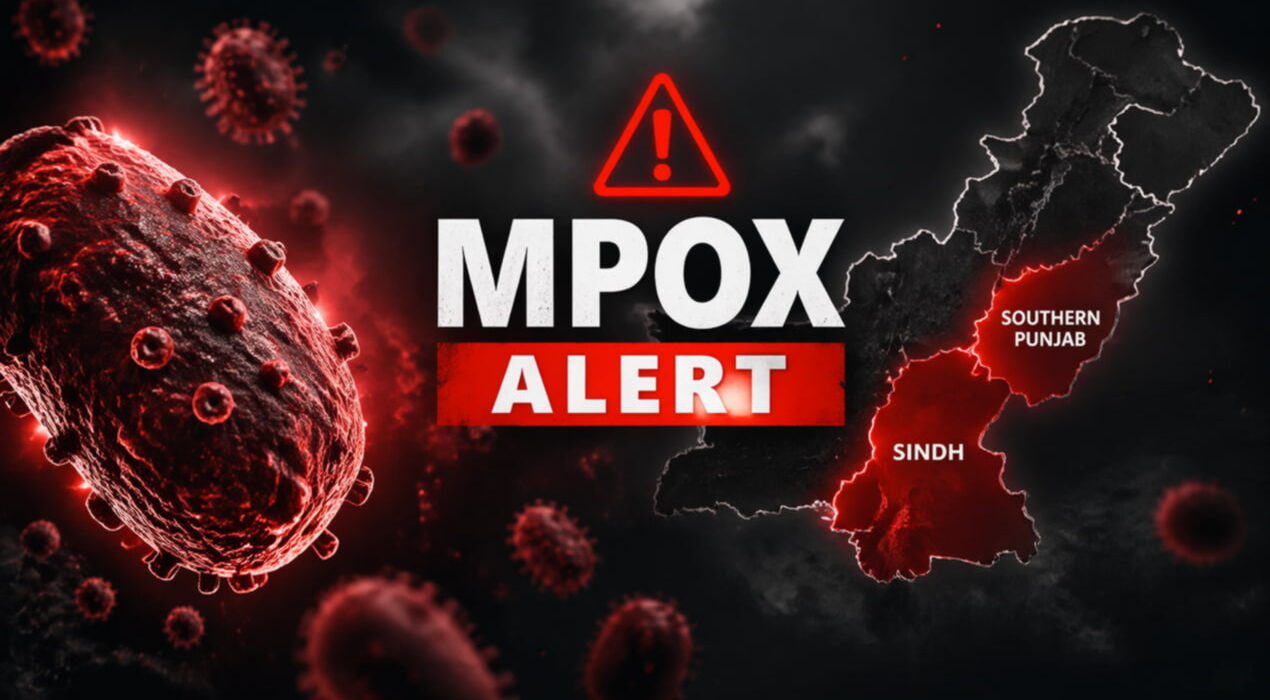
Federal and provincial health authorities have confirmed ‘Mpox Clade 1b’ in parts of Sindh and southern Punjab. This variant raises concern due to higher transmissibility and possible severity. Therefore, officials urge the public to stay alert and follow safety guidelines.
Laboratory experts analyzed samples collected in Khairpur. Researchers at Dow University of Health Sciences confirmed the presence of clade 1b through genetic sequencing. This strain belongs to clade I of the mpox virus and spreads more easily between people.
Rising cases and affected areas
Sindh has reported over two dozen suspected and confirmed cases so far. Khairpur appears as the most affected district in the province. In addition, officials have linked at least nine deaths to the outbreak.
Across Pakistan, authorities have recorded more than two dozen confirmed infections. Meanwhile, teams are investigating suspected cases in southern Punjab. For example, Rahim Yar Khan and nearby areas show signs of local transmission.
Experts warn that actual case numbers may be higher. Limited testing and surveillance gaps may hide the full picture. As a result, authorities continue to expand monitoring efforts.
Why this variant matters
Health experts say clade 1b shows stronger human-to-human transmission. It spreads through close physical contact and contaminated materials. In addition, prolonged exposure to respiratory droplets can increase risk.
This strain may also cause more severe illness. Children and people with weak immune systems face higher risk. Therefore, doctors stress early diagnosis and proper care.
Prevention and response measures
Authorities recommend early detection and isolation of suspected cases. People should seek medical help if they notice fever, rash, or swollen lymph nodes. In addition, hospitals must follow strict infection control measures.
Public awareness plays a key role in limiting spread. However, experts advise avoiding panic and relying on verified information. Communities can reduce risk by staying informed and acting responsibly.