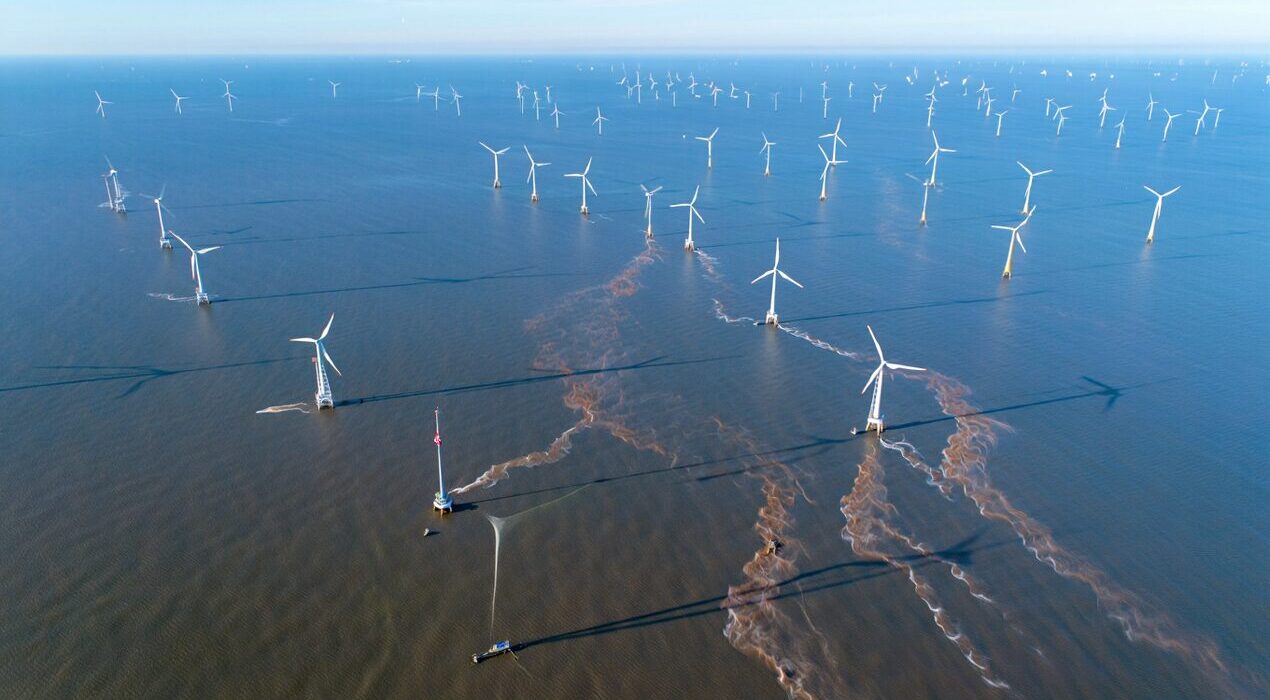
Wind Farms Disrupt Ocean Currents and Move Millions of Tons of Mud
Offshore wind farms produce clean energy. However, they also change the ocean environment.New research from Helmholtz-Zentrum Hereon shows a surprising effect. Wind farms disrupt sediment movement in the North Sea.As a result, millions of tons of mud shift location each year.
Turbines Alter Flow
Waves and currents normally stir up seabed material. Particles travel, settle, and then stir again.Wind turbines act as obstacles above and below the surface. They slow down currents across large areas.Therefore, mud and organic matter end up in different places.
Massive Mud Movement
The German Bight feels the strongest impact. About 52 percent of all sediment changes occur there.Each year, wind farms redistribute roughly 1.5 million tons of mud. This mud contains carbon from dead plants and animals.The seafloor acts as a carbon sink. Changing sediment patterns could affect long‑term carbon storage.
A New Computer Model
Researchers developed a simulation that combines weather, waves, currents, and sediment data. The model predicts future changes.As wind farms expand, the effects will grow. This could impact ecosystems and coastal stability.
Next Steps for Scientists
The team plans to study sensitive areas like the Wadden Sea. That region needs continuous sediment to keep pace with rising sea levels. “Our findings help plan new wind farms in an environmentally friendly way,” says lead author Jiayue Chen.Better understanding of sediment flow also supports shipping safety and coastal protection.