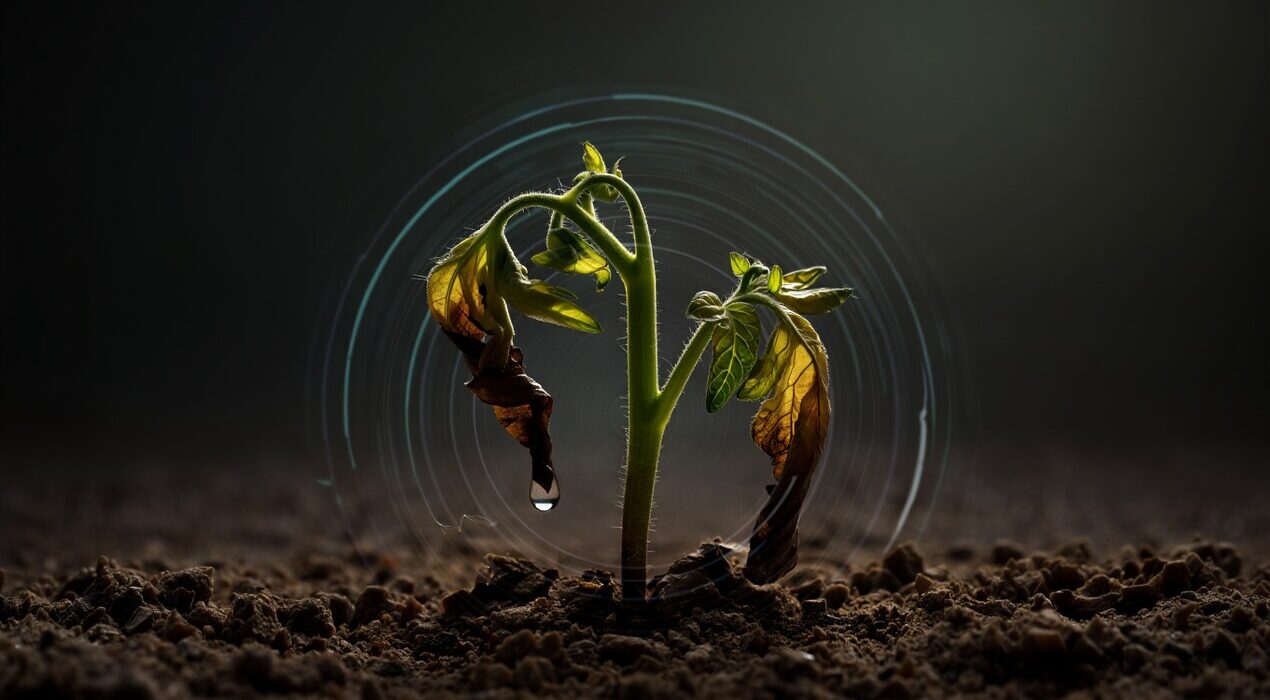
Stressed Plants “Scream” in Ultrasonic Clicks
Plants cannot run away from danger. But they may “scream” instead.New research shows that stressed plants release ultrasonic clicks. These sounds resemble popping bubble wrap.However, human ears cannot hear them. The frequencies are far too high.
The Experiment
Scientists at Tel Aviv University recorded tomato and tobacco plants. They used sensitive microphones in a soundproof chamber.Some plants went without water. Others had their stems cut.Healthy plants stayed mostly silent. Stressed plants produced 30 to 50 sounds per hour.
The Clicks Mean
The sounds reach about 65 decibels. That is as loud as a normal conversation.Nevertheless, we miss them completely. Animals like moths and mice may not.“There is a possibility that a lot of acoustic interaction is occurring,” says Professor Lilach Hadany.
Different Stresses, Different Sounds
A machine learning algorithm could tell the difference. It distinguished dehydration from physical damage.It also identified the plant species. Corn, wheat, grape, and cactus all make sounds when stressed.The clicks likely come from air bubbles bursting inside the plant’s water tubes.
Farmers could monitor crop hydration by listening. No visible signs of thirst are needed. Other plants might also detect these sounds. They could prepare for stress before it arrives.“This opens a new avenue for communication and eavesdropping,” says co‑author Yossi Yovel.