Infant Colic Allergy Risk Study Links Early Crying to Food Allergies
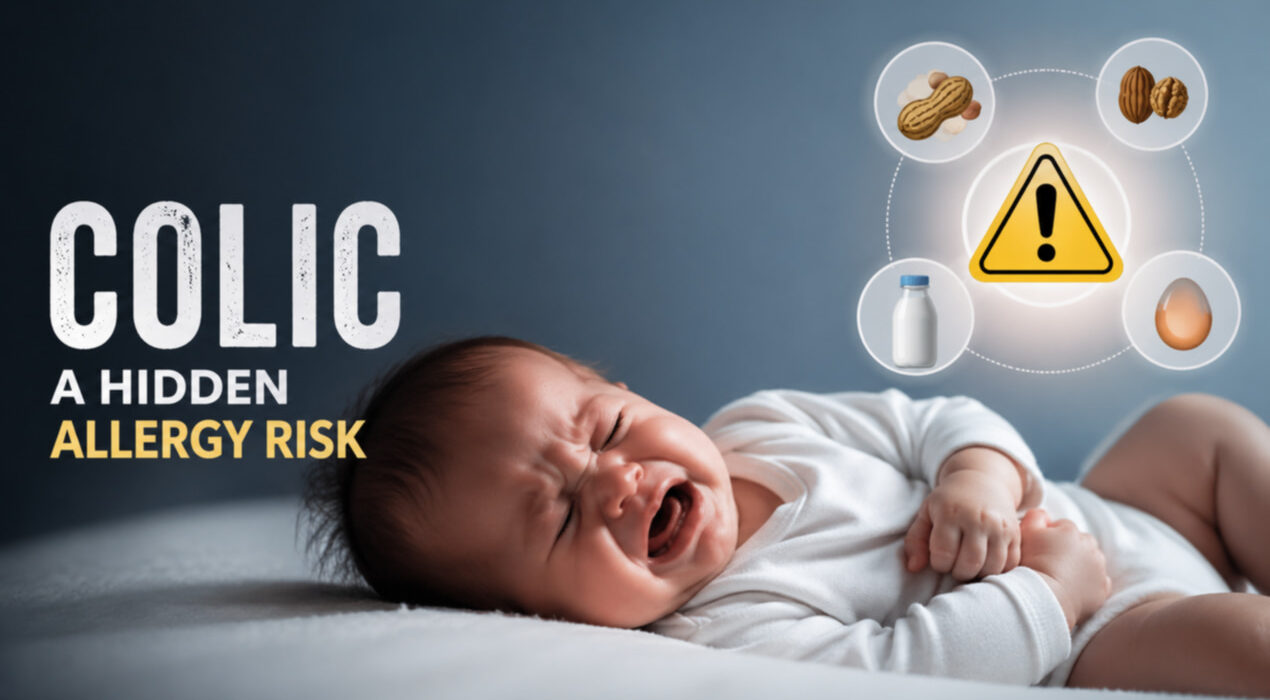
Infant colic allergy risk appears higher in early life. A large study followed more than 1,200 children from birth. It found a 70% higher risk of food allergy by age two to three. Researchers say early crying may reflect deeper immune changes. Therefore, colic may act as an early warning sign.
Colic Linked to Allergy Risk
Colic causes long periods of crying and abdominal discomfort. However, scientists now believe it may signal immune activity changes. For example, some infants later develop food allergies. The study shows a clear pattern over time. Children with colic had higher allergy rates than others. As a result, researchers suggest closer early monitoring.
Stronger Link With Peanut Allergies
The research followed children into adolescence. Peanut and tree nut allergies showed the strongest link with colic. For instance, peanut allergy affected 8% of children with colic.
In comparison, only 4% of children without colic had peanut allergy. In addition, sensitivity tests showed stronger reactions to peanut proteins. However, milk and egg allergies showed weaker connections.
Over time, the link became more specific. Peanut allergy risk remained highest in late adolescence. Therefore, researchers believe immune patterns may develop early in life.
What This Means for Parents
Experts advise calm awareness instead of fear. Colic does not directly cause allergies. Instead, it may reflect an underlying immune tendency. Doctors may also review family allergy history. In addition, they may suggest early food introduction under guidance. This follows current health recommendations.
Colic affects around one in five newborns. Previously, it was seen as harmless and temporary. However, new evidence suggests a deeper biological link. Researchers now view colic as a possible marker. It may point to gut and immune system activity. As a result, early care and observation can support better outcomes.