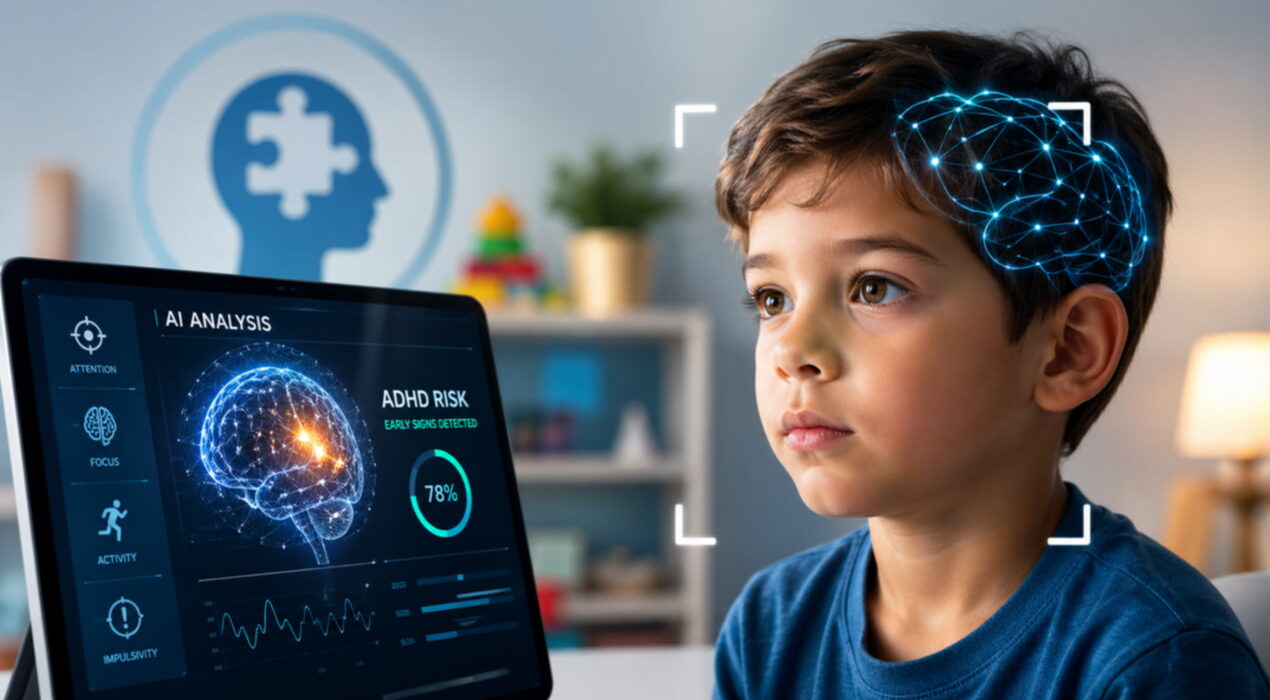
AI ADHD Prediction Tool Detects Early Signs in Children
Artificial intelligence is changing how doctors detect attention issues in children. A new AI ADHD prediction approach may spot warning signs years earlier. As a result, children could receive support much sooner.
Early signals in health data
Researchers found that the system can flag early ADHD warning signs with strong accuracy. It uses routine electronic health records to study behavior patterns. For example, it looks at sleep, activity, and development over time.
In the study, scientists reviewed records from more than 140,000 children. They trained the model to detect trends from birth through early childhood. Therefore, the system learned to link patterns with later ADHD diagnoses.ADHD affects about 8 percent of children and teenagers. Symptoms include trouble focusing, restlessness, and impulsive actions. However, many children remain undiagnosed for years despite clear signs.
Why early detection matters
Early insight can improve a child’s daily life. Children often struggle when support arrives too late. In addition, delays can affect school performance and confidence.Experts say timely care leads to better outcomes. For instance, children can access learning strategies and behavioral support earlier. As a result, they may build stronger social and academic skills. Researchers also found the tool worked across diverse groups. It showed consistent results regardless of sex, race, or background. Therefore, it may help reduce gaps in diagnosis.
Role of doctors and next steps
The tool will not replace doctors. Instead, it helps clinicians focus on children who need attention. As a result, fewer families may wait years for answers. Experts stress the need for safe and ethical data use. However, early results remain promising. AI ADHD prediction could soon support faster, fairer care for children everywhere.