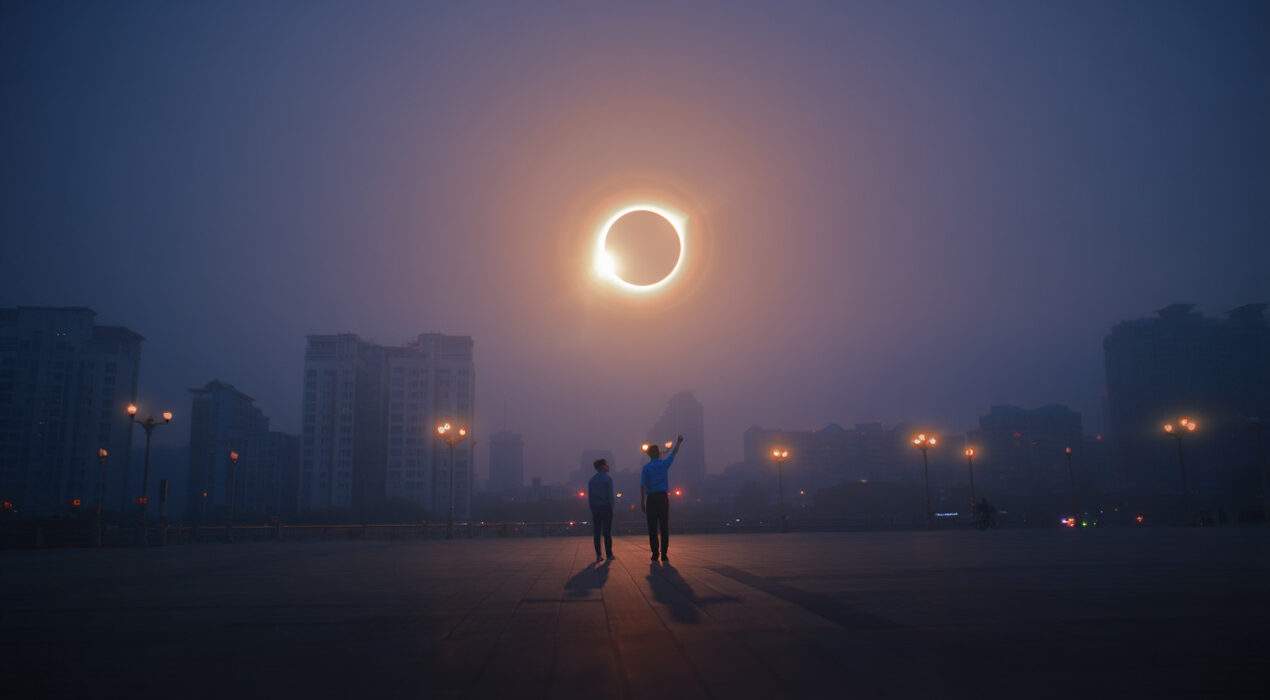
Total Solar Eclipse Made Cities Go Eerily Quiet
Seismic instruments detect vibrations from human activity. Cars, construction, and crowds all shake the ground. During the April 8, 2024, total solar eclipse, something unusual happened. Cities went quiet beneath the surface. Seismologist Benjamin Fernando witnessed it in Ohio. “Everything went really quiet,” he said.
A Clear Pattern in the Data
Fernando analyzed hundreds of seismic stations. The results showed a consistent pattern tied to the eclipse. Just before totality, noise rose slightly. Then, as the Moon fully covered the Sun, vibrations dropped sharply. After totality ended, activity resumed. Noise levels even climbed slightly above the monthly average.
Only Cities in the Path
This effect only occurred in urban areas directly inside the path of totality. Rural regions showed no change. For example, New York saw 97 percent totality. Nevertheless, its seismic noise did not drop. Therefore, the eclipse had to be complete to interrupt daily routines.
A Shared Pause
Fewer cars moved on the roads. People stepped away from work and errands. As a result, human‑driven vibrations fell enough to measure clearly. A similar drop happened during COVID‑19 lockdowns in 2020.
No Earthquake Link
Some people believe eclipses trigger earthquakes. The data does not support that idea. “That’s definitely not the case,” Fernando says. This study provides another clear demonstration. The eclipse created a brief, eerie quiet. It also gave scientists a unique way to measure human activity from below.