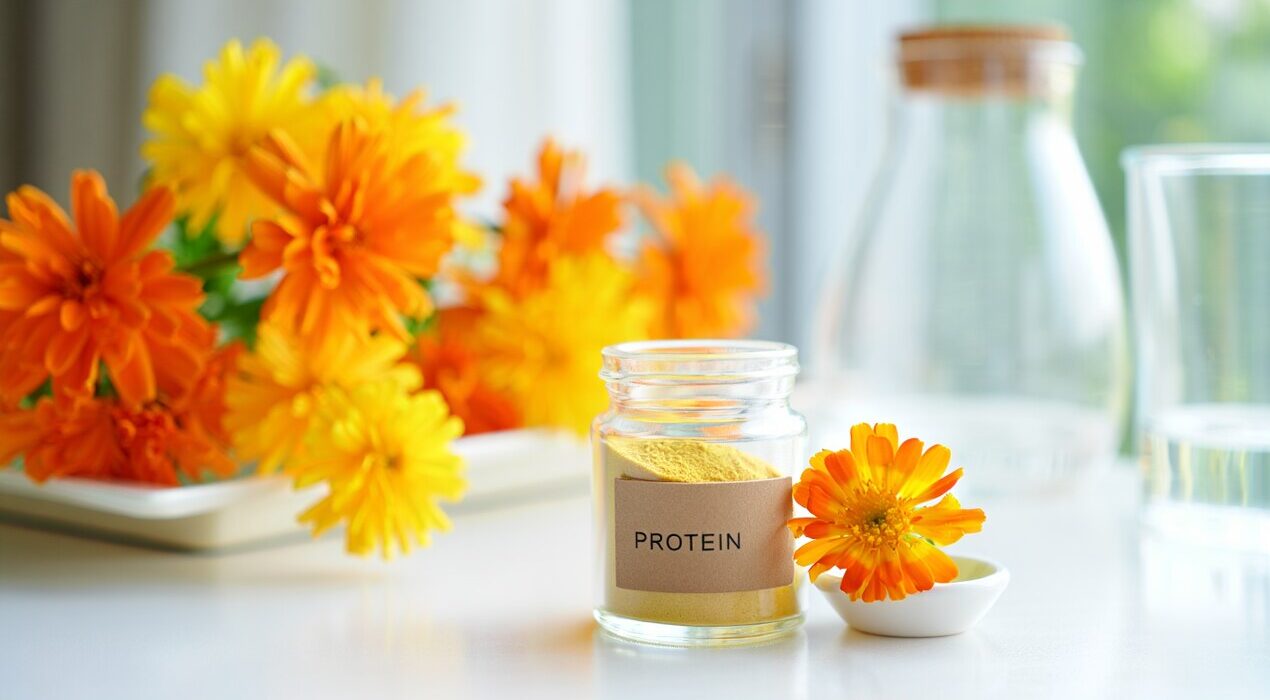
Common Marigold Flower Offers Unexpected New Protein Source
Pot marigolds are beautiful ornamental flowers. However, an estimated 40 percent of production ends up as waste. Researchers at the American Chemical Society saw an opportunity. They explored whether these discarded flowers could become a protein source. The findings appear in ACS Food Science & Technology.
Heat Stable and Functional
The team processed marigold flowers into powder. Then they used four extraction stages to separate different protein groups. Some extracts were rich in glutamic and aspartic acid. These compounds create an umami flavor that enhances taste. In addition, the proteins showed strong heat stability. They remained intact at temperatures up to 221°F (105°C).
This exceeds the tolerance of pea and chickpea proteins. Therefore, marigold proteins may survive cooking better.
Great for Emulsions
Two of the protein extracts demonstrated strong emulsifying ability. They can keep oil evenly dispersed in water. This property is crucial for salad dressings, mayonnaise, and dairy alternatives. The proteins also offer hydrating and antioxidant benefits.
Reducing Waste, Adding Value
“We saw an opportunity to value this agricultural byproduct,” says corresponding author Anand Mohan. The growing demand for plant‑based ingredients makes this discovery timely. Marigold proteins could improve flavor, texture, and stability in baked goods and other foods. Next, researchers will test health benefits and make consumer products like dressings and baked goods.
Science That Matters
“Demonstrating that a common flower can become a valuable food ingredient makes science relatable,” Mohan concludes. This approach turns waste into nutrition. A simple marigold may help feed the future.