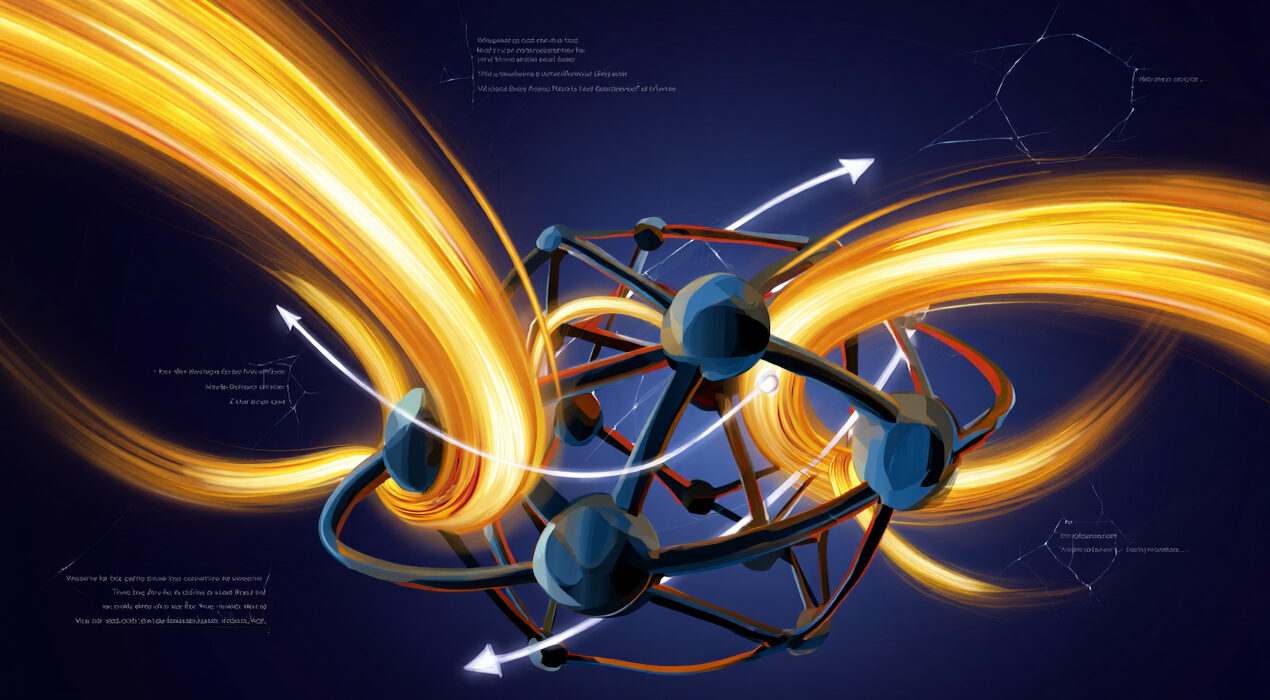
Light Matter Twist Discovery Reveals Hidden Optical Force
The light matter twist discovery reveals that light can move objects in unexpected ways. Scientists found that light can push and twist matter sideways. As a result, this finding changes how we understand light and its effects.
Light has long been known to carry momentum. For example, James Clerk Maxwell first proposed this idea in the 1870s. Later, Arthur Ashkin developed optical tweezers to control tiny particles. However, measuring these forces at very small scales remained difficult.
New Method to Measure Optical Forces
Researchers at Hokkaido University created a new measurement system. They designed a platform called a “micro-drone” to study nanoscale forces. In addition, they used laser beams to hold and control the setup.This system allows scientists to track motion in three dimensions. Therefore, they can measure both movement and rotation with precision. Unlike older methods, it captures forces from all directions.
During experiments, researchers tested tiny gold structures. When exposed to light, these objects rotated sideways. As a result, scientists observed a new effect called transverse optical torque.
Rethinking Light and Its Properties
The light matter twist effect revealed something unexpected. Scientists found that rotation did not depend on angular momentum. Instead, it depended on a property called optical helicity.
Optical helicity describes the twist or handedness of light waves. Even when angular momentum was removed, the sideways motion remained. Therefore, this confirms helicity as the key factor.This discovery opens new possibilities in science and technology. For example, researchers can design light-driven nanomachines. In addition, it may improve advanced sensing tools.
Overall, this research changes how scientists view light–matter interaction. It shows that light holds hidden properties that can influence the physical world in new ways.