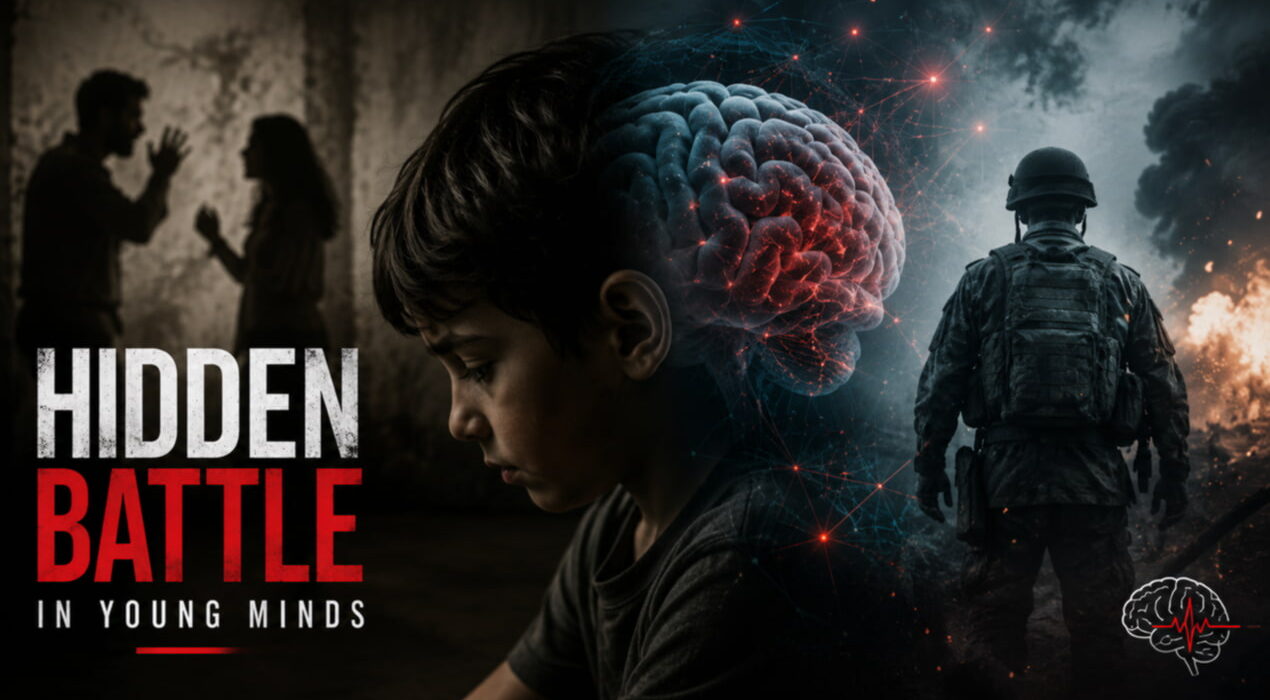
Pakistani Children Brain Study Shows Soldier-Like Stress Patterns in Home Violence
Brain imaging studies reveal a disturbing reality in Pakistan. Children raised in violent or unstable homes may develop brain patterns similar to soldiers returning from combat. Researchers say these changes can occur even when no mental disorder is diagnosed.
Study Findings
Weak family environments appear to affect the brain’s threat response system. Scientists used functional MRI scans to study 43 children. They compared those exposed to conflict, abuse, or neglect with those from stable homes.
Hidden Brain Stress
Results show that affected children often stay in a constant state of alert. Their brains act as if danger is always present. This happens even without visible symptoms in daily life.
Impact on Growth
Experts warn that long-term exposure may shape emotional development. Children can struggle with trust, learning, and relationships later in life. However, early care and support can help the brain recover.
Experts say early intervention can reduce long-term harm for children. Schools and communities play a key role in identifying at-risk children. Therefore, awareness programs can help protect mental health early.
Families also need guidance to create safe and stable home environments. In addition, support services can provide counseling and recovery pathways. Researchers emphasize that stable homes support healthier brain development. This reduces fear-based responses and improves emotional control over time.
However, violent environments can leave lasting stress patterns in the brain. As a result, children may struggle with focus and memory functions. In many cases, support systems can slowly reverse these effects. Therefore, timely action remains essential for protecting child mental health. Overall, safe environments give children a stronger foundation for future wellbeing.
Without proper care, stress can accumulate and affect learning performance. Early detection helps reduce long-term emotional and cognitive difficulties. Public health programs should prioritize child protection and mental wellbeing. This requires coordinated action from all stakeholders. Child wellbeing must come first.