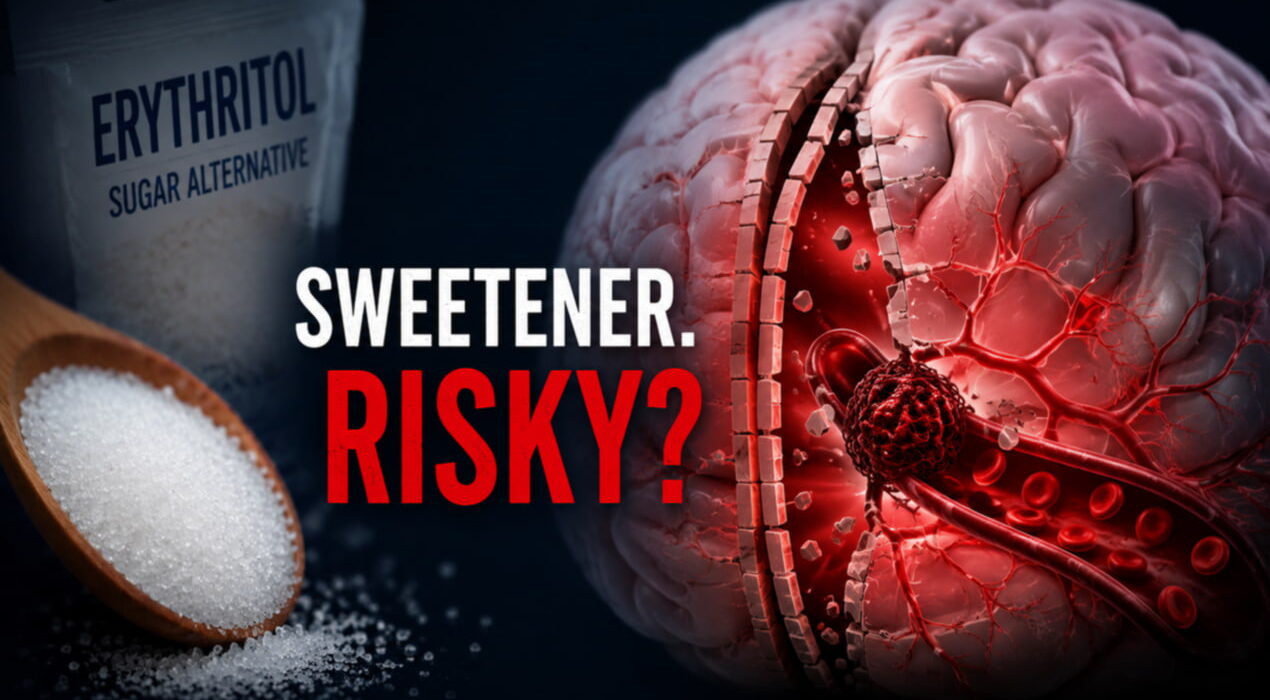
erythritol brain barrier: Common Sweetener May Raise Stroke Risk
Found in protein bars and energy drinks, erythritol has long been seen as a safe sugar substitute. However, new research on erythritol brain barrier suggests possible hidden risks. Scientists at the University of Colorado report it may harm protective brain cells and increase cardiovascular danger. Therefore, concerns are rising about long-term use. The study links exposure to damage that could affect heart health and raise stroke risk over time.
Cell Damage Findings
Researchers exposed blood-brain barrier cells to erythritol levels similar to those found after a soft drink. They observed oxidative stress, which flooded cells with free radicals. As a result, antioxidant defenses weakened. This caused cell damage and sometimes cell death. In addition, vessel function became unstable, reducing normal protection. Consequently, brain tissue may become more vulnerable to clots and reduced oxygen supply during stress or physical activity. These effects raise serious health concerns.
Blood Flow Impact
Healthy blood vessels regulate flow using nitric oxide and endothelin-1. Nitric oxide relaxes vessels, while endothelin-1 tightens them. However, erythritol disrupts this balance. It reduces nitric oxide production and increases endothelin-1 levels. As a result, vessels may stay narrowed. This can restrict oxygen delivery to the brain and increase risk of ischemic stroke. The body also struggles to prevent dangerous clot formation under these conditions. This imbalance may develop gradually over a time period.
Stroke Risk Signals
Human studies also show similar patterns. Large observational research links high erythritol levels with increased cardiovascular events. One study found nearly double risk among heavy consumers. However, scientists note limitations because many experiments used isolated cells instead of full blood vessels. Therefore, results may not fully reflect human biology. Regulators still approve erythritol as safe. Nevertheless, experts recommend caution until more advanced testing confirms long term effects on health. Consumers should stay informed and cautious.