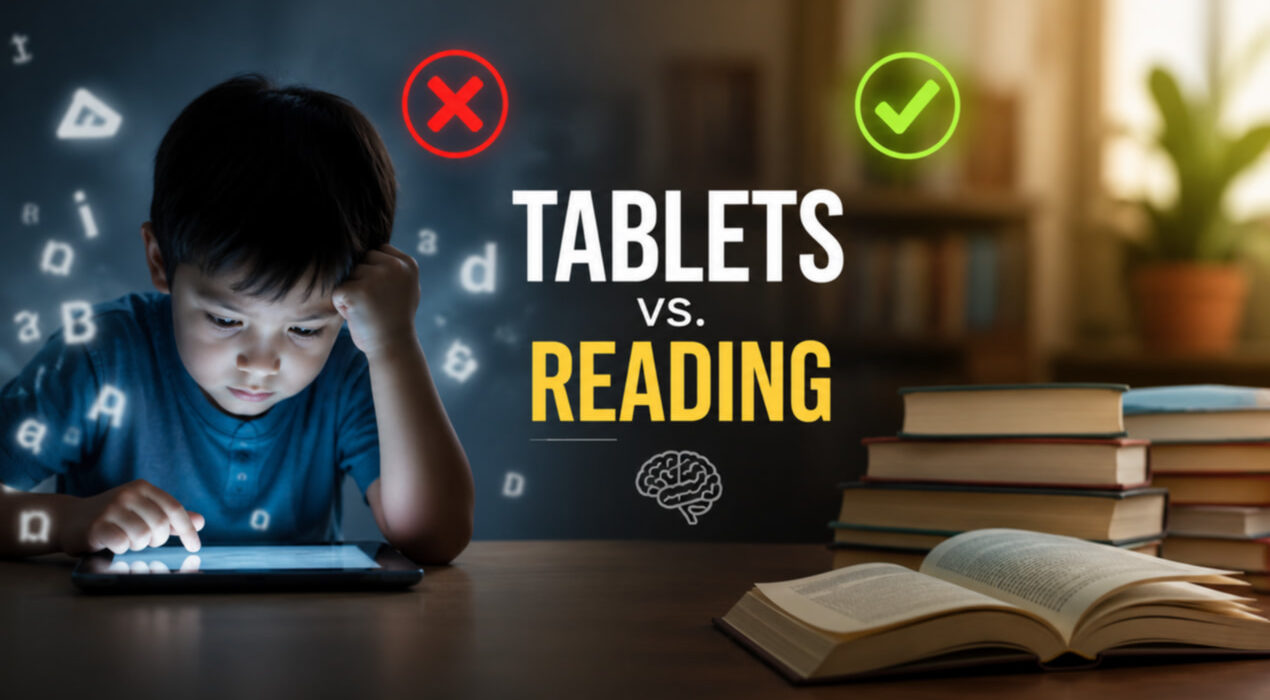
Tablet Learning May Affect Children’s Reading Skills, NIH Warns
Many children now use tablets for learning at home and in school. While digital tools can support education, experts warn that too much screen-based learning may affect reading development. Research from the National Institutes of Health suggests that children who depend heavily on tablets may struggle with letter recognition and early literacy skills. As a result, some children may find reading more difficult during important stages of growth.
Why Reading Skills Matter
Letter recognition is one of the first steps in learning to read. Children must connect letters with sounds before they can understand words and sentences. Printed books, handwriting, and classroom interaction help strengthen these skills. In contrast, fast-moving digital content may reduce attention and limit meaningful practice. Therefore, experts encourage families to balance screen use with traditional learning activities.
Screen Time and Brain Development
Young brains develop through touch, movement, and direct interaction with learning materials. Writing letters by hand helps children remember shapes and sounds more clearly. However, tablets often encourage swiping and tapping instead of active participation. Researchers believe this change may affect memory, focus, and language development over time. In addition, long hours of screen exposure can reduce communication between parents, teachers, and children during learning sessions.
Creating Healthy Learning Habits
Experts say technology should support education instead of replacing important learning experiences. Parents can encourage children to read printed books, practice handwriting, and discuss stories together every day. Simple habits like limiting screen time and creating reading routines may improve focus and literacy skills. A balanced approach allows children to enjoy technology while building strong reading abilities for the future.
Teachers also recommend outdoor play, creative activities, and group discussions because these experiences improve concentration, social skills, and emotional development. Healthy learning environments help children become confident readers and active learners.