China Creates Lab-Grown Heart Pacemaker for Future Cardiac Treatment
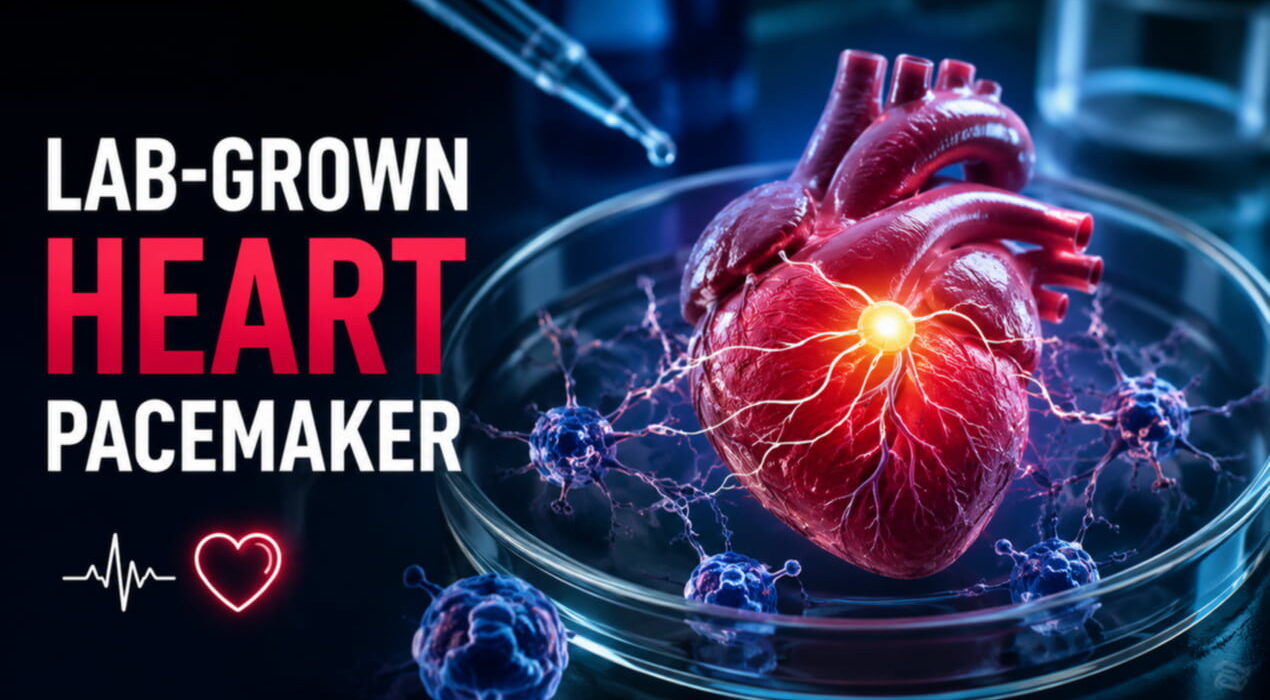
Chinese scientists have created the world’s first lab-grown sinoatrial node, the tiny structure that controls the heart’s rhythm naturally. The breakthrough could improve research into heart disease and help doctors test new medicines more safely. Researchers in Shanghai used human pluripotent stem cells to build the organoid, which can beat on its own like a natural pacemaker.
Building a Living Pacemaker
The sinoatrial node acts as the heart’s “master conductor.” It sends electrical signals that control how the heart chambers contract and pump blood. However, damage to this area can cause dangerous rhythm problems and even heart failure in severe cases.
To solve this challenge, the research team created a three-dimensional sinoatrial node organoid. They also linked it to a man-made cardiac nerve network. As a result, the organoid responded to signals similarly to a human heart. Scientists said electrical impulses moved smoothly between tissues for the first time in laboratory testing.
Why the Discovery Matters
Researchers published the study in Cell Stem Cell on May 15. Experts believe the new model could support future biological pacemakers and reduce dependence on electronic devices. Traditional pacemakers can cause infections, require battery replacements, and struggle to adapt as patients age.
Scientists have long found the sinoatrial node difficult to study because it is tiny and hard to access in human tissue. Animal testing also produced limited results. Therefore, many researchers hoped to grow a realistic human version in the lab.
China Expands Science Innovation
The breakthrough highlights China’s rapid advances in biotechnology and medical science. Researchers in Shanghai previously grew a small artificial heart with chambers and blood vessels. These developments may transform future treatments for heart disease worldwide.
In addition, scientists believe organoid technology could eventually personalize treatments and improve survival rates for patients with serious conditions worldwide.