World Food Safety Facts: 10 Common Myths That Could Put Your Health at Risk
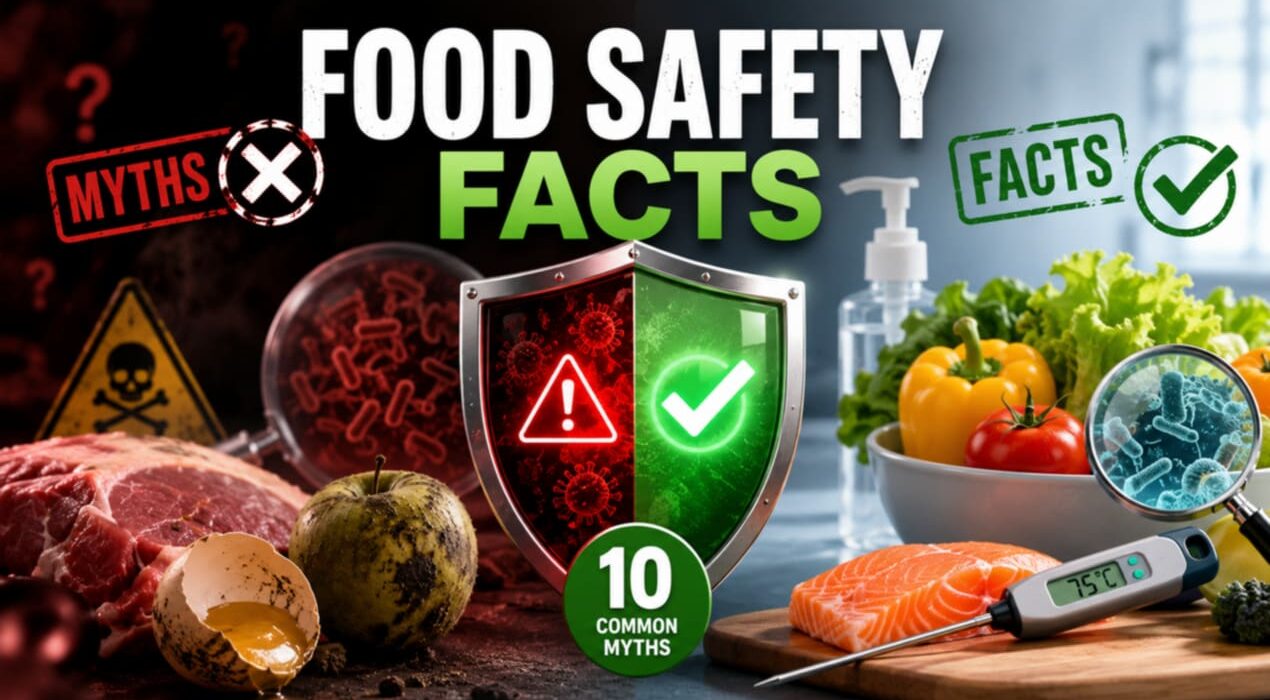
Food Safety Facts are essential for protecting your health and preventing foodborne illnesses. Every year, World Food Safety Day highlights the importance of safe food handling from farm to table. However, many people still believe myths that can increase health risks. Understanding the truth can help families make safer choices every day.
Common Food Storage And Handling Myths
Many people think spoiled food always smells or looks bad. However, harmful microorganisms often show no visible signs. Therefore, food can still cause illness even when it appears fresh. Another common myth involves leftovers. Food should not stay at room temperature for more than two hours. Instead, store leftovers in airtight containers and eat them within three to four days. Some also believe the “5-second rule” keeps dropped food safe. In reality, bacteria can transfer instantly. As a result, picking food up quickly does not guarantee safety.
Kitchen Hygiene Matters More Than You Think
Dishcloths and sponges can spread bacteria across kitchen surfaces. Therefore, clean and disinfect them regularly. Boiling them in water can also help reduce contamination. Many people wash raw poultry before cooking. However, this practice can spread harmful microorganisms to nearby surfaces. Modern poultry processing already makes washing unnecessary. Hand sanitiser is useful, but it cannot fully replace soap and water. In addition, proper handwashing remains one of the best ways to prevent foodborne illnesses.
Safe Food Practices For Better Health
Food poisoning symptoms do not always appear immediately. In some cases, illness develops days or even weeks after eating contaminated food. Frozen food should never thaw at room temperature. Instead, thaw it in the refrigerator or cold water. This method helps prevent bacterial growth.
Organic fruits and vegetables also require washing before eating. While they use natural pesticides, residues and contaminants may still remain. Finally, foodborne illnesses can become serious. Although many cases are mild, some infections may cause severe complications. Therefore, following Food Safety Facts can help keep you and your family safe