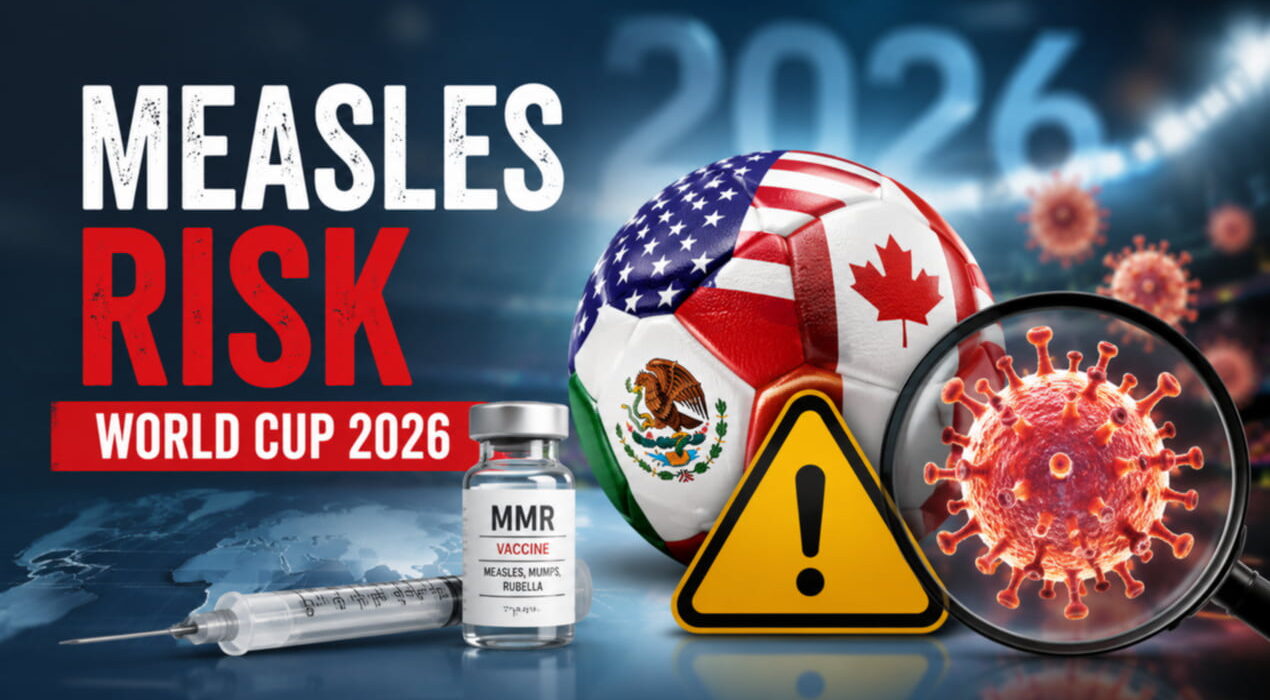
FIFA World Cup 2026 Measles Risk Raises Public Health Concerns
The Pan American Health Organization (PAHO), established with the support of the United Nations, has warned that the risk of a measles outbreak could increase during the FIFA World Cup 2026, which will be hosted by the United States, Mexico, and Canada. The agency noted that more than 20,000 measles cases and 25 related deaths have already been reported across the Americas this year.
Health officials said the large movement of international travelers during the tournament may create favorable conditions for the spread of infectious diseases. As millions of football fans are expected to travel between host cities, public health authorities are closely monitoring the situation. Experts stress that preventive measures will play a vital role in reducing health risks before and during the event.
Vaccination Remains the Best Protection
According to PAHO, most reported measles cases have occurred among people who were not vaccinated or whose vaccination status was unknown. Therefore, the organization strongly recommends that travelers receive the measles and rubella vaccine at least two weeks before departure.
Medical experts explain that vaccination remains the most effective way to prevent infection and limit transmission. In addition, travelers should review their immunization records before making travel plans. Public health agencies continue to encourage communities to improve vaccine coverage, especially among children and vulnerable groups.
Enhanced Monitoring at Borders
PAHO has also urged member countries to strengthen disease surveillance at border crossings, airports, and other entry points. Authorities are being encouraged to improve screening and reporting systems to identify potential cases quickly.
Furthermore, health officials believe that early detection can help prevent wider outbreaks during major international gatherings. Effective coordination between countries will be essential as the World Cup approaches.
Global Health Preparedness
The organization emphasized that preparedness efforts should begin well before the tournament starts. Governments, healthcare providers, and travelers all have a role to play in preventing the spread of measles.
As a result, stronger vaccination campaigns and enhanced monitoring measures may help protect public health and ensure a safer FIFA World Cup 2026 experience for everyone involved worldwide.