Sindh Wheat Corruption Crackdown: Five Food Department Officials Dismissed
The Sindh Food Department has taken strong action against officials involved in irregularities related to government wheat stocks. Authorities dismissed five employees after completing disciplinary proceedings under the Sindh Civil Servants Rules. The action comes as part of the government’s campaign against Sindh wheat corruption and misuse of public resources.
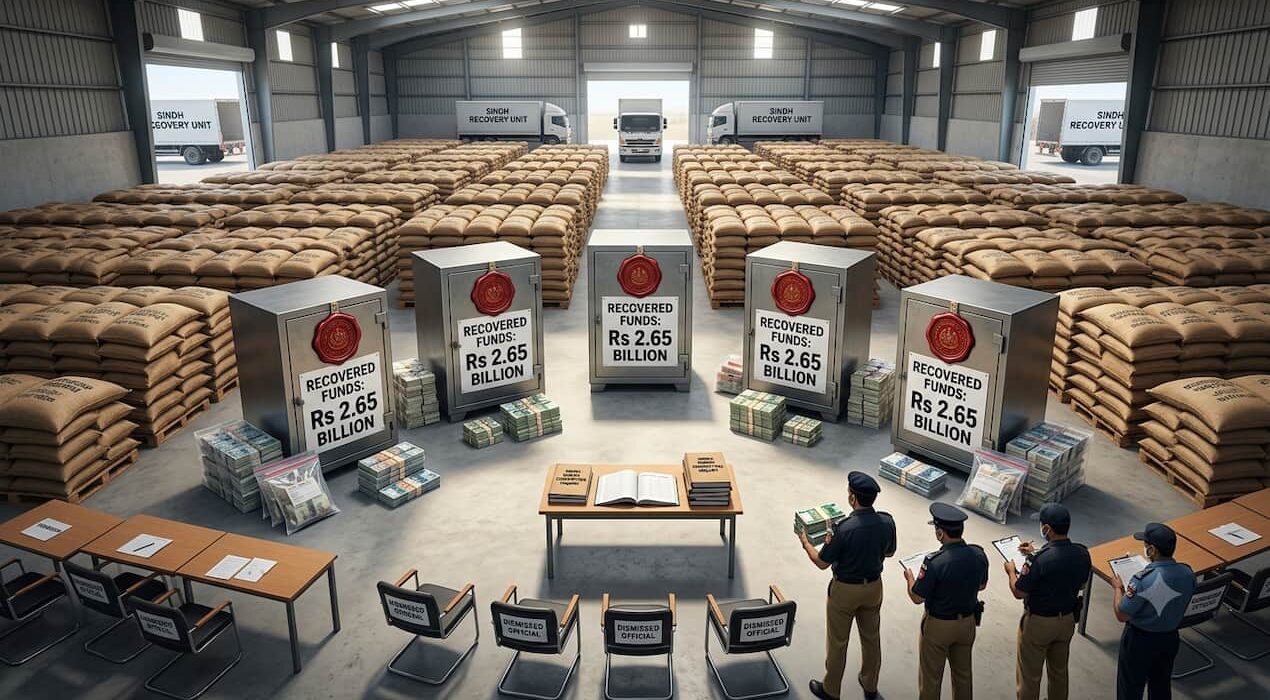
Sindh Food Minister Makhdoom Mehboob Uz Zaman directed the department to enforce a zero-tolerance policy against corruption. As a result, officials ordered the recovery of more than Rs2.65 billion, including markup, from those held responsible. The department has also referred the cases to the Anti-Corruption Establishment Sindh for criminal investigation and prosecution.
Major Cases of Wheat Stock Mismanagement
Investigators found serious irregularities at several wheat storage centers across Sindh. Balakh Sher Shaikh, in charge of PRC Kandhkot, allegedly misappropriated 9,913.952 metric tons of wheat from the 2019-20 crop. Therefore, authorities ordered recovery of Rs783.69 million.
Similarly, Habibullah Abro of PRC Golarchi faced dismissal after officials detected shortages in government wheat stocks. Recovery of nearly Rs88 million has been ordered. In another case, Ali Asghar Panhwar of PRC Johi lost his job over the alleged misappropriation of 28,375 wheat bags. Authorities directed recovery of more than Rs382 million.
Recovery Process and Legal Action
The department also dismissed Deedar Hussain Magsi after establishing major shortages and fake dispatches of wheat stocks. The reported shortage exceeded 7,045 metric tons. Consequently, authorities ordered recovery of over Rs1.19 billion.
Meanwhile, Muhammad Ali Magsi faced dismissal over shortages, misappropriation and adulteration of government wheat stocks. Investigators found wheat mixed with dust and other foreign particles. This contamination created difficulties for flour mills and atta chakkis.
Minister Mehboob Uz Zaman said corruption in the Food Department would not be tolerated. He stressed that wheat is a public asset. Therefore, anyone involved in misuse, shortages, adulteration or fake dispatches will face strict legal and departmental action.