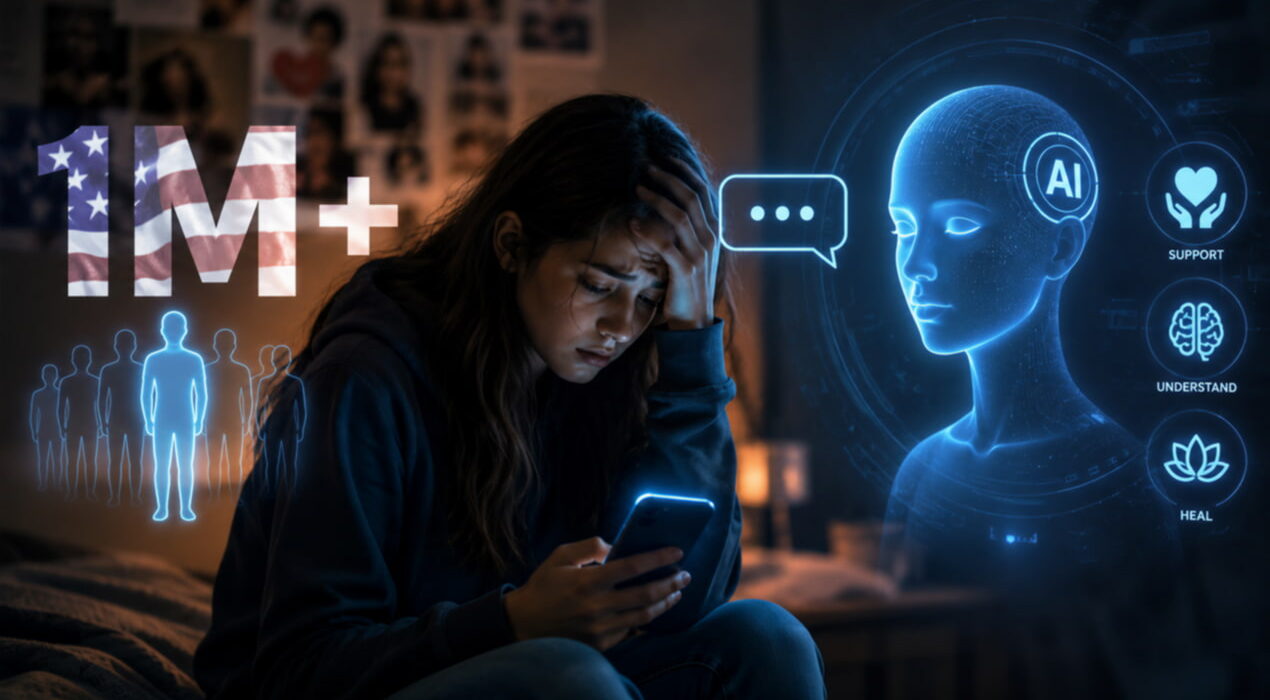
Million American Youth Seek AI Mental Health Advice During Emotional Stress
A new study has found that many young people in the United States seek AI mental health advice during difficult emotional moments. The research focused on Americans aged 12 to 21 years. It revealed that nearly one in five teenagers and young adults turn to AI chatbots when they feel sad, anxious, or emotionally overwhelmed.
The findings highlight how digital tools are becoming part of everyday life for younger generations. Many participants said they used chatbots to ask questions, seek reassurance, or discuss personal concerns they found difficult to share elsewhere. As a result, experts believe technology is reshaping how young people approach emotional support.
Why Young People Use AI Chatbots
The study, published in the medical journal JAMA Pediatrics, found that more than 91 percent of users considered chatbot responses helpful. For example, some participants said AI tools offered immediate answers and a judgment-free space for conversation.
In addition, chatbots remain available around the clock. This accessibility appeals to young users who may hesitate to speak with family members, teachers, or healthcare professionals. However, convenience does not always guarantee reliability.
Experts Warn About Limitations
Mental health specialists caution that AI mental health advice cannot replace trained professionals. Chatbots lack human understanding, clinical judgment, and emotional awareness. Therefore, they may fail to recognize serious warning signs. Experts also warn that AI systems can sometimes provide inaccurate or misleading information. In certain situations, this could delay appropriate care for vulnerable individuals.
Balancing Technology and Professional Care
Researchers believe AI tools can support emotional well-being when used responsibly. However, they should complement, not replace, professional guidance.
Parents, educators, and healthcare providers should encourage open conversations about safe technology use. Young people also need digital literacy skills to evaluate online advice carefully. As AI becomes more common, balanced approaches will help ensure that innovation supports, rather than compromises, mental health care.